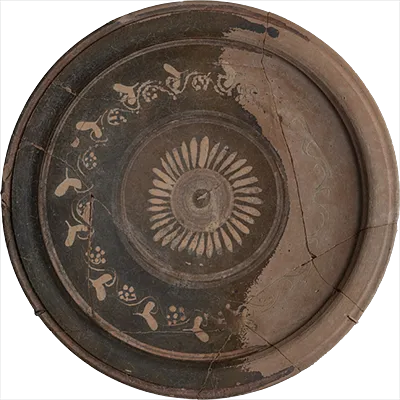
The Archaeological Museum of Aiani, as part of its communication and educational policy, has been systematically organizing numerous educational programs for several years, targeting preschool, primary, and secondary school children. For more information, see the Educational Programs section.
If you plan to visit the Archaeological Museum of Aiani, either to participate in the offered educational programs or simply to tour its exhibition spaces, it is essential to contact the museum staff in advance, as participation in the educational programs is exclusively through prior booking. You will need to get in touch with the program coordinators from Monday to Friday, 8:30-15:00, by calling 2461098800 or through the online reservation form to set a date and time for your visit. It is very important to adhere to your scheduled visit time to avoid overlapping with other school groups at the museum.
Consult our website regarding Ancient Aiani and its archaeological sites. Explore our digital collection or search the museum’s exhibits on the Portal of Mobile Monuments of the Directorate of the Management of the National Archive of Monuments to give the students an initial introduction to the museum’s artifacts. Learn about the identity, objectives, and pedagogical methods of each of our educational programs.
Discuss the museum’s exhibits with the students and the historical period in which they were created (from the prehistoric period to the Roman era).
The students should understand that they are interacting with movable monuments of great historical and cultural significance. Therefore, it is very important to discuss the expected behavior of the students in the museum before your visit: explain to the students that touching the showcases and the exhibits during the tour is not allowed. Additionally, they should be instructed to walk and not to run or jump around the museum. Special attention is required when using the staircase that leads to the educational program room! It is also noted that there may be other individual visitors in the museum, with whom you will need to coexist. Therefore, it is advisable to avoid shouting inside the museum.
If the number of students exceeds 30, it would be a good idea to divide them into groups at school in order to save time at the museum. This separation is essential for the smooth conduct of the educational program as well as for the safety of the students and the museum’s exhibits.
In case the student group includes children with mobility problems, serious vision impairments, or other learning difficulties, please indicate this information in your communication with the program coordinators so that it can be considered by the staff of our educational programs.
Students may bring a device for photos (camera or mobile phone) and are allowed to freely take pictures of the museum (without flash) for personal use only after the tour is over.
Meet the coordinators of the educational programs at the museum entrance, who will be responsible for conducting the programs.
At the museum’s reception area, coordinate with the security staff about where the students will leave their belongings (bags, coats).
Once the students have completed the special workshops, they should return the materials they used in the condition they received them and hand them over to the program coordinators, unless their creations are given to them as souvenirs.
The duration of the educational programs is approximately 2 hours. If the students have food with them, they can eat in the museum courtyard or the educational program room before or after the program begins, during the program with a 10-minute break between the tour and the special workshops, or after the program ends. Eating is not allowed inside the museum, only water is permitted. The museum has only a water vending machine, so students should bring their snacks in advance. The museum is located a short distance from the village of Aiani, where there are eateries, bakeries, etc.