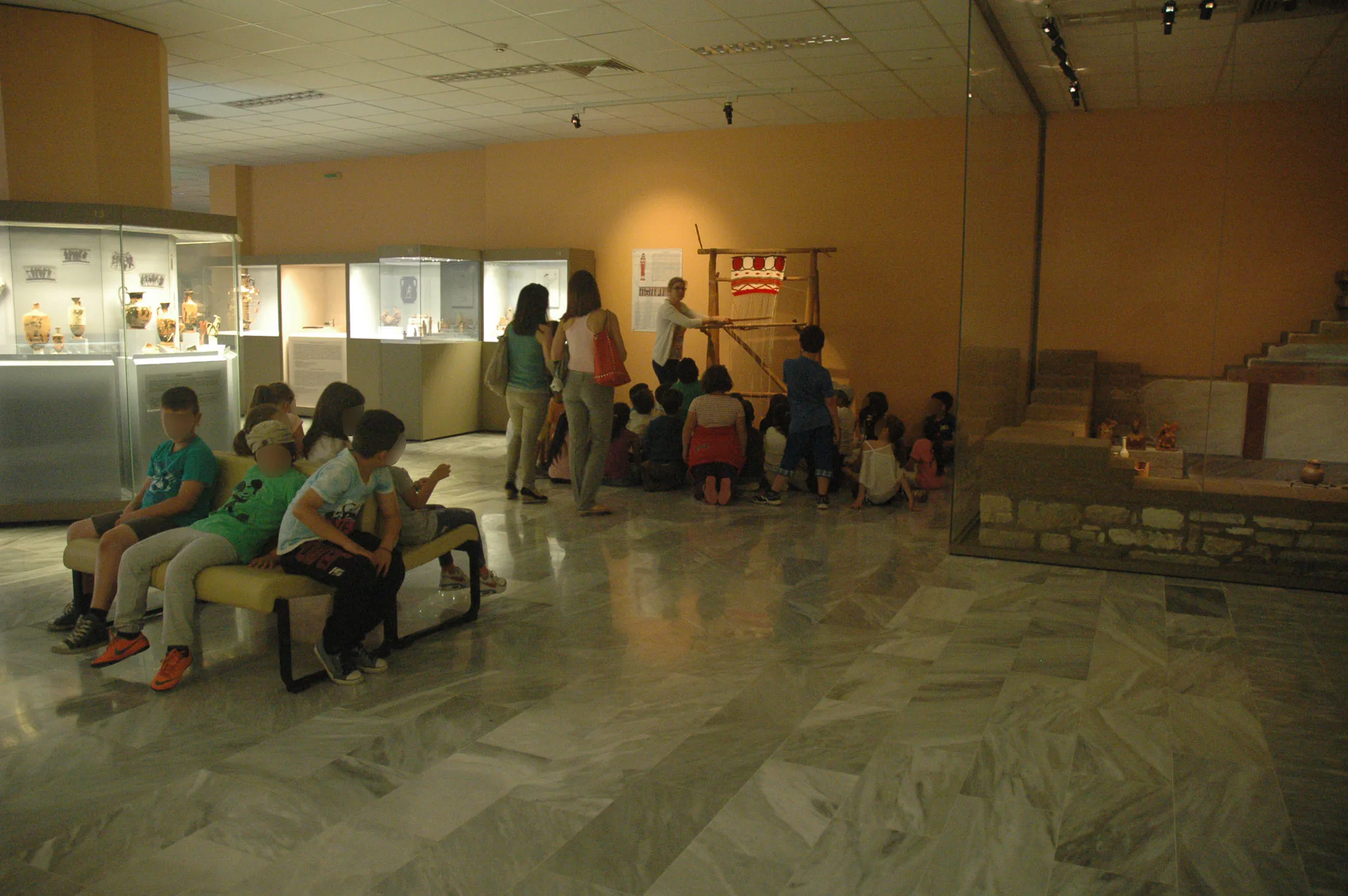
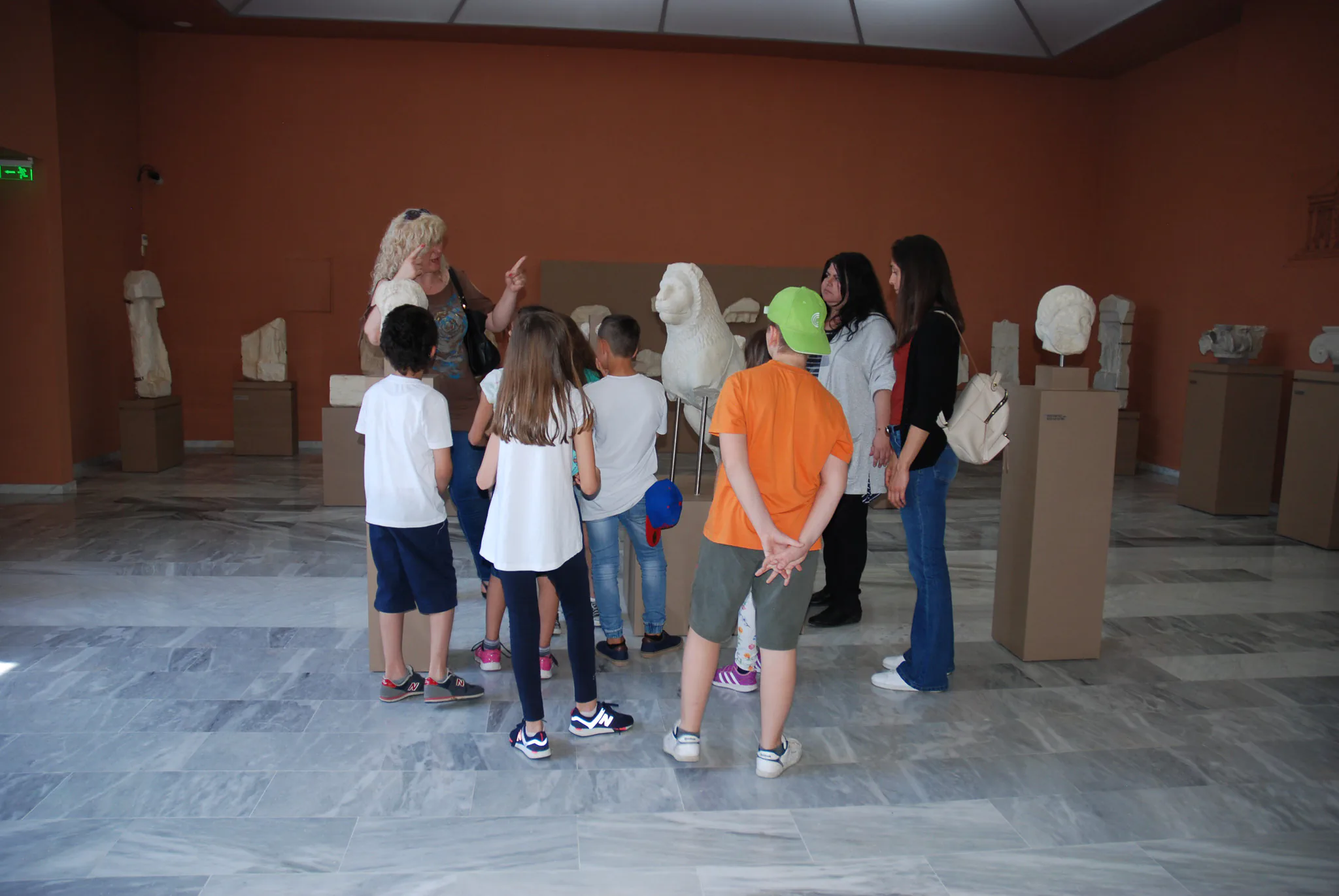
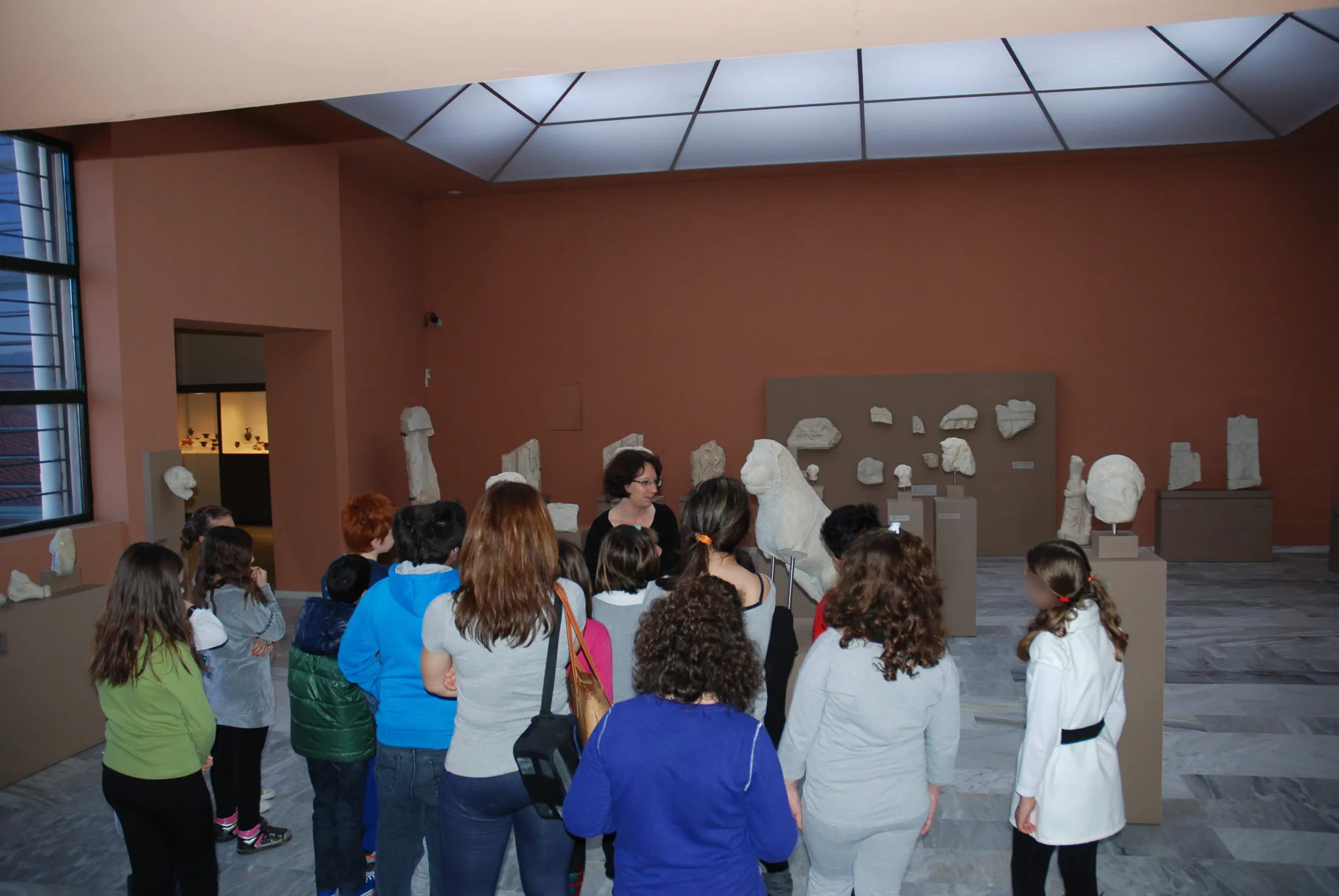
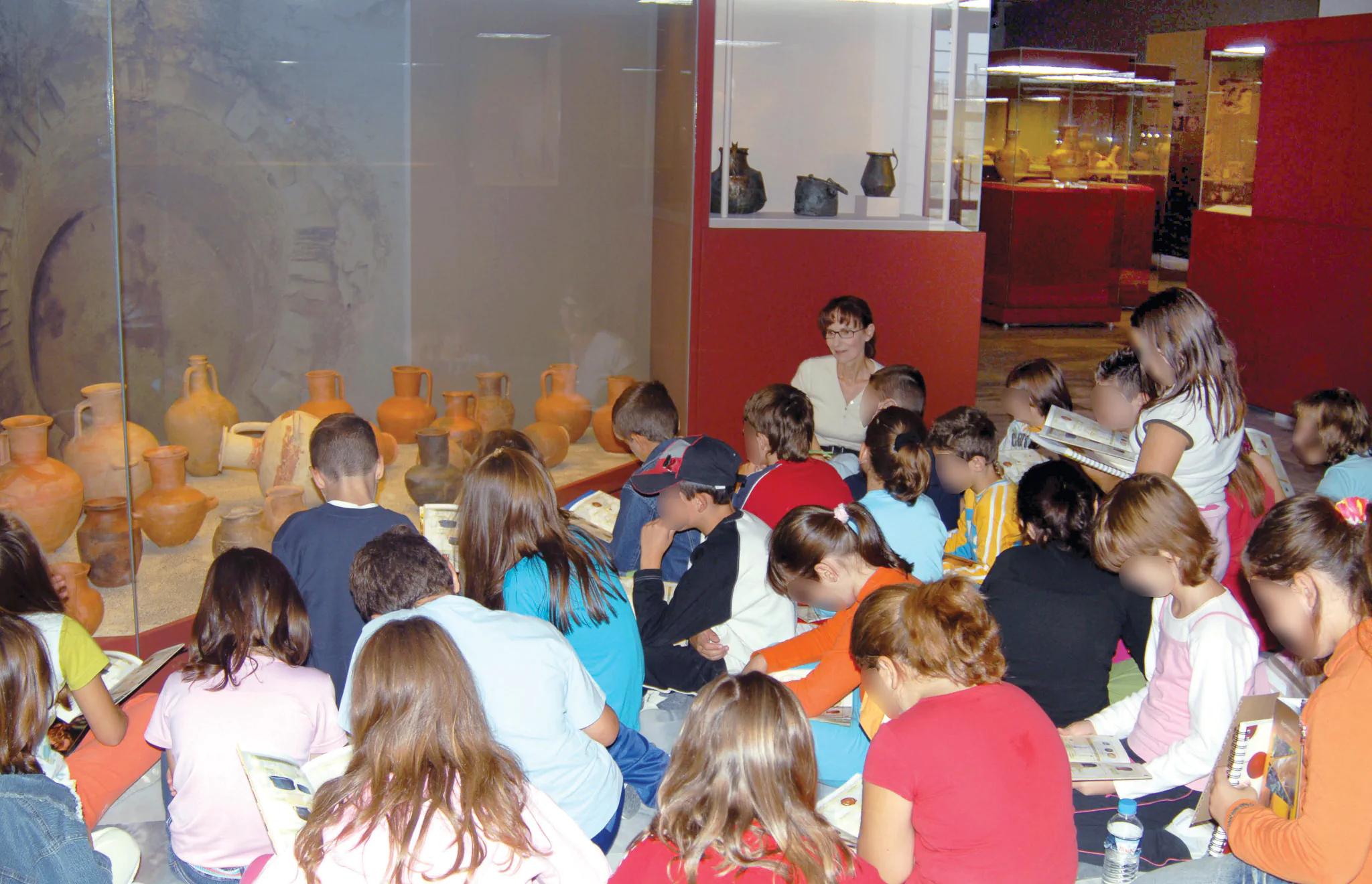
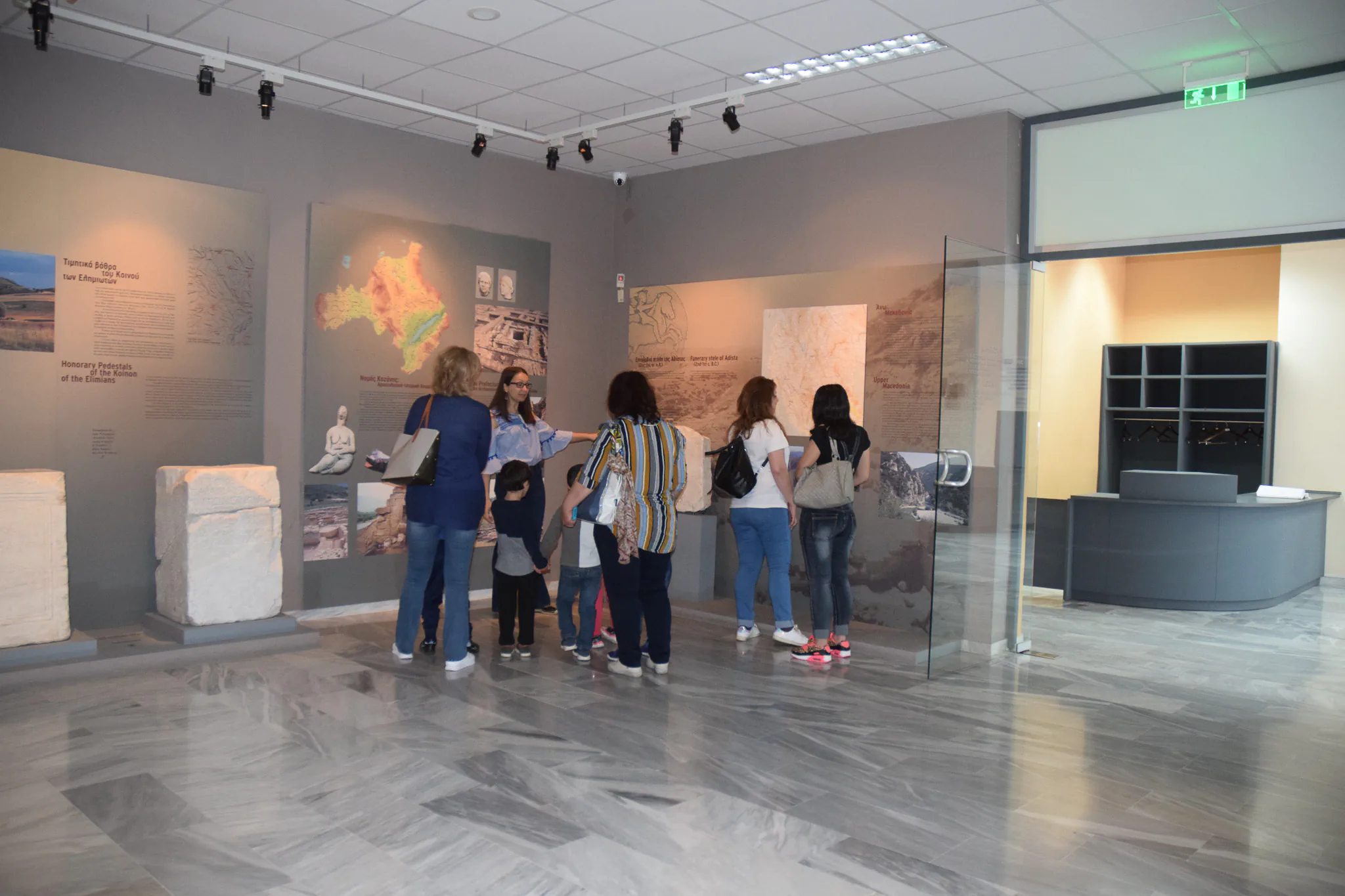
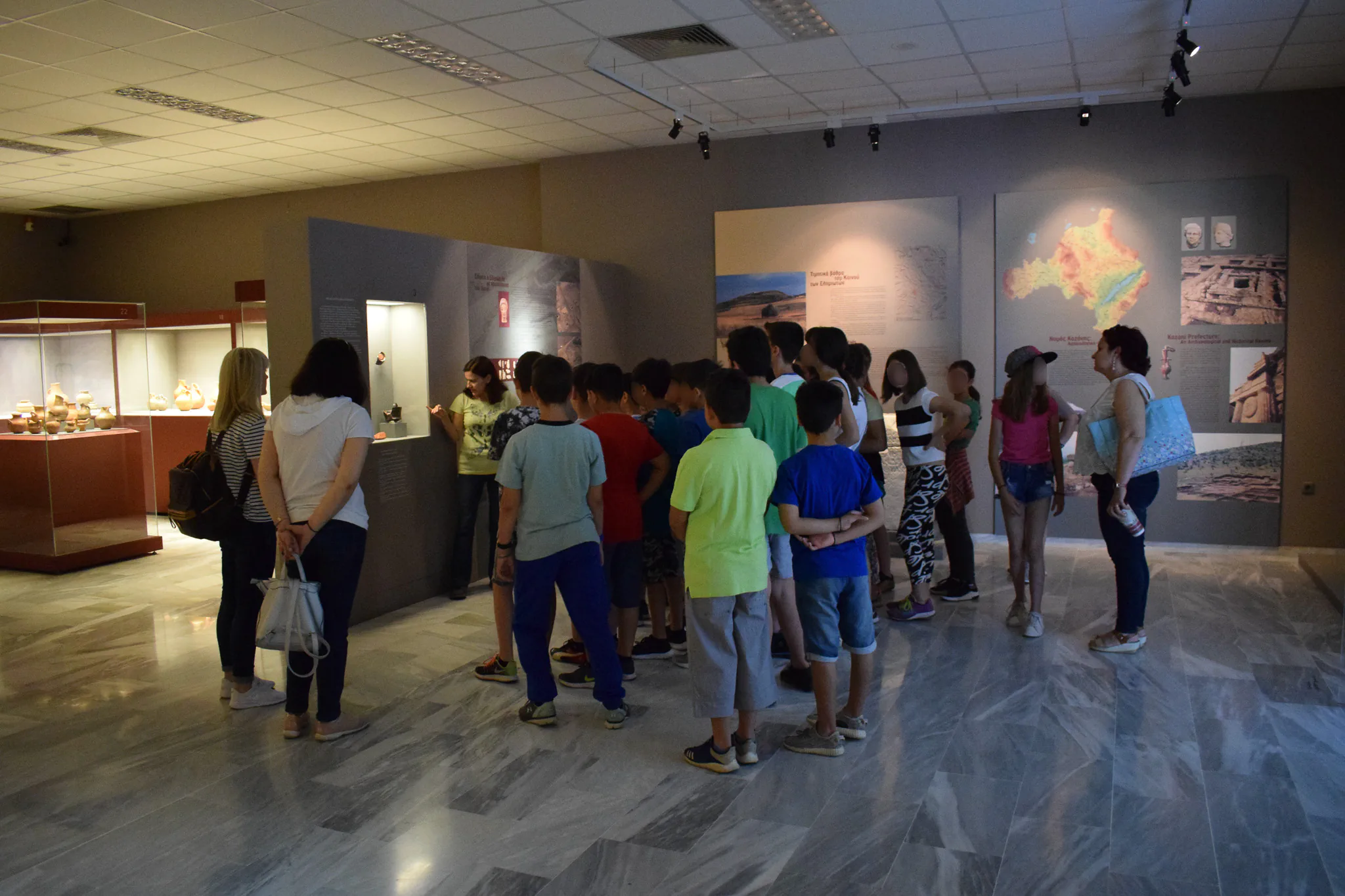
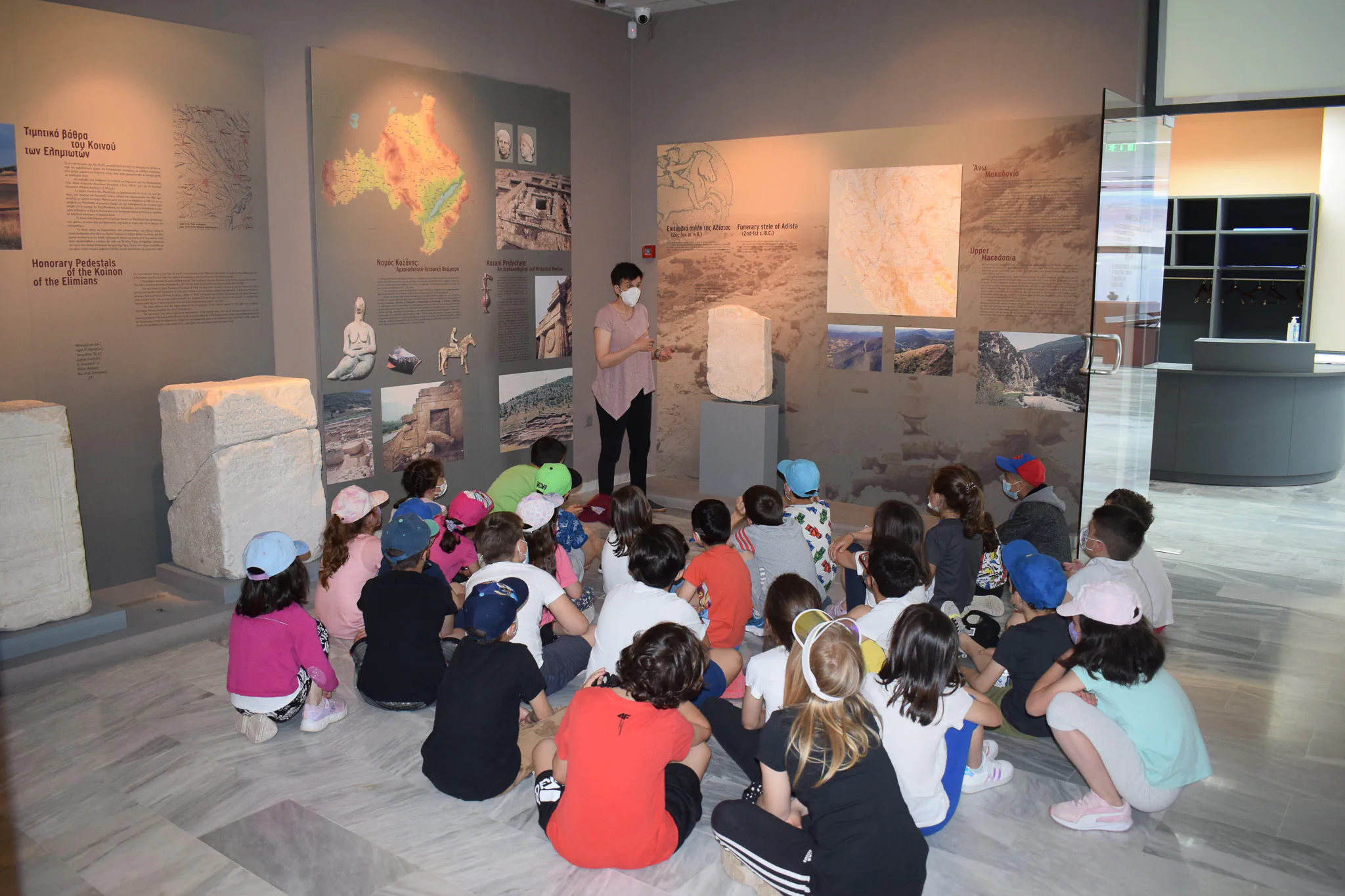
If the purpose of a museum is to produce and communicate knowledge, as experts claim, this mission is faithfully fulfilled by the Archaeological Museum of Aiani. From its inception, the museum’s exhibitions were designed to emphasize its educational role. Since 1988, a series of educational programs have been implemented within its premises, inspired and primarily organized by the now honorary Director of the Ephorateof Antiquities, Georgia Karamitrou-Mentesidi, who also authored several educational brochures.
Over the years, many of the museum’s permanent and temporary archaeologists have participated in implementing these programs, teaching archaeology based on extensive and continually updated research findings. They have presented and interpreted excavation data and artifacts in an effort to cultivate archaeological awareness among students of all ages.
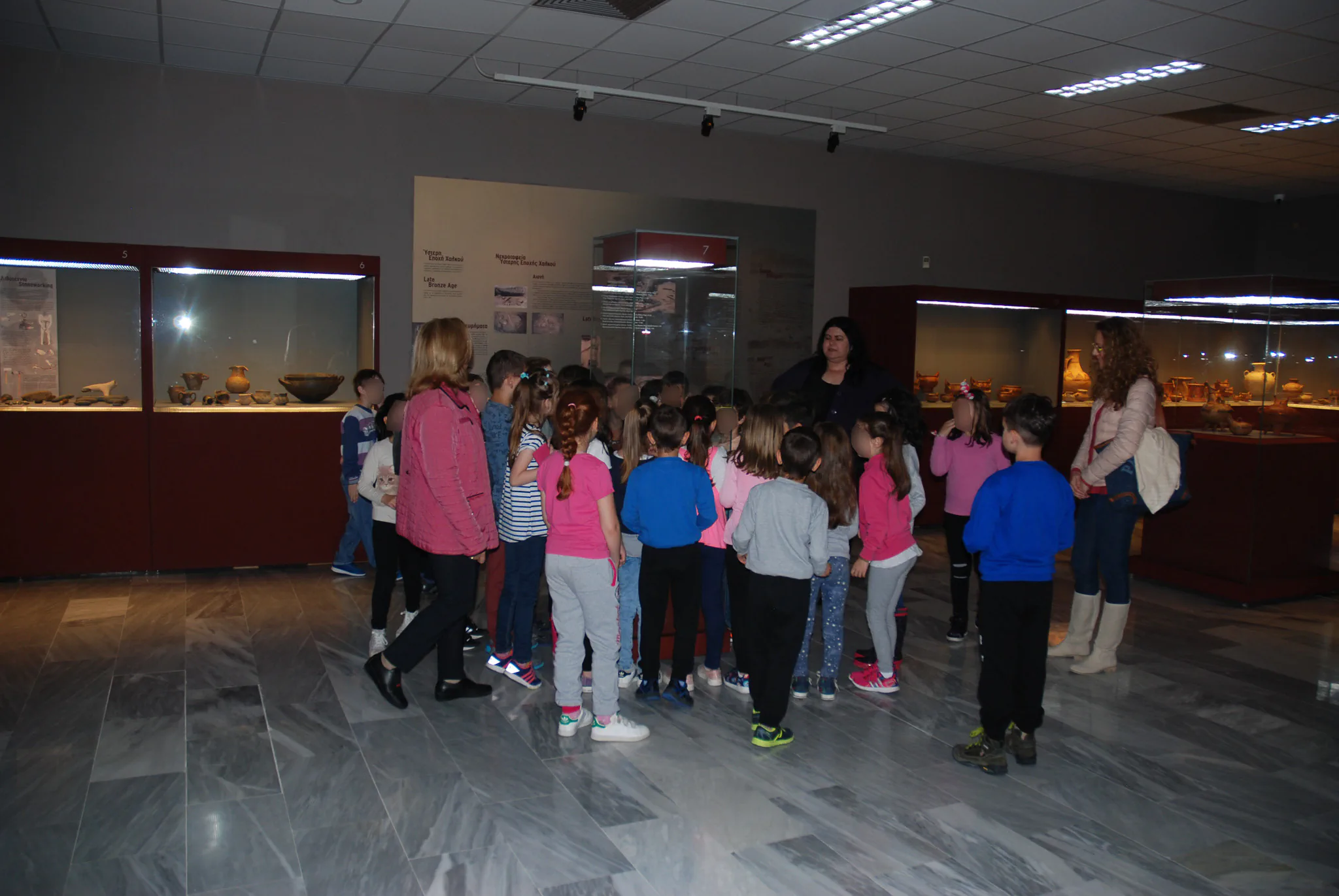
The response from schools throughout these years has been overwhelmingly positive and encouraging, ensuring the continuation of these programs, which now number in the hundreds. On average, approximately 3,000 students participate annually, coming not only from the local area but from across Greece. The programs are mainly held from March to June.
The educational programs aim to engage primary and secondary school students with Greece’s cultural heritage in an experiential way, exploring the lifestyle, technology, and ideology of the ancient inhabitants of the region. Chronologically, these programs cover the entirety of prehistoric and historical periods, beginning with the Neolithic era, around 6500 BCE.
Students first tour the museum galleries, where they have the opportunity to explore findings from the ancient city of Aiani, the capital of the Kingdom of Elimeia. Following the tour, they participate in educational programs focused on selected thematic units.