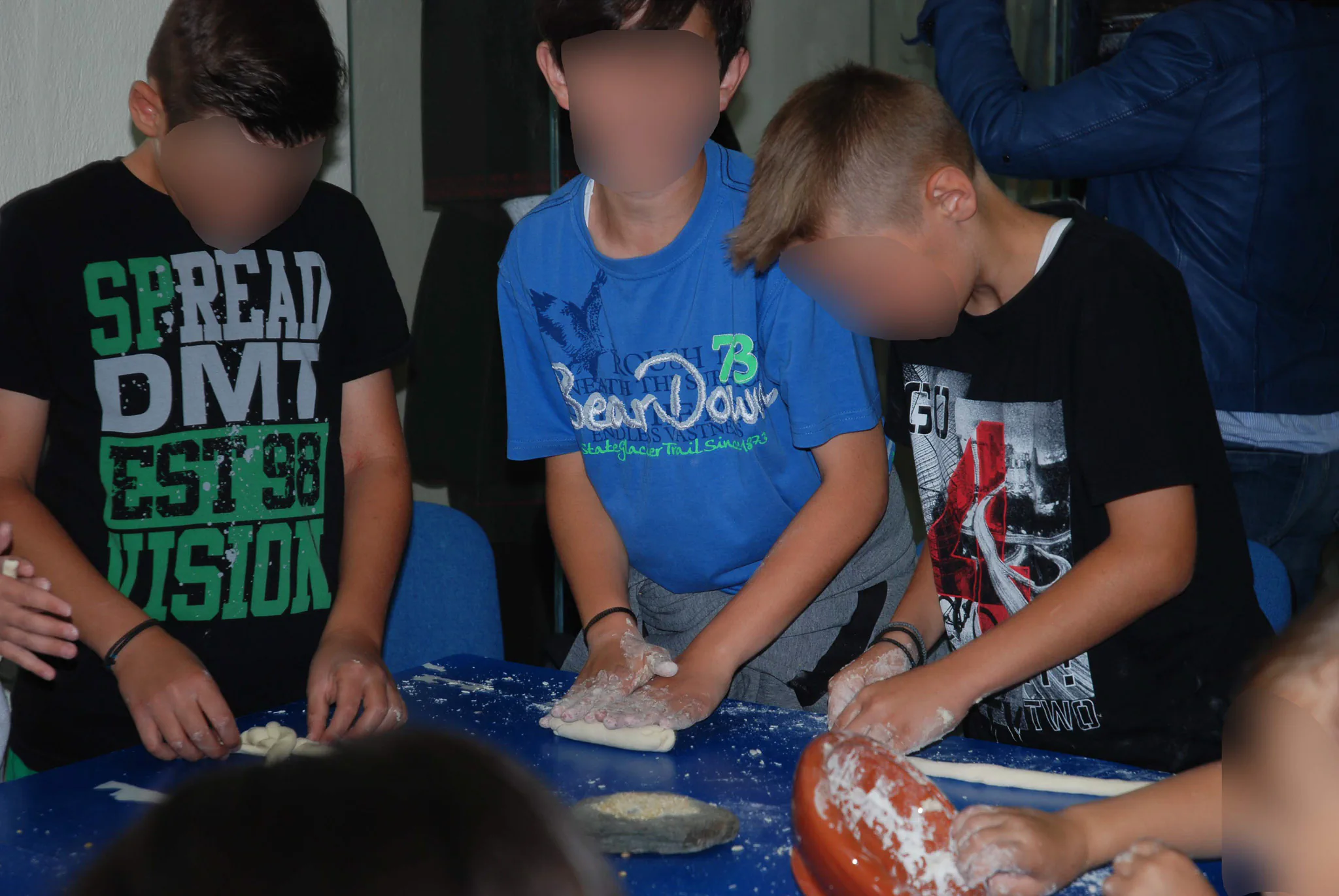
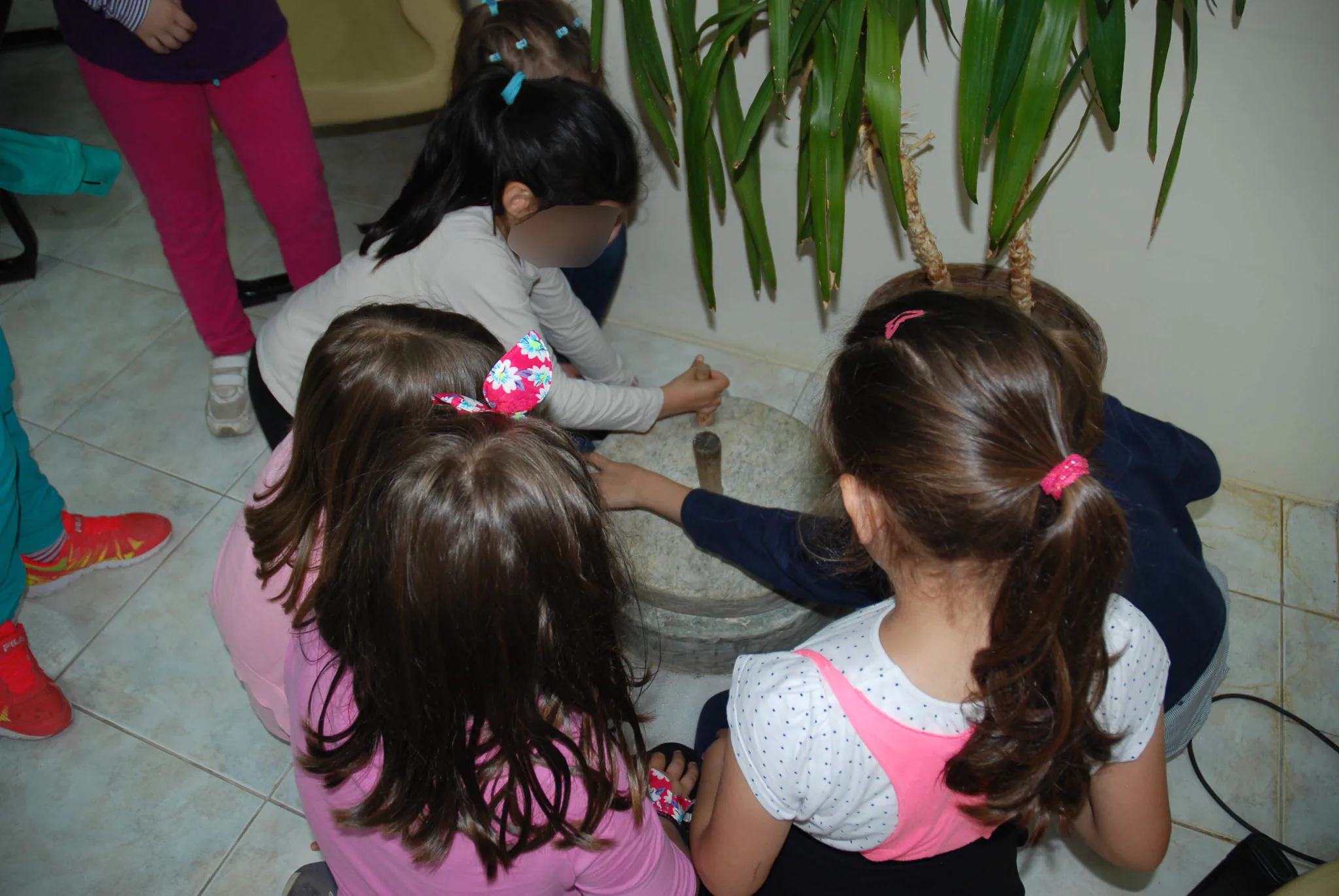
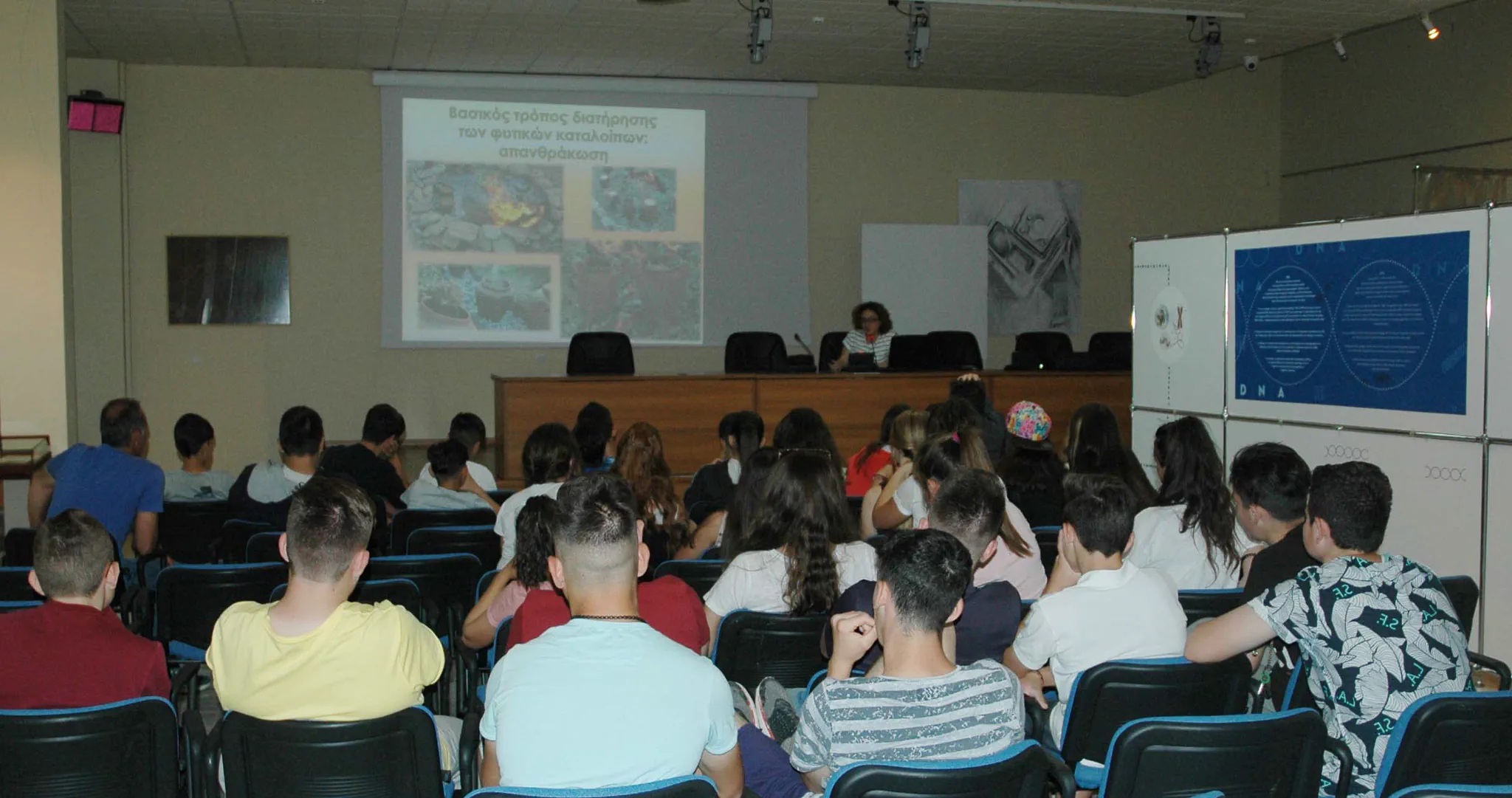
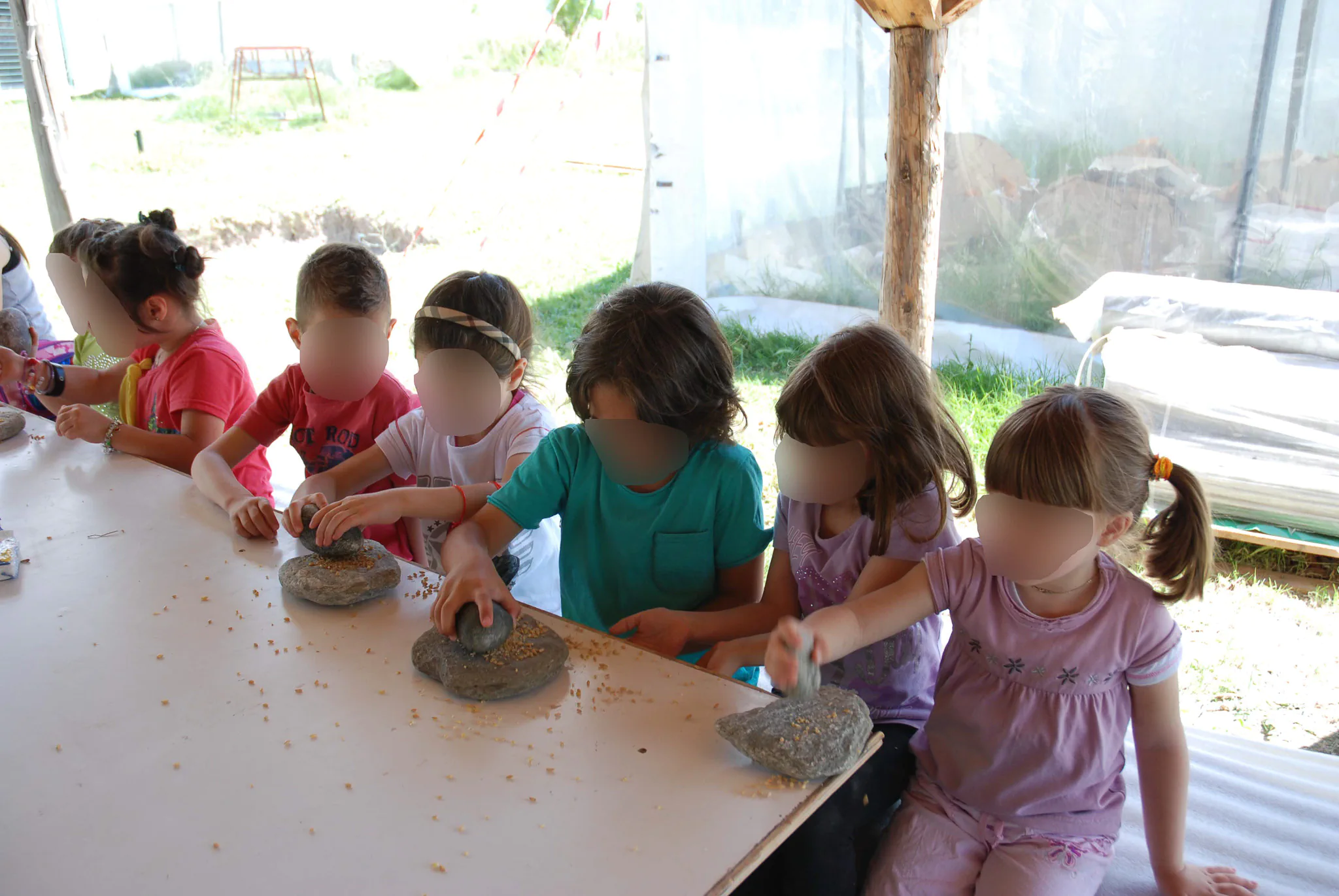
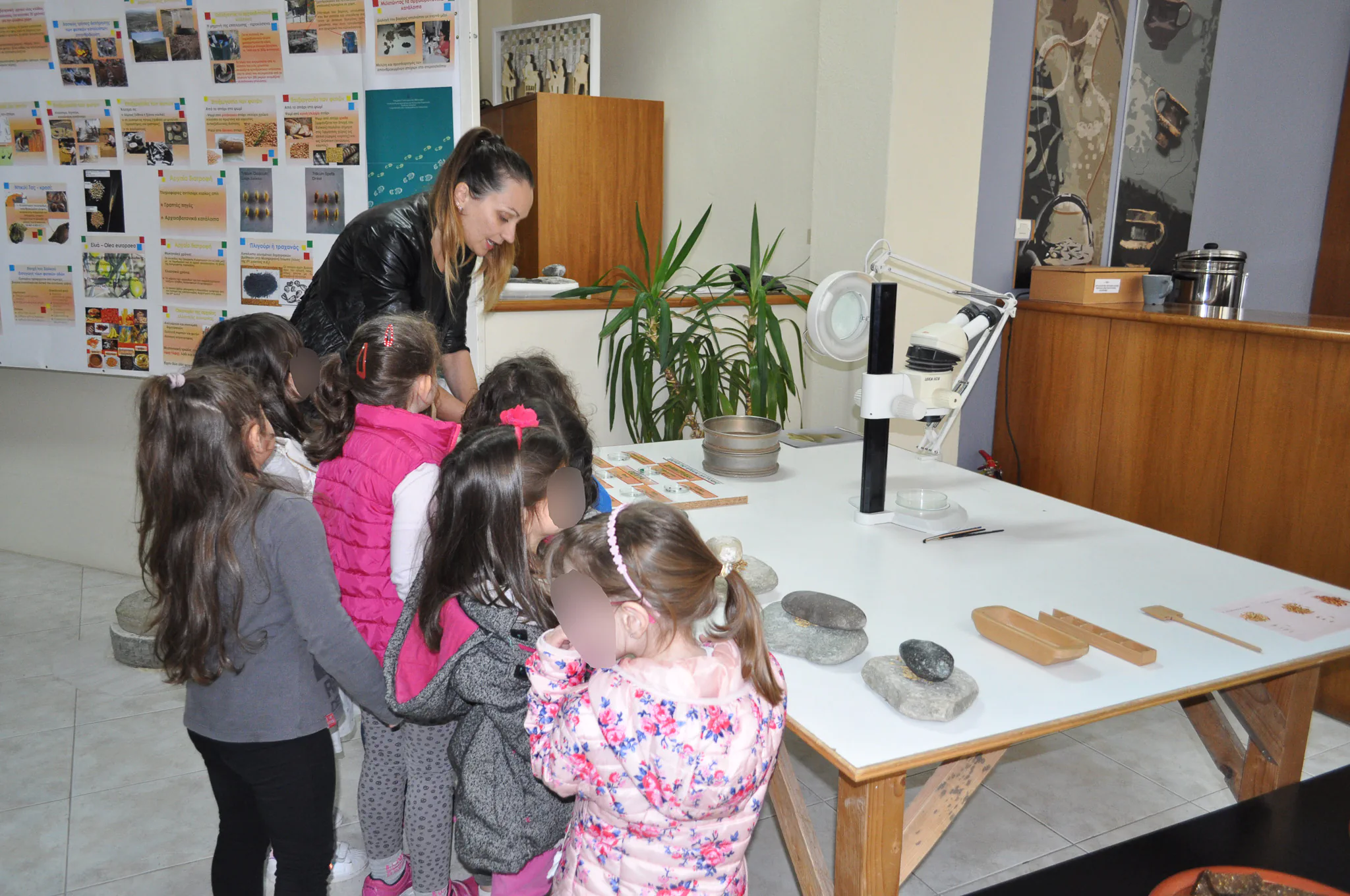
What did ancient people eat? How did they transform nature’s offerings into meals? What were the social, economic, and symbolic dimensions of food? This program explores these questions, helping participants understand the basics of ancient human nutrition, from the cultivation of cereals and legumes to animal husbandry. Preschoolers and early primary school students experience hands-on grinding of cereals using stone tools to produce flour, an essential ingredient for bread. They also learn about ancient cooking and dining utensils, tools, and hearths. Older students engage in more advanced activities, including exploring archaeobotanical evidence and viewing seeds from Neolithic settlements in Kozani through stereoscopes, providing a scientific perspective on early agriculture.
Useful Information
Target Audience
Preschoolers, Primary School Students (Grades 1–3), Middle School Students (Grades 7–9)
Participants
Up to 30 students
Duration
120 minutes (including a short break)
Schedule
Monday to Friday
Location(s)
Archaeological Museum of Aiani: Permanent Exhibition Hall and Educational Program Room
Pedagogical Tools to Support the Program
Activity Sheets
Hands-On Workshops
Storytelling
Museum Kits
Audiovisual Materials
Discussion and Inquiry-Based Methods
Object Study and Observation Tools (Stereoscope)