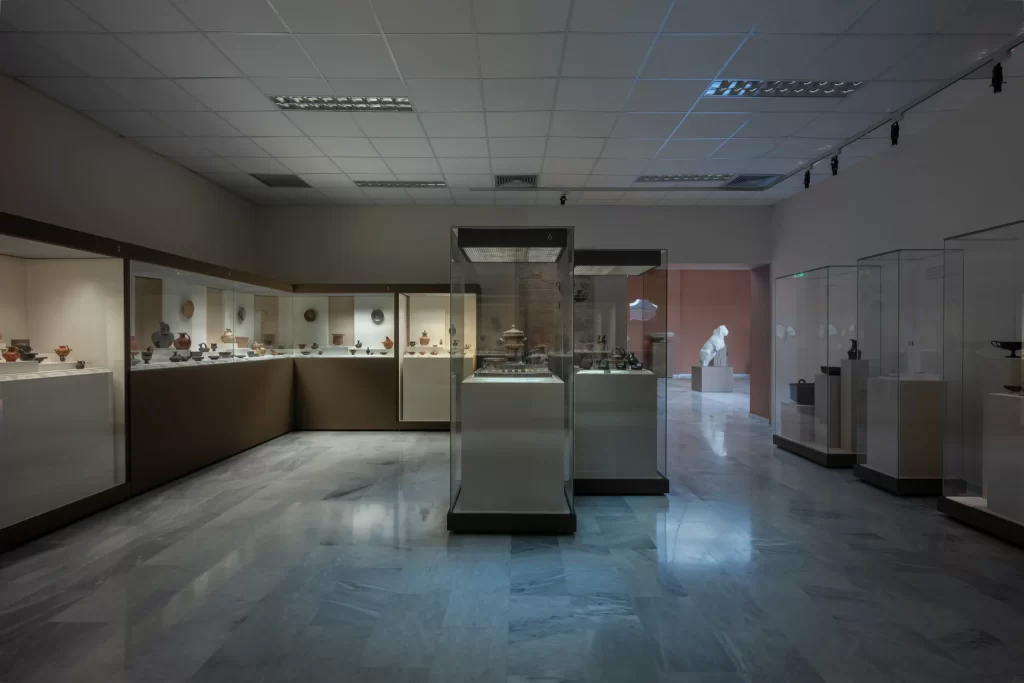
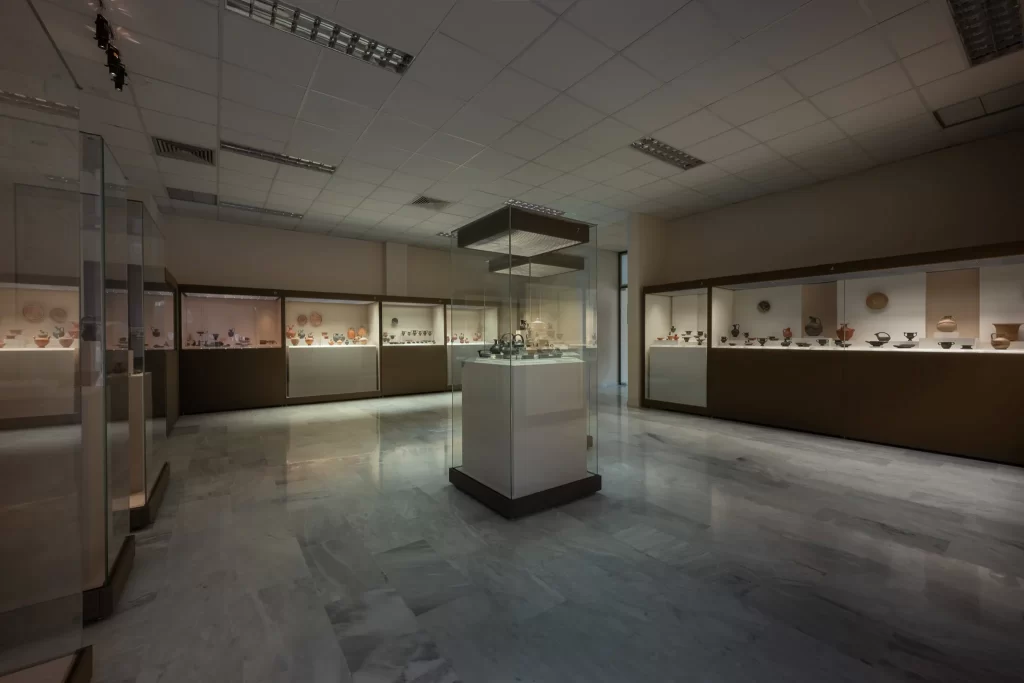
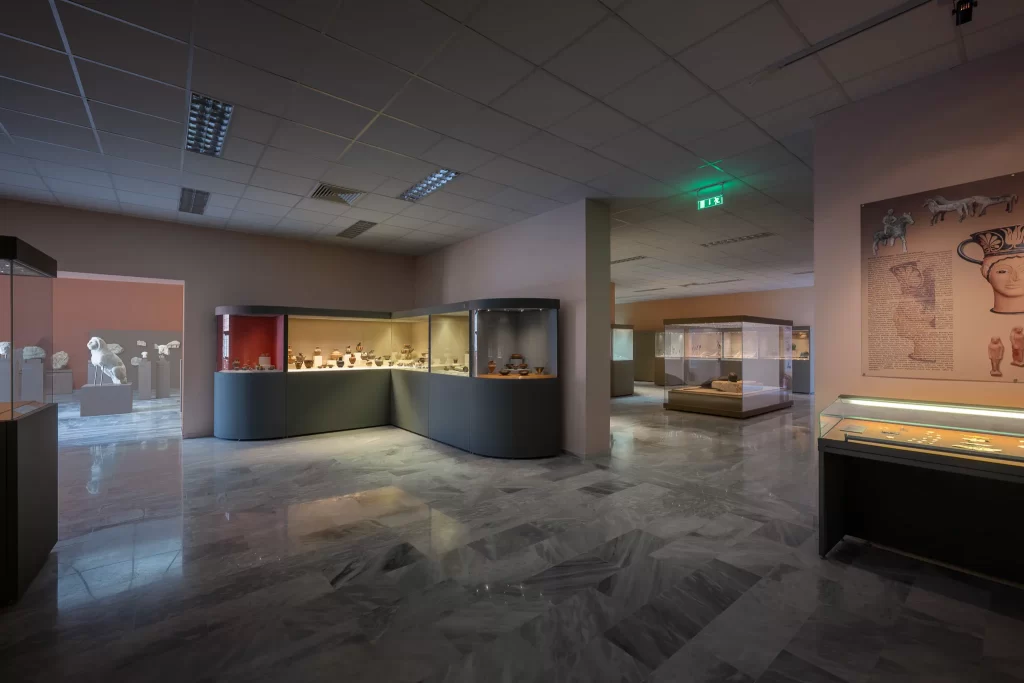
The wealth of finds that had for years been coming to light in the Aiani area attested to the existence in this locality of an important, very ancient and long-lived civilisation. This fact, along with the need to preserve and protect the antiquities, led to the establishment of the Archaeological Collection of Aiani in 1951-52 by the teacher, headmaster of Aiani Primary School and – until 1982 – provisional Curator of Antiquities, Constantine Siampanopoulos. The Collection, which was created with objects collected by students or handed in by local residents, was initially housed in the Primary School, where it was inaugurated in 1960. Later, it was transferred to the ground floor of the then new Community Office, where it was redisplayed by the Ephorate of Antiquities of the 14th Regional Unit and inaugurated in 1969.
The systematic archaeological research that was commenced in 1983 by the 17th Ephorate of Prehistoric and Classical Antiquities of Edessa and the archaeologist Dr. Georgia Karamitrou-Mentessidi, Honorary Curator of Antiquities at the Ministry of Culture, immediately began to yield important finds.
The excavations were to radically alter the history of the local area, adding a new dimension to the long history of Macedonia and creating a need for the construction of a large and modern archaeological museum.
In 1990 the Municipal Community of Aiani granted use of the first floor of its Cultural Centre to house the finds from the excavations. After the severe earthquake of 1995, the exhibits in the old Archaeological Collection, together with the finds from the excavations, were moved to the Archaeological Museum, which was still under construction.