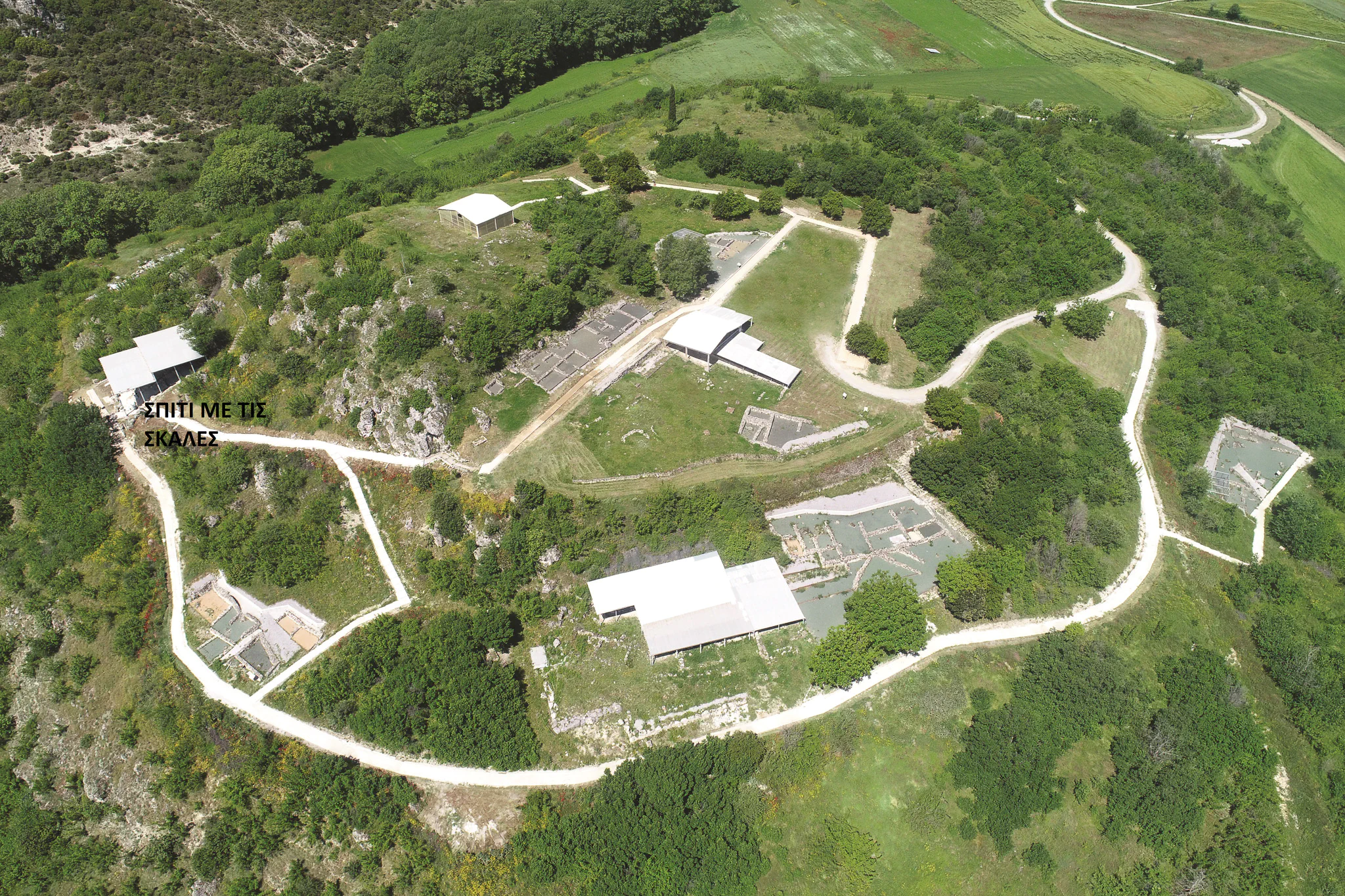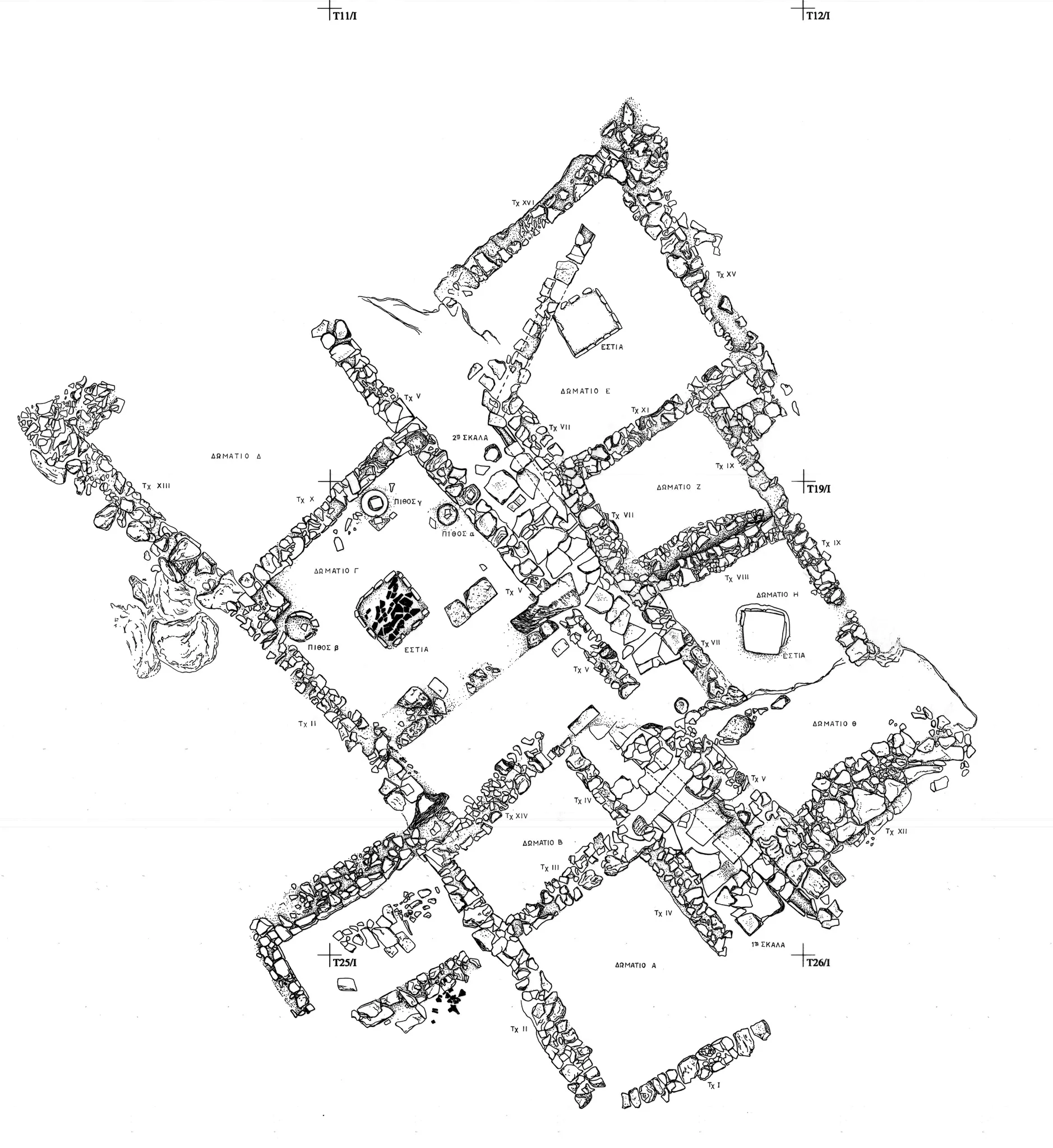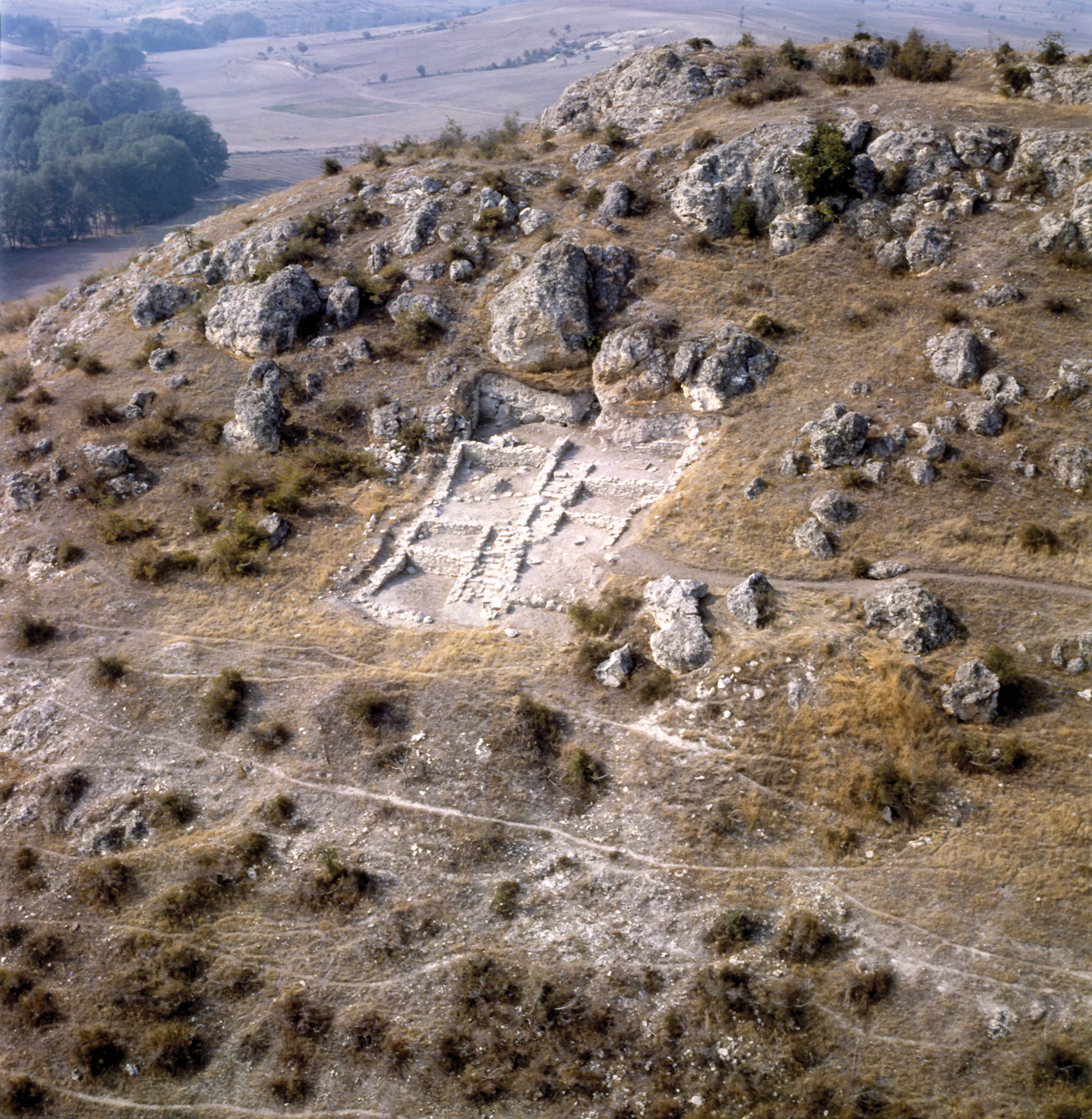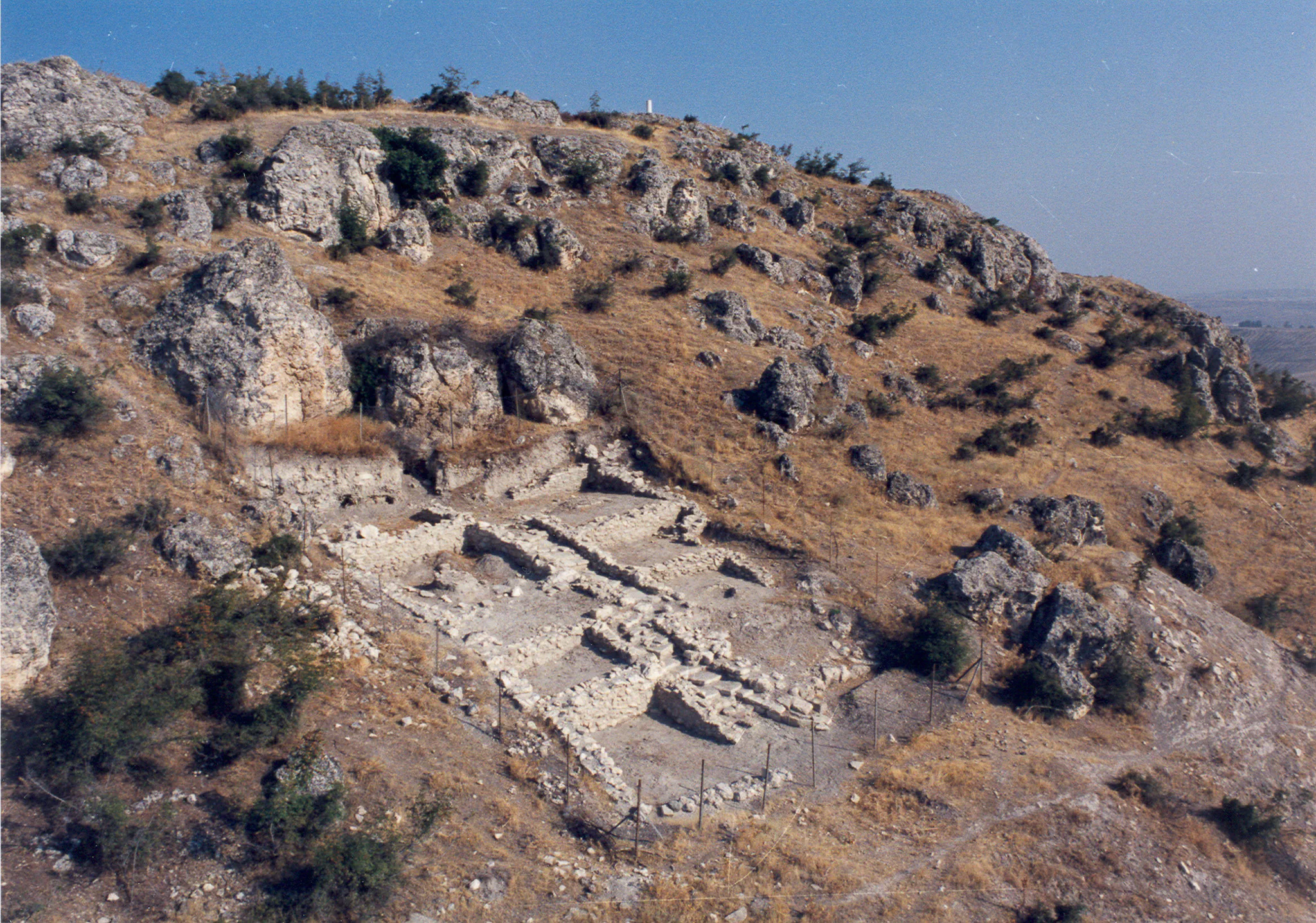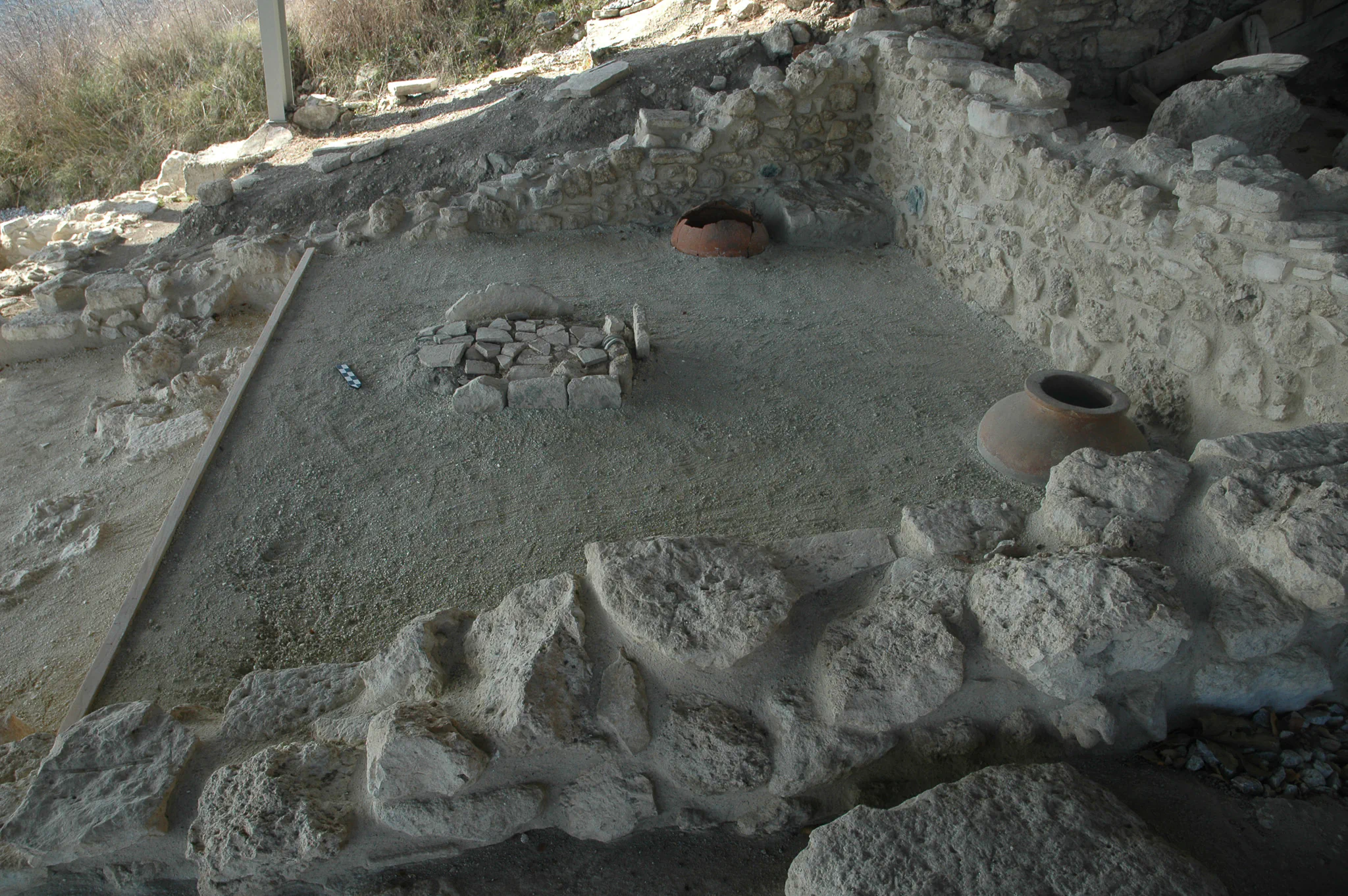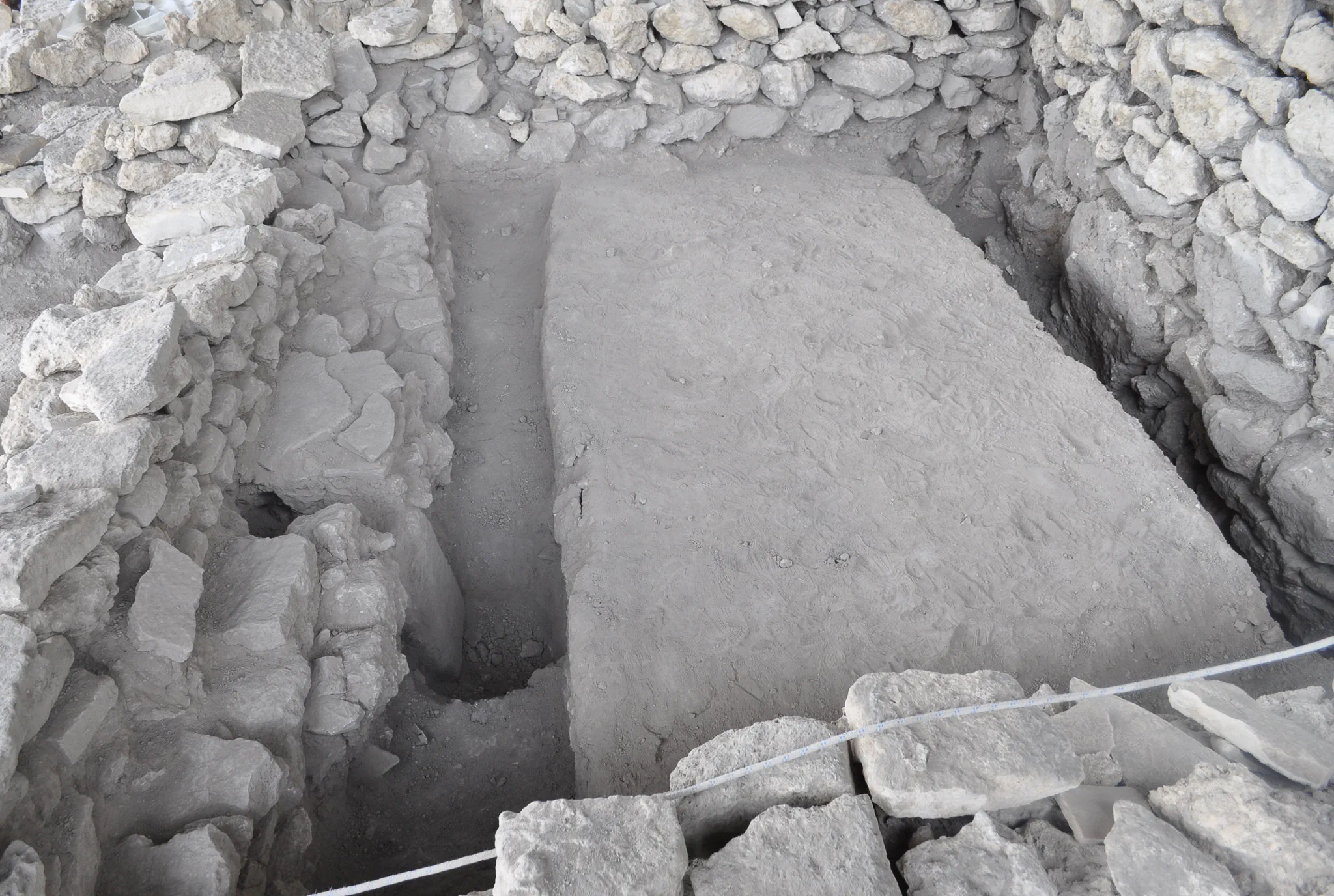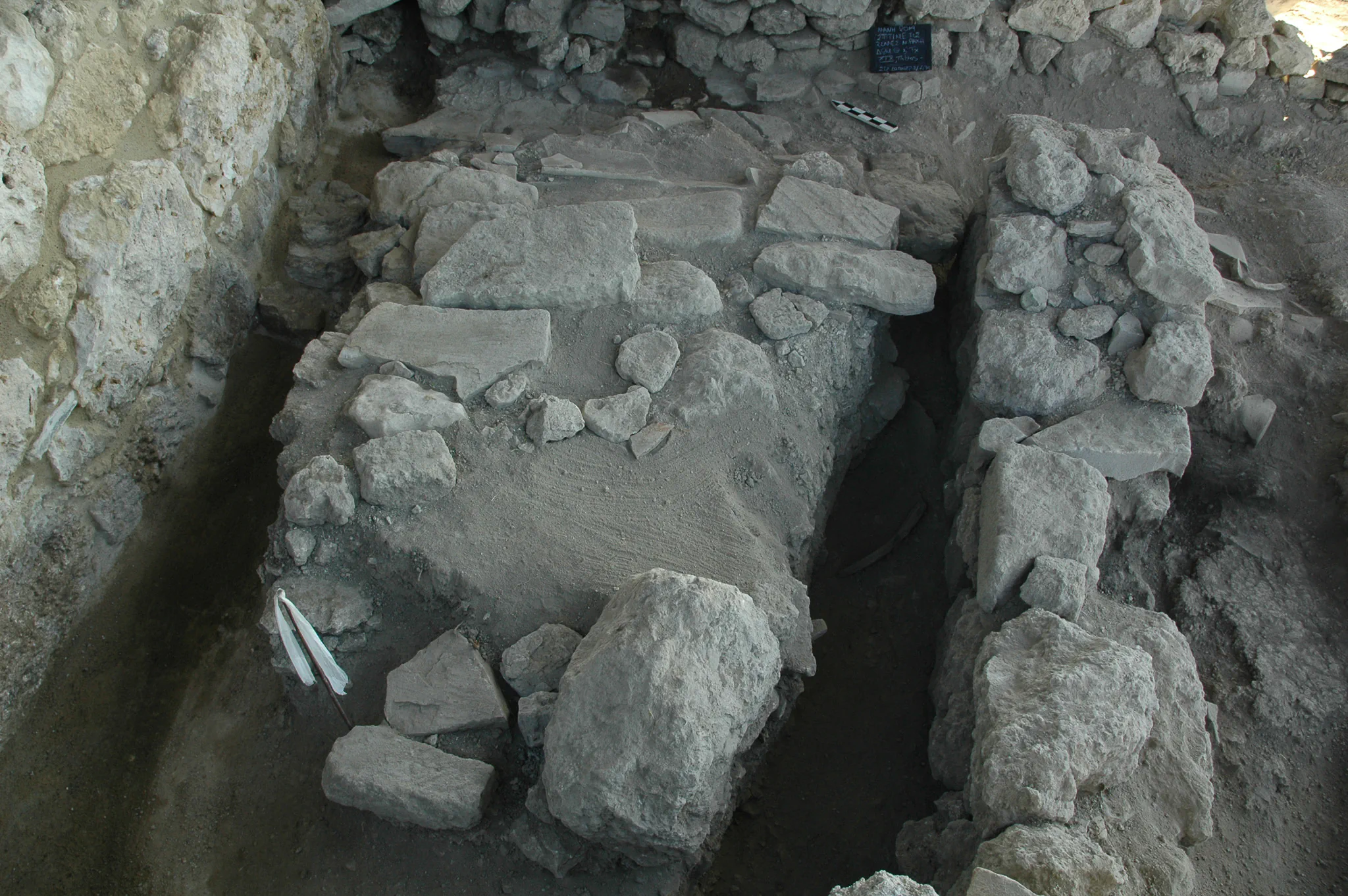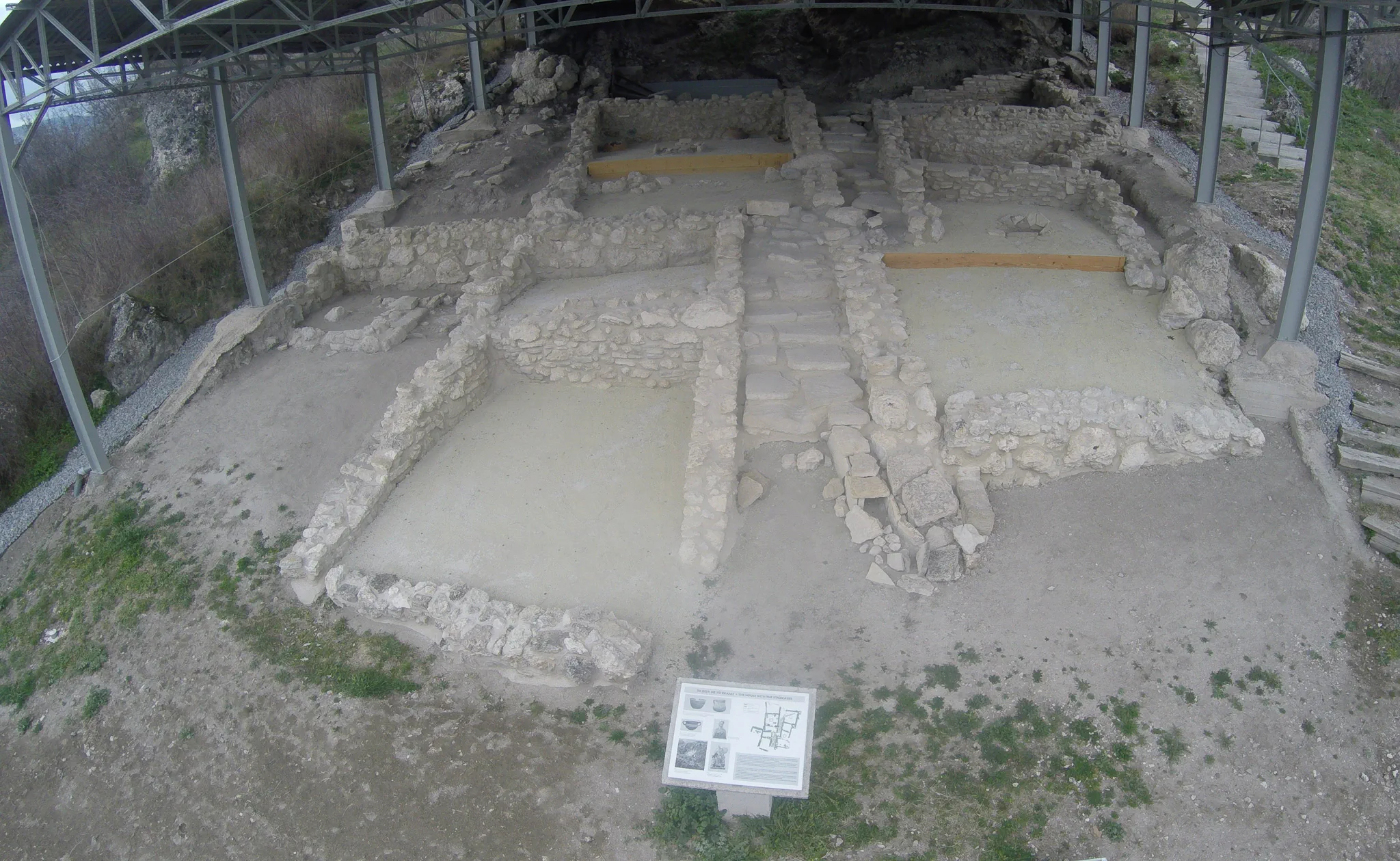
A visit to the House with the Staircases is of greater interest. This is the name given to an excavation on a plateau to the south, which can be reached either by a footpath from the Building with the Stoa or a lower footpath from the Excavation of the Ashlar Masonry. Here, beneath the stones of the stepped passageways, there is a stone drainage conduit, which leads from the highest room on the north side, runs beneath the steps and ends lower down at the edge of the plateau. The first staircase leads to a room in which three pithoi were discovered in situ, together with a rectangular hearth framed by small stones and containing numerous layers of ash. On one side of the hearth, immediately next to it, an interesting polygonal stone base was uncovered, within which lay a clay skyphos and, in the intervening space, six bronze coins and the silver effigy of a snake, probably a dedication to Zeus Ctesius, protector of household property, whose symbol was a snake.
This room also contained figurines of Cybele and other female figures on top of some stones in a corner, amphoras and smaller clay vases, an iron scraper for a kneading trough, a stone handmill and some bronze coins. The room is believed to have served as a storeroom or a utility room where bread was made and meals were cooked, and evidently included a household shrine.
The dwellings in this area continue beneath the enormous rocks that have broken away, possibly as the result of an earthquake: this event may have caused the destruction and sudden abandonment of the site, which meant that many important finds were left in situ.
Dr Georgia Karamitrou-Mentesidi
During the restoration of the site, sections of exterior walls were uncovered, and the boundaries, foundation methods, and construction phases of the buildings were clarified. The new findings are summarized as follows: Particularly reinforced foundations were identified in the horizontal walls of the middle rooms B and Z, which bear the greatest pressure due to the steep slope of the terrain. In room E, the northern wall was found to extend northeastward beyond the excavated area, along with a stone conduit constructed at the junction of the two walls. In rooms B and C, as well as in the staircase, evidence suggests the presence of two construction phases with differing floor plans.To the southwest of room B, another room was uncovered, which initially seems to have formed a single space with room B. Beneath its floor, fill and a pithos from the Early Iron Age were discovered, pushing the habitation of the site back to this period.
Dr. Areti Chrondroyianni-Metoki