Section 06. Dwellings and activities of the residents
Room C displays finds relating to public and private life, arranged in thematic units, while at the end of the room the model of the Royal Necropolis, together with some of the grave goods found there, serves as an introduction to the burial customs and practices of the Archaic and Classical Periods.
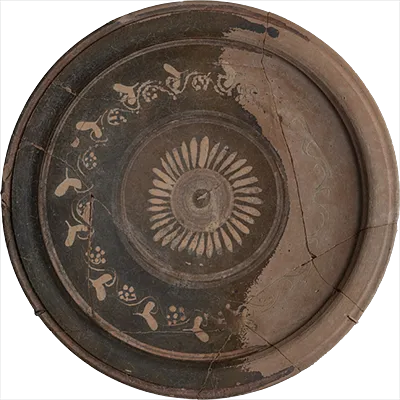
To the right of the entrance, the main feature is the reconstruction of the interior of Room C in the section of the excavation dubbed ‘The House with the Staircases’, which dates from the Hellenistic Era. Its construction included the use of stone foundations and a superstructure of unbaked mud bricks. The walls were coated with plaster and decorated in a variety of different colours. The room was dominated by the central hearth, while various everyday vessels and three storage jars served for storing, preparing and serving food. A ledge in the corner, with figurines of the goddess Kybele, served as a domestic shrine.
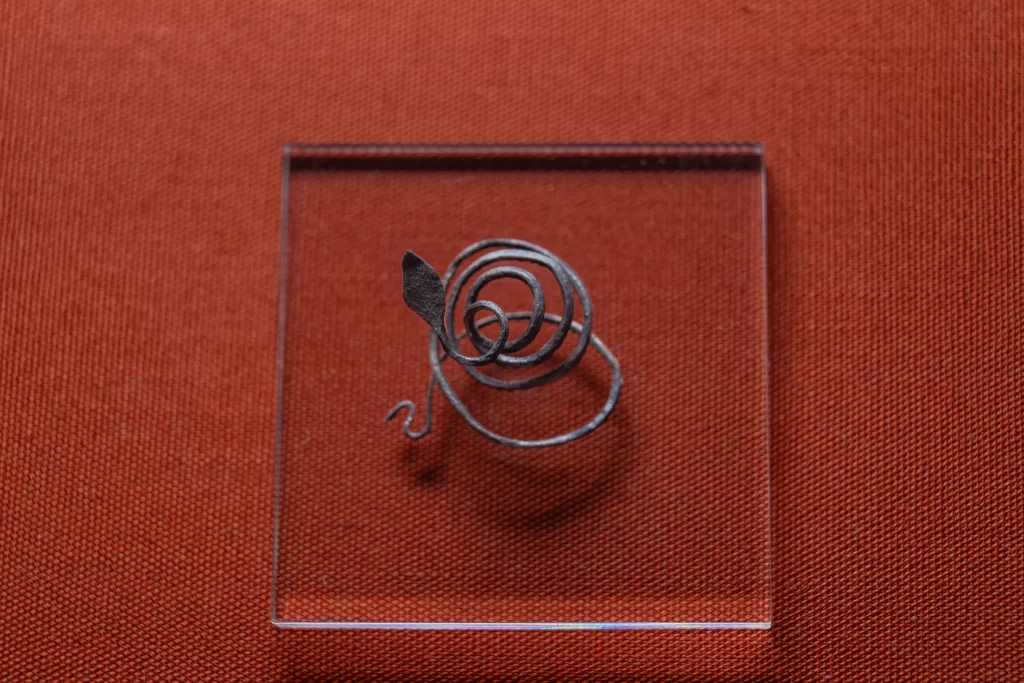
On the opposite side of the room, Cases 2-3 display an array of keys, door bosses, nails and knockers from the wooden doors of houses, as well as a variety of iron implements, such as knives, pruners, hooks and a saw.
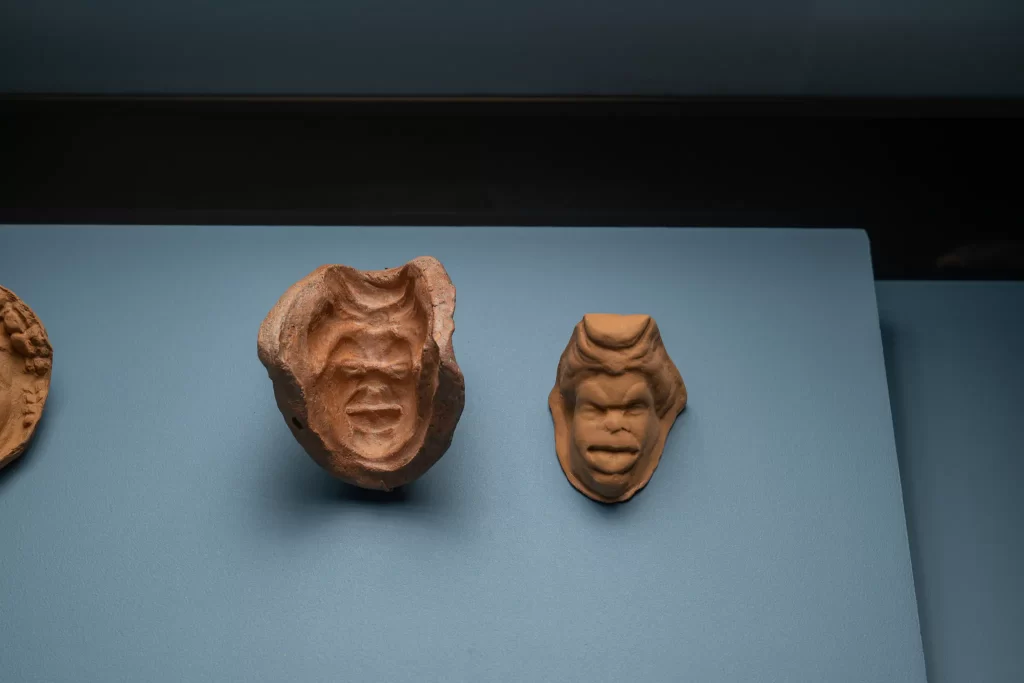
Case 4 contains a series of clay moulds, seals and stamps that attest to the existence of workshops at Aiani. They include the mould for a lion, heads of Sileni, an Eros figure, and the stamped handle of an amphora.