
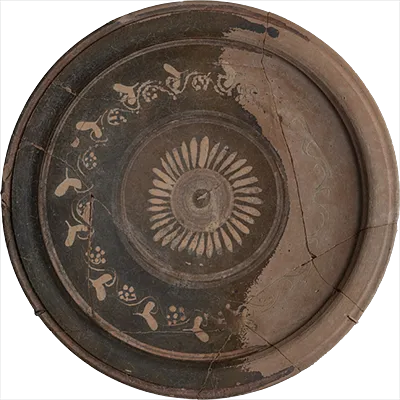


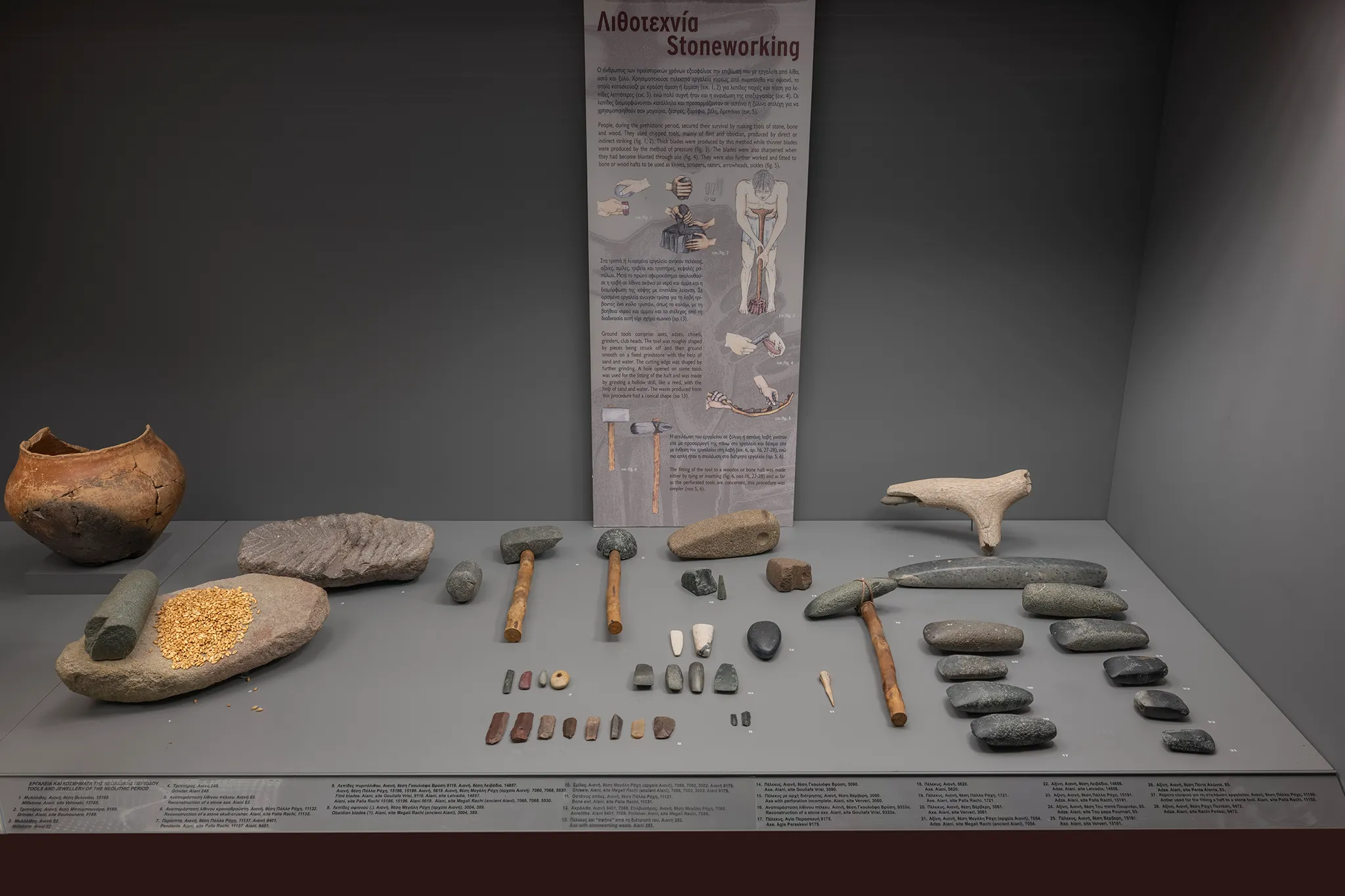
These exhibits represent daily life in the Aiani region during the Neolithic period and Early Bronze Age. Here, you’ll find clay vessels with striking painted motifs, stone tools, jewelry, anthropomorphic figurines, and more. They reveal how the inhabitants of the Aiani region lived, worked, and expressed their beliefs.
Prehistoric settlement in Aiani began as early as the mid-6th millennium BC, with the earliest known site at Ververi, a valley just west of today’s community.
By the mid-5th millennium BC, the hill of Megali Rachi—where ancient Aiani would later grow—was also inhabited. In the site of Leivadia, which became the royal necropolis, a cemetery from the late Bronze Age (second half of the 2nd millennium BC) was also found.
Archaeologists have identified numerous settlements from this period, suggesting a growth in population and community spread.
During the Early and Middle Bronze Age—roughly the 3rd to early 2nd millennium BC—there was a general decline in the number of settlements, though some grew larger and more complex. Excavations at Megali Rachi and Polemistra revealed buildings with apsidal plans and stone foundations.