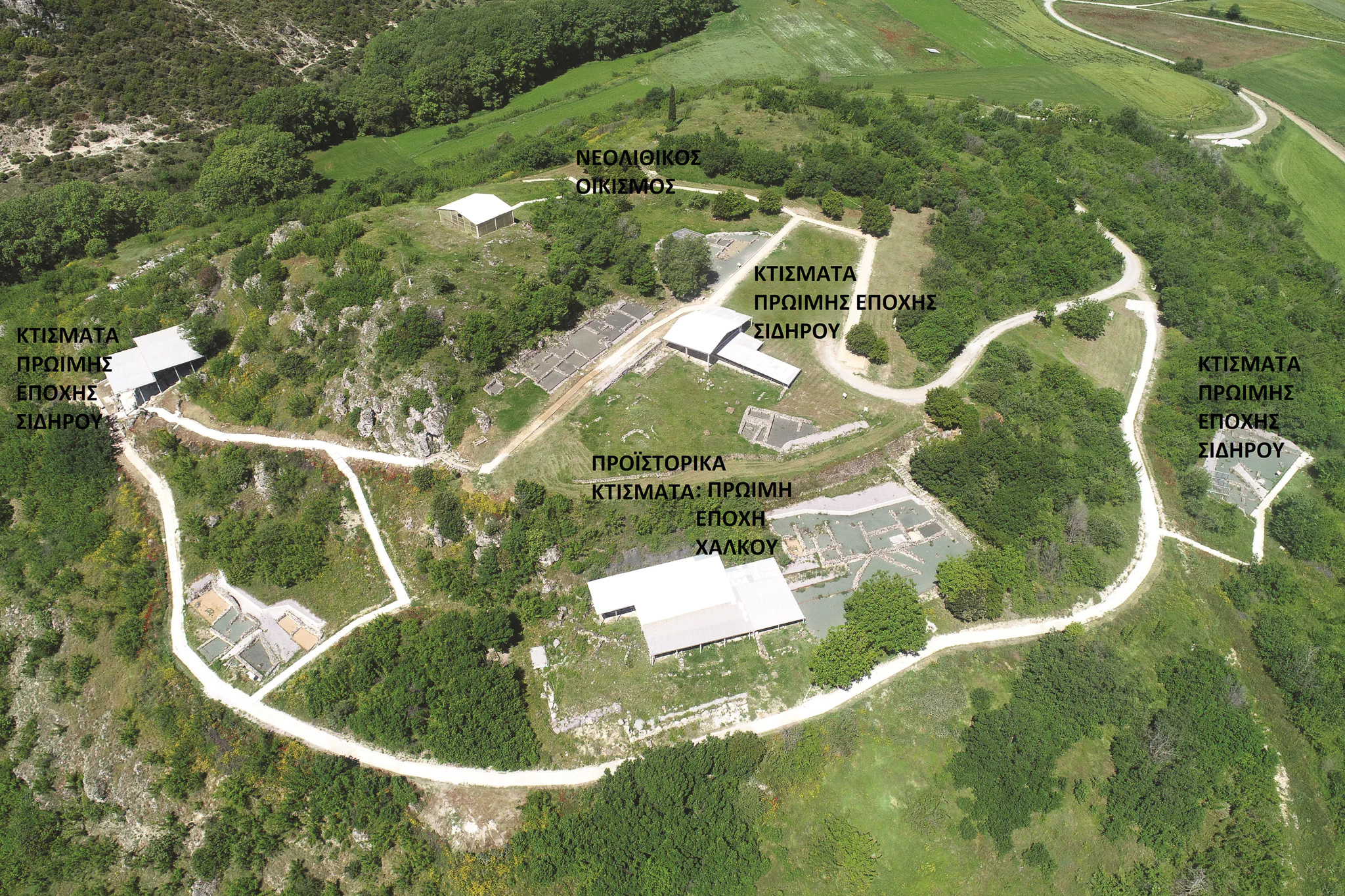
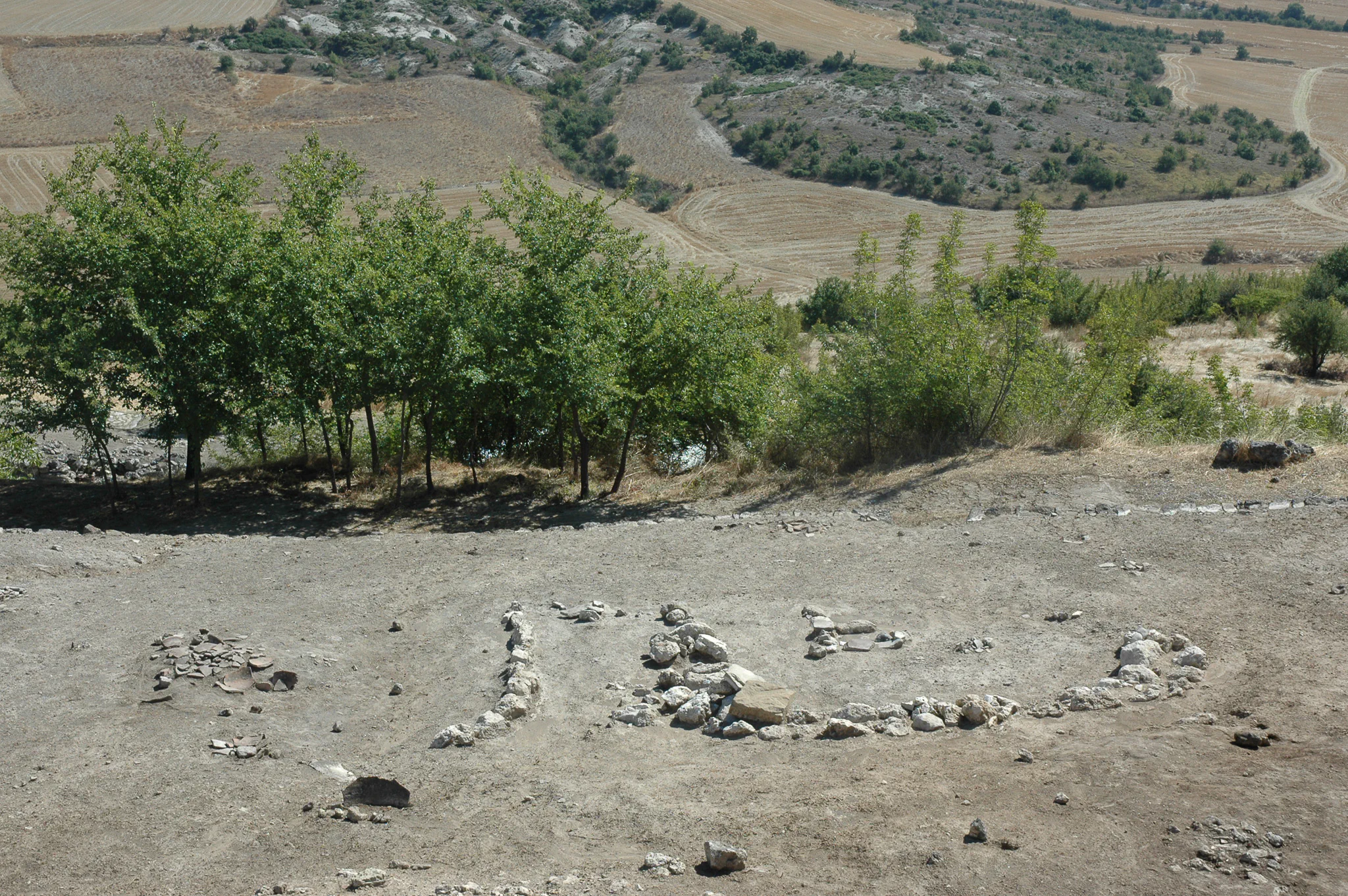
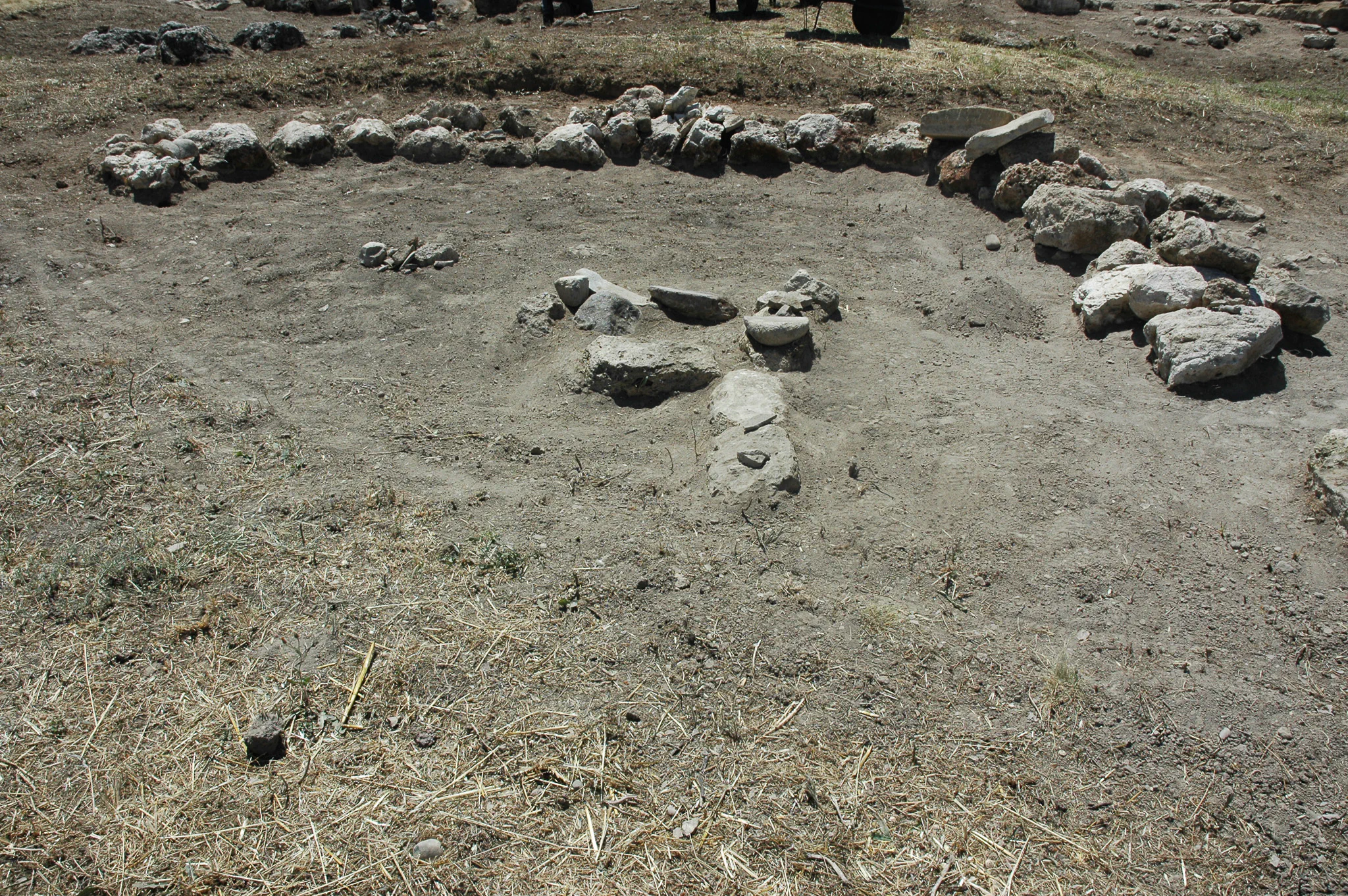
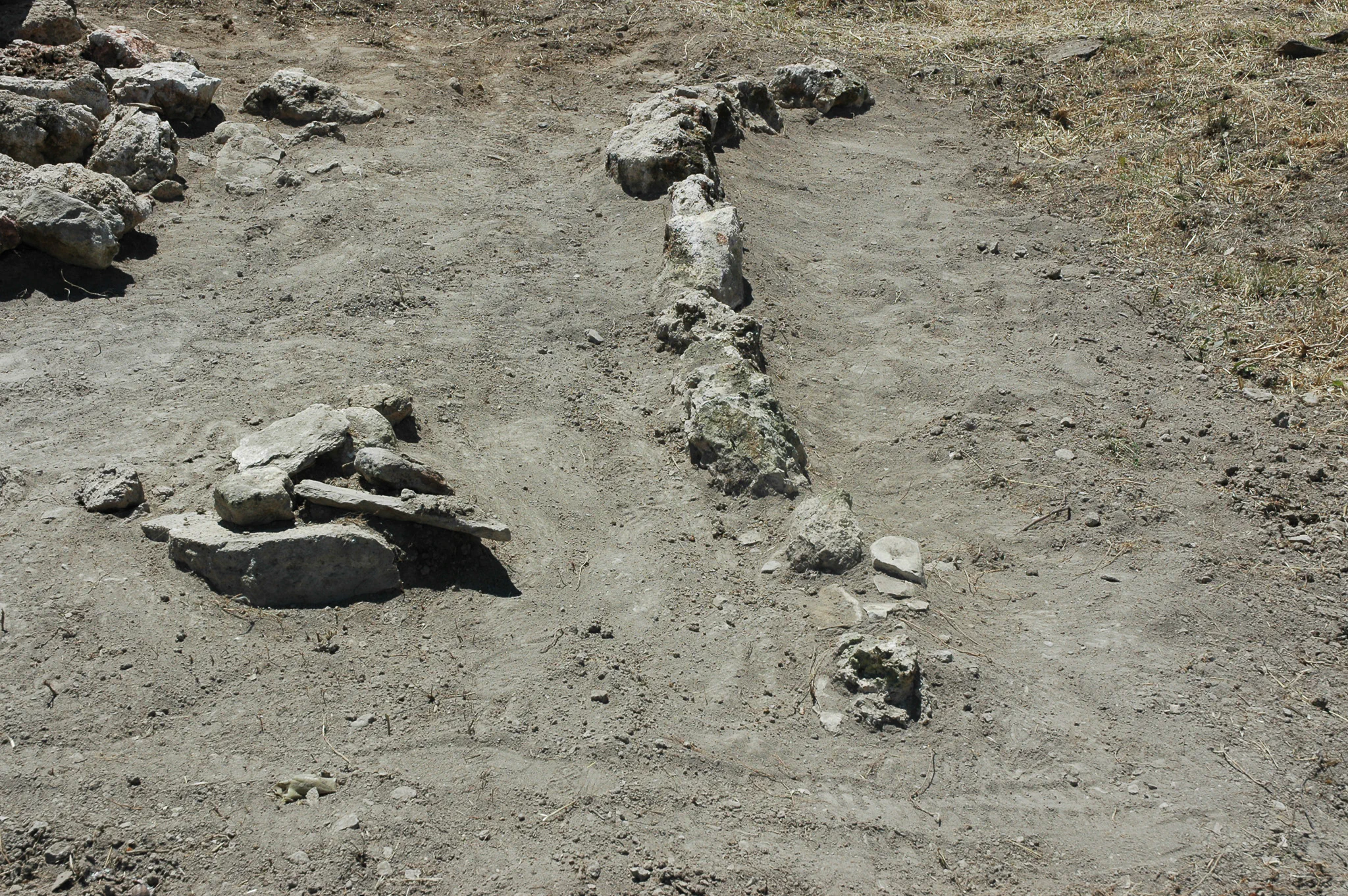
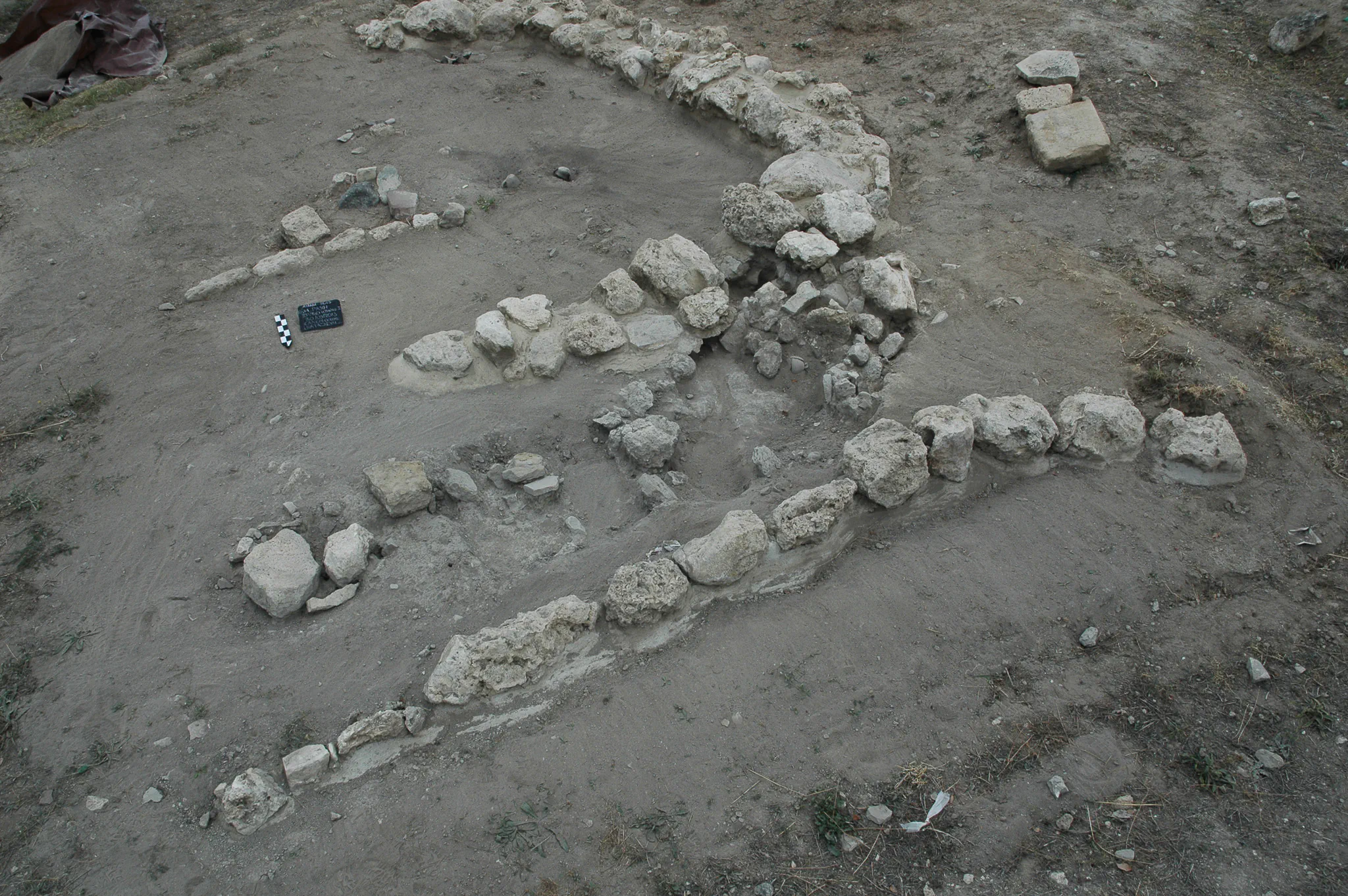
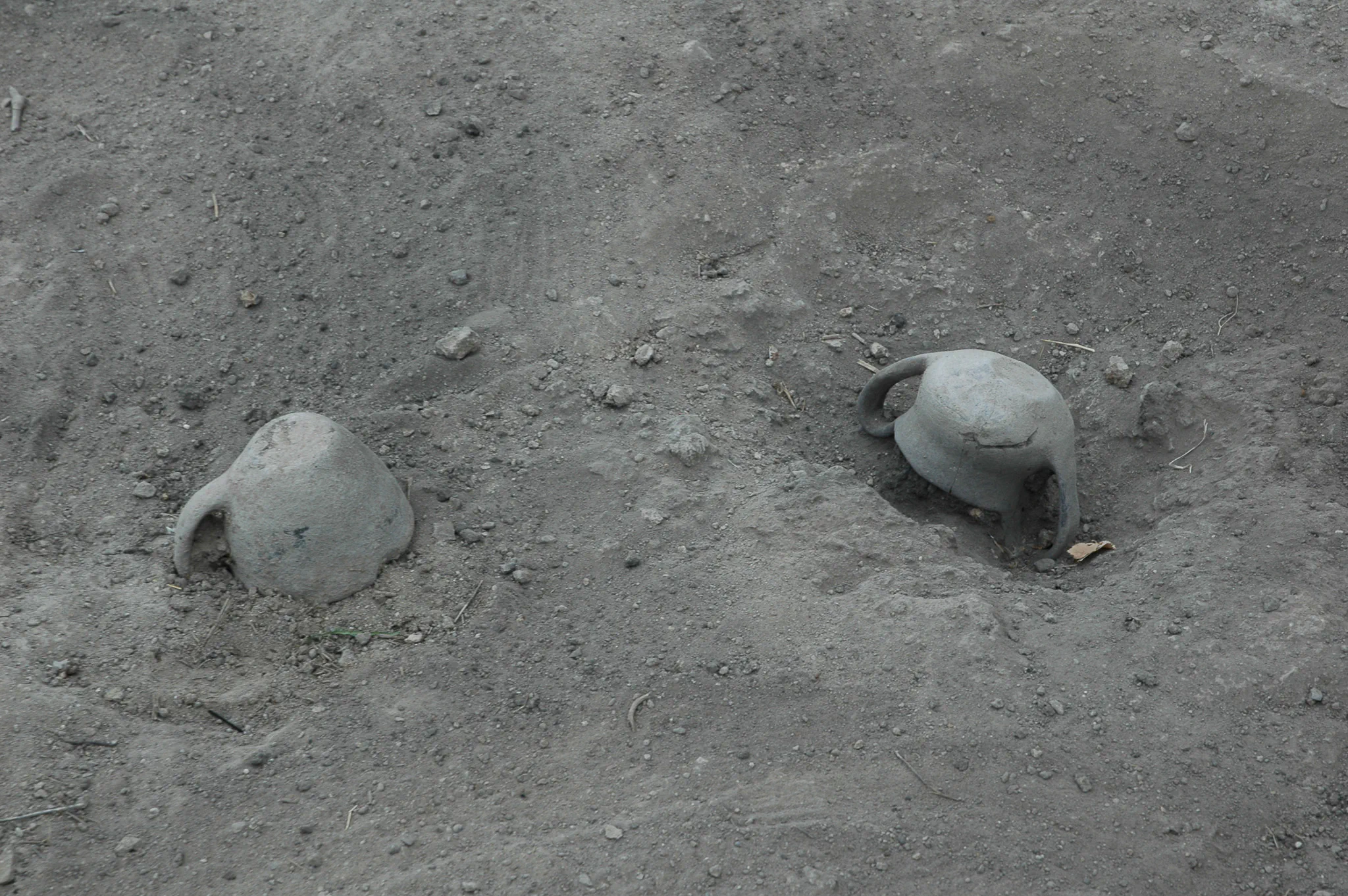
The hill of Megali Rachi in Aiani was first inhabited during the Late/Final Neolithic period (5th and 4th millennia BCE). The small-scale settlement from this period is located on the summit plateau. Excavations revealed residential remains, such as postholes, pits, and fill layers from structures built with wooden posts.
Life on the hill continued into the Early Bronze Age, during the 3rd millennium BCE, likely following a temporary hiatus. This period includes two ellipsoidal structures excavated in the southeastern part of the summit plateau. These structures preserve one to two rows of stones, and one of them features an interior hearth. The buildings were restored.
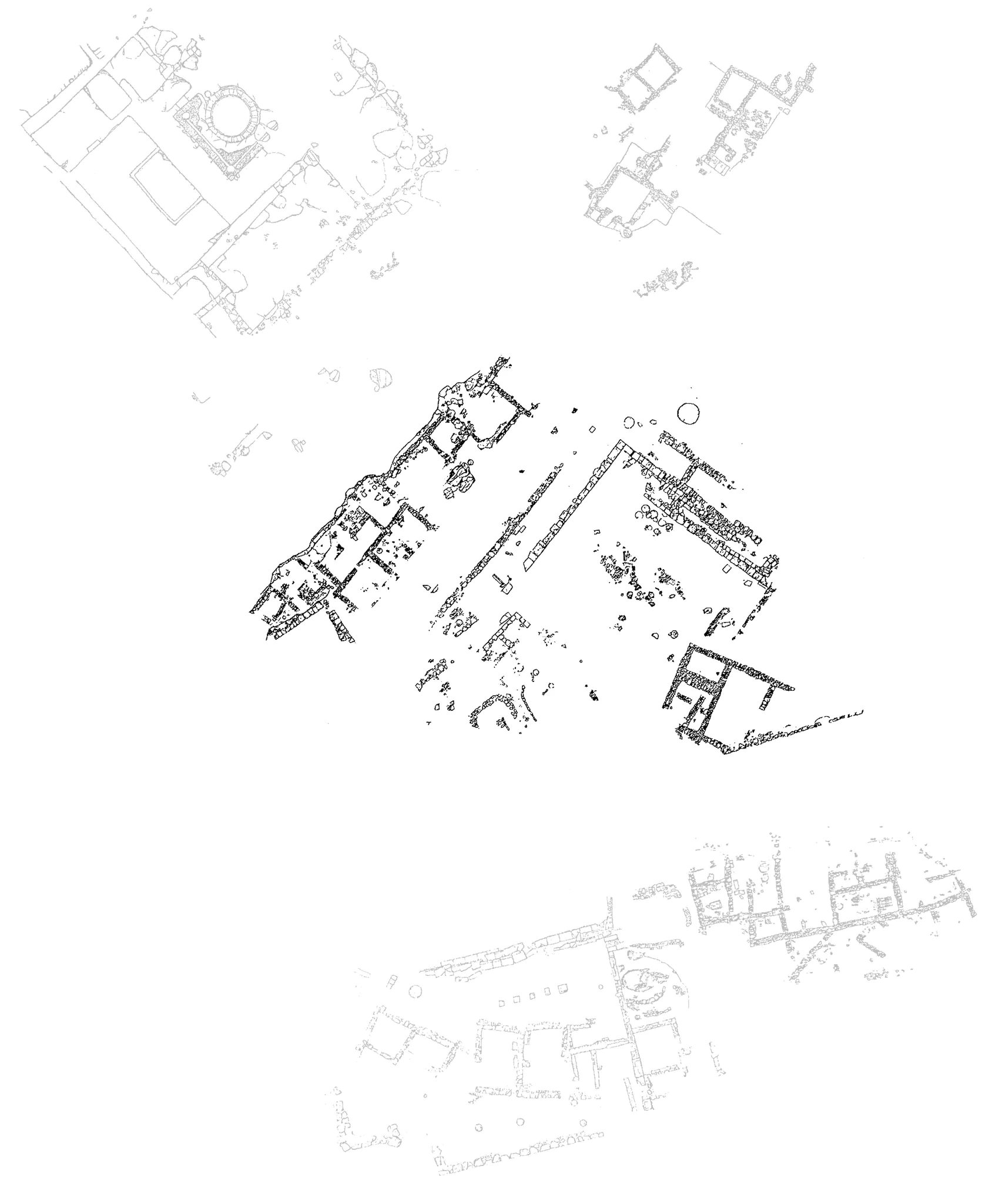
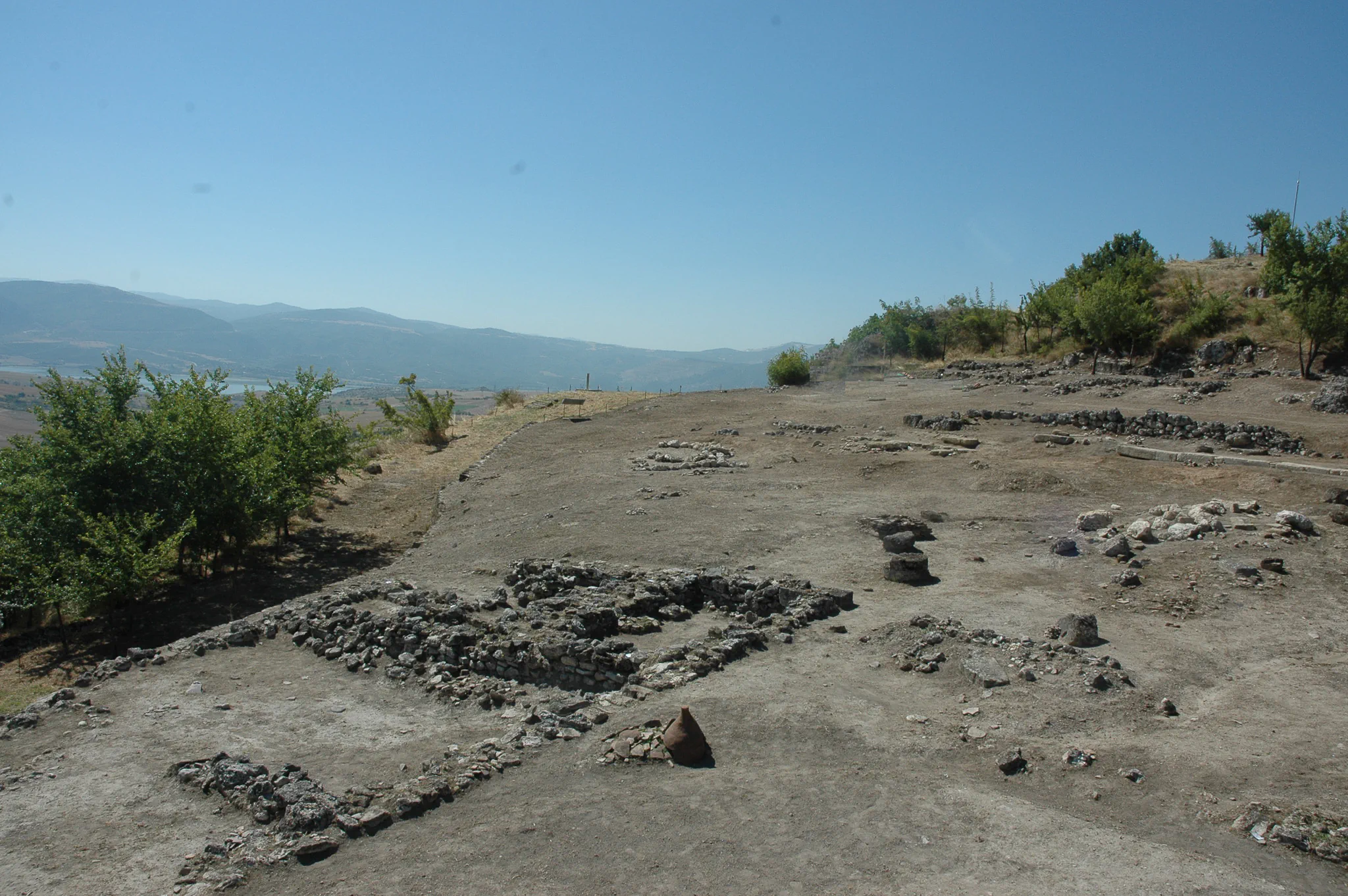
Habitation on the hill appears to have been interrupted for some time, resuming during the Early Iron Age (1100–700 BCE) and continuing until the end of the Hellenistic period, in the 1st century BCE, when the site was permanently abandoned. Remains from this era, primarily storage pits, were identified and excavated in various parts of the hill. During this time, the settlement covered a significant area and likely played a central role in the life of the region’s inhabitants, setting the stage for its illustrious historical development.