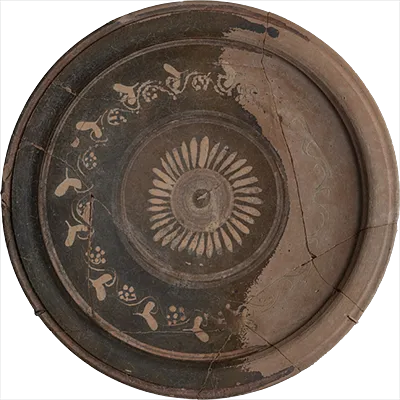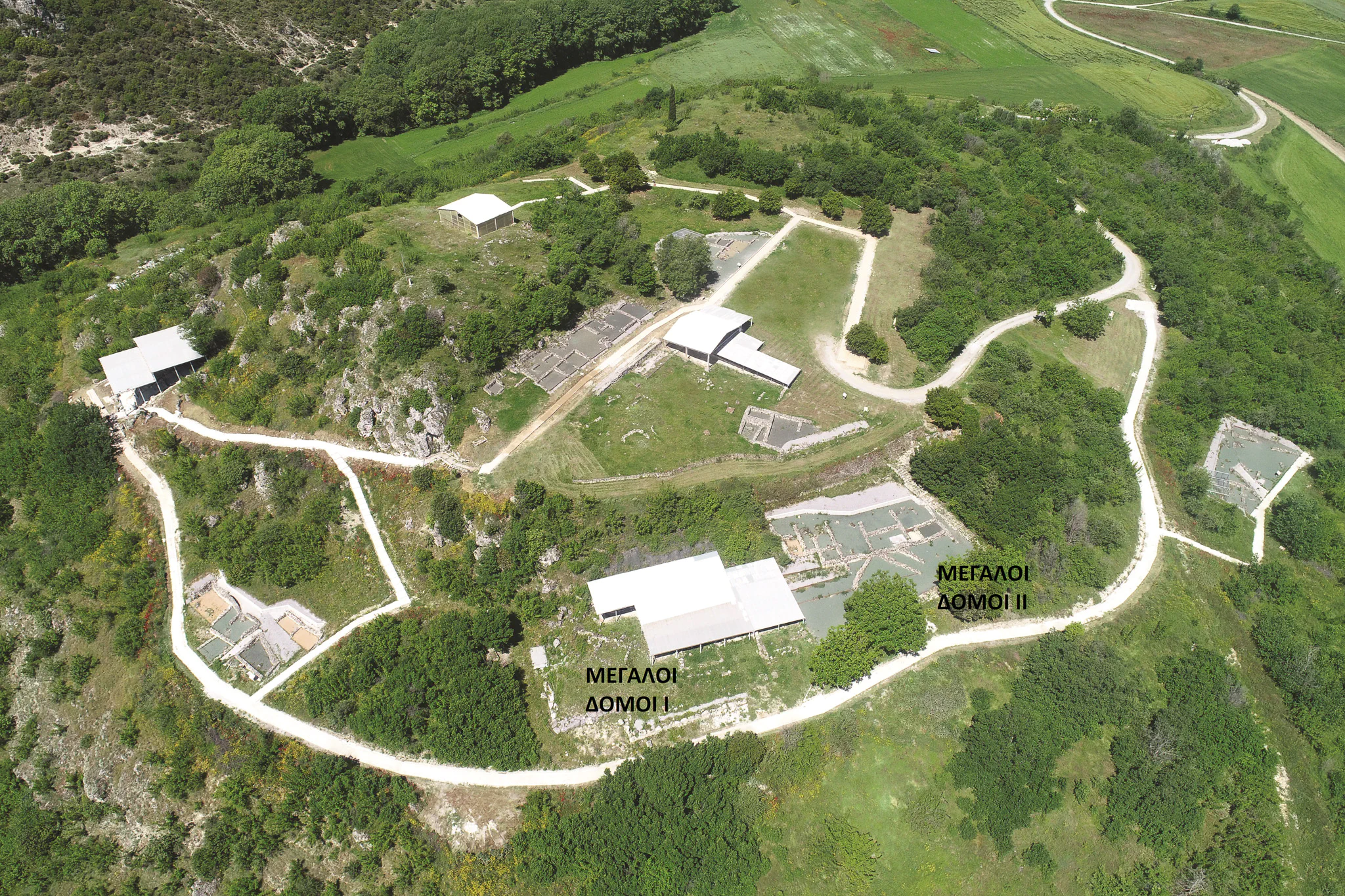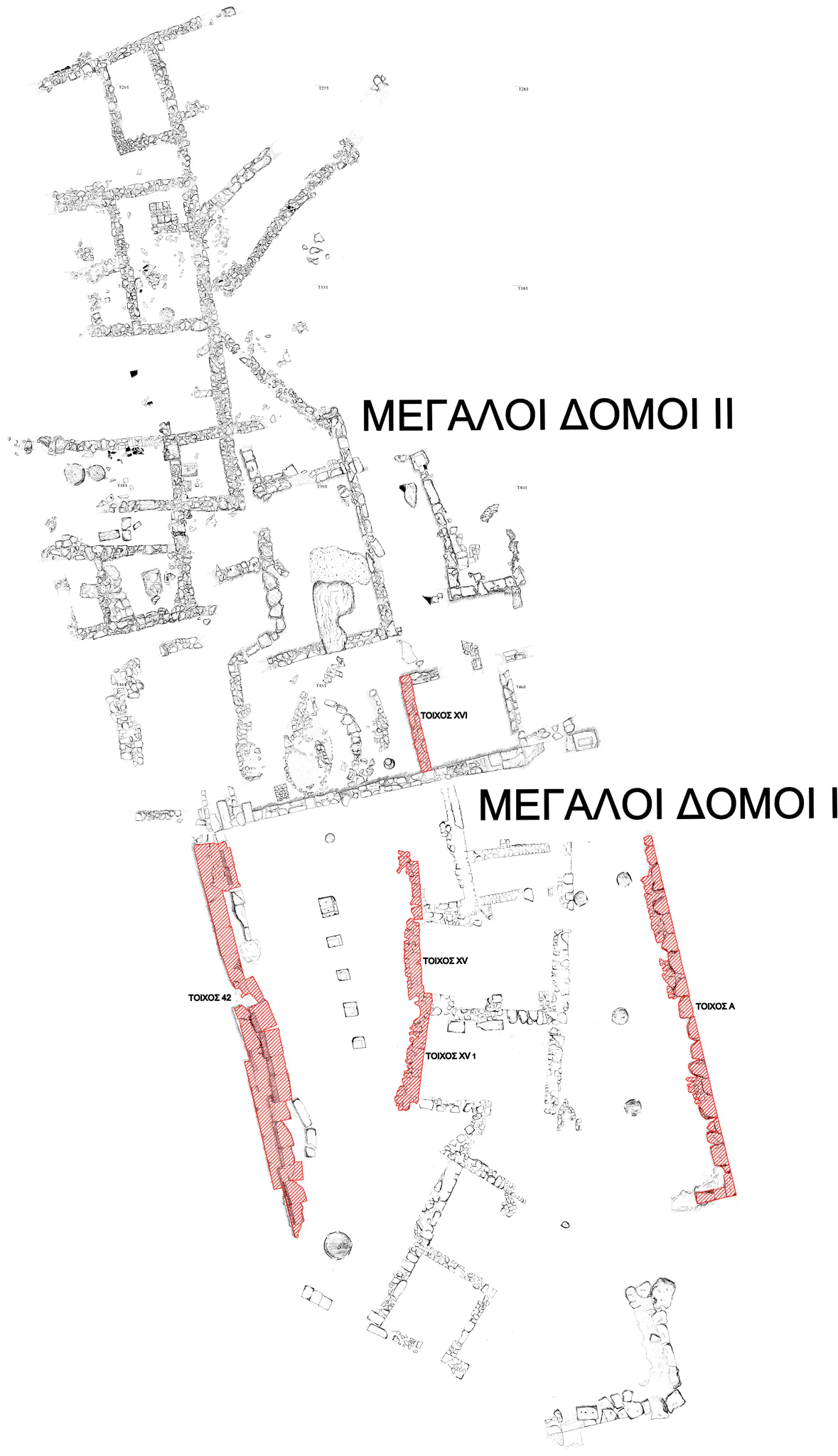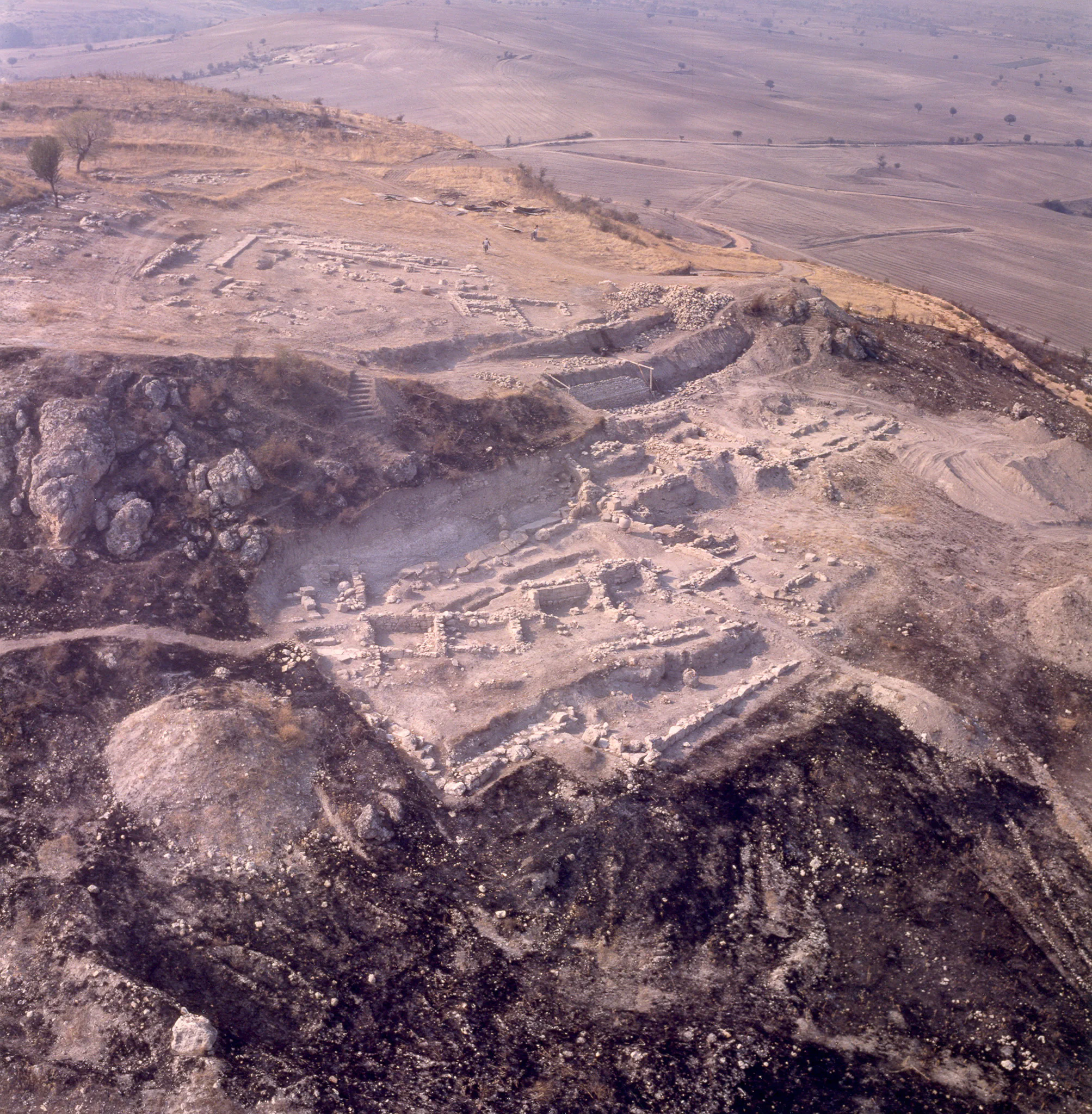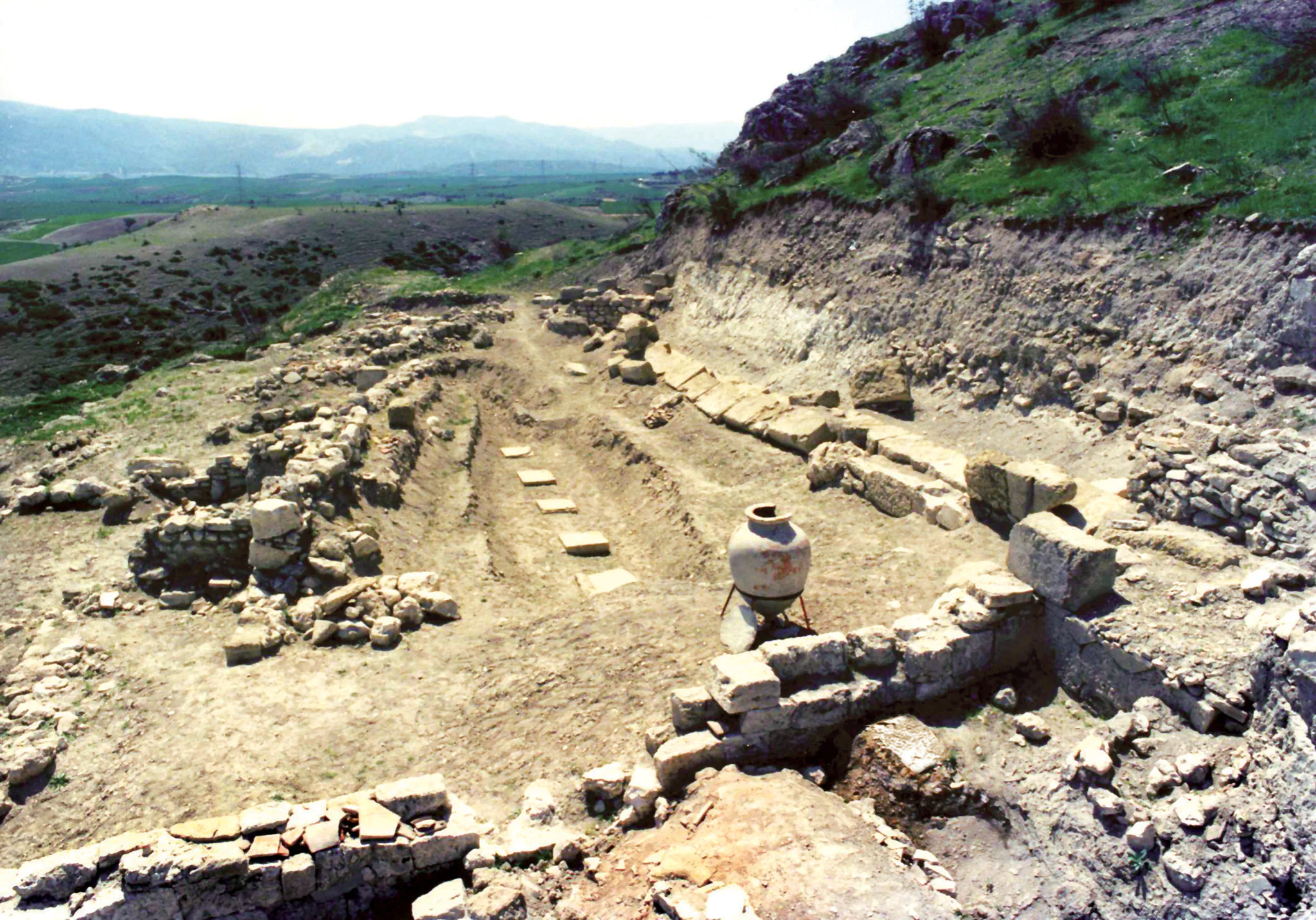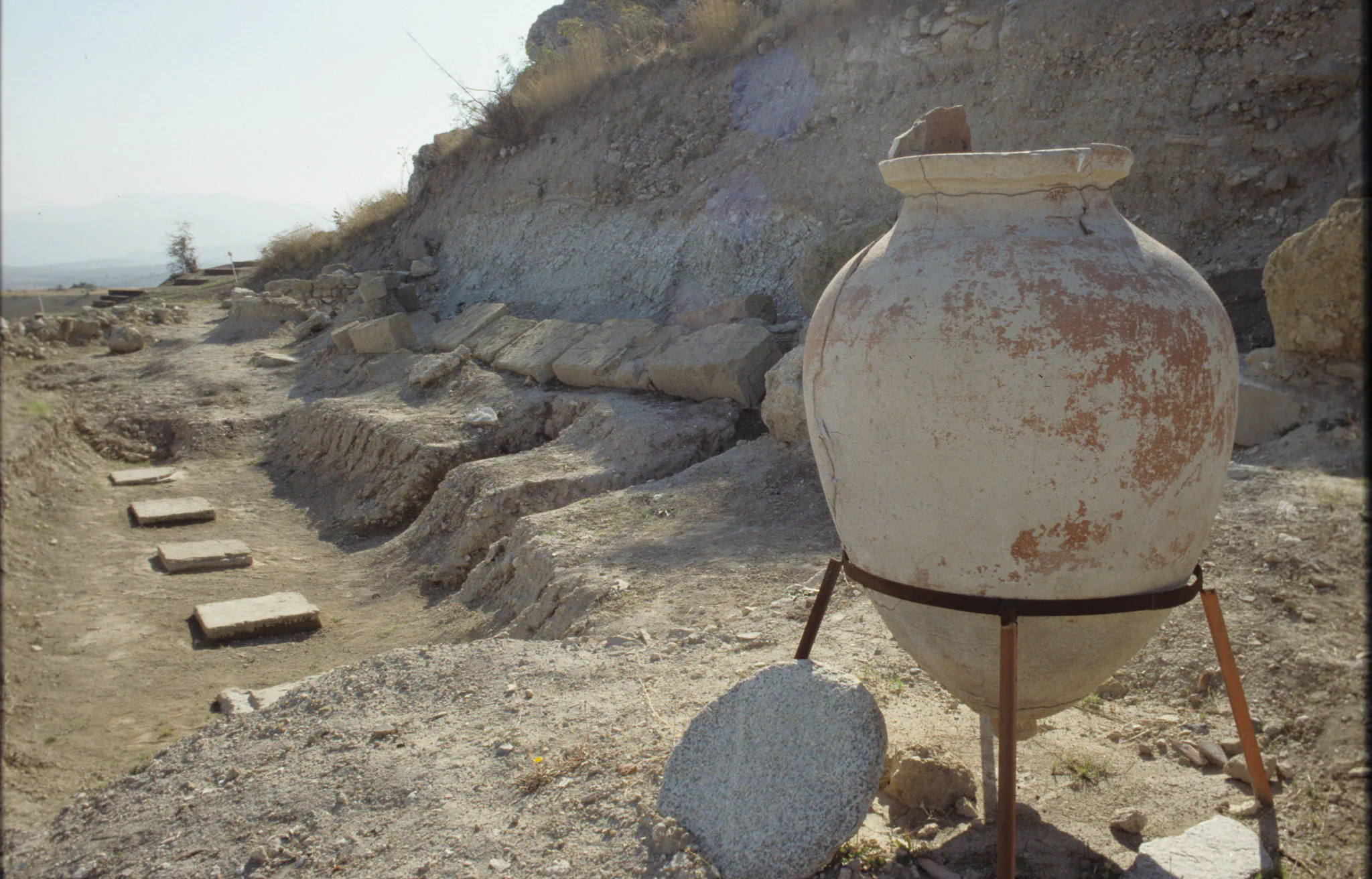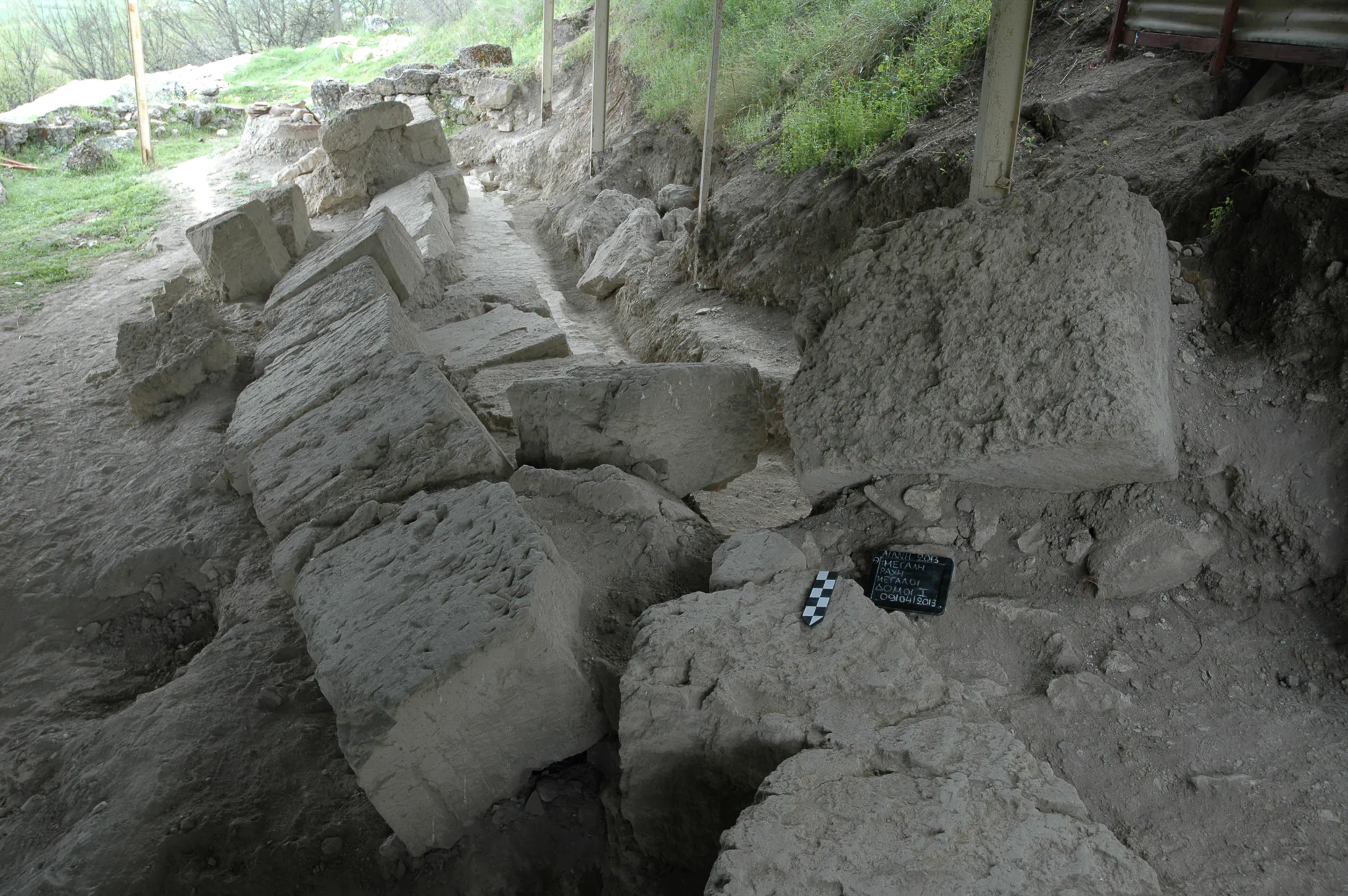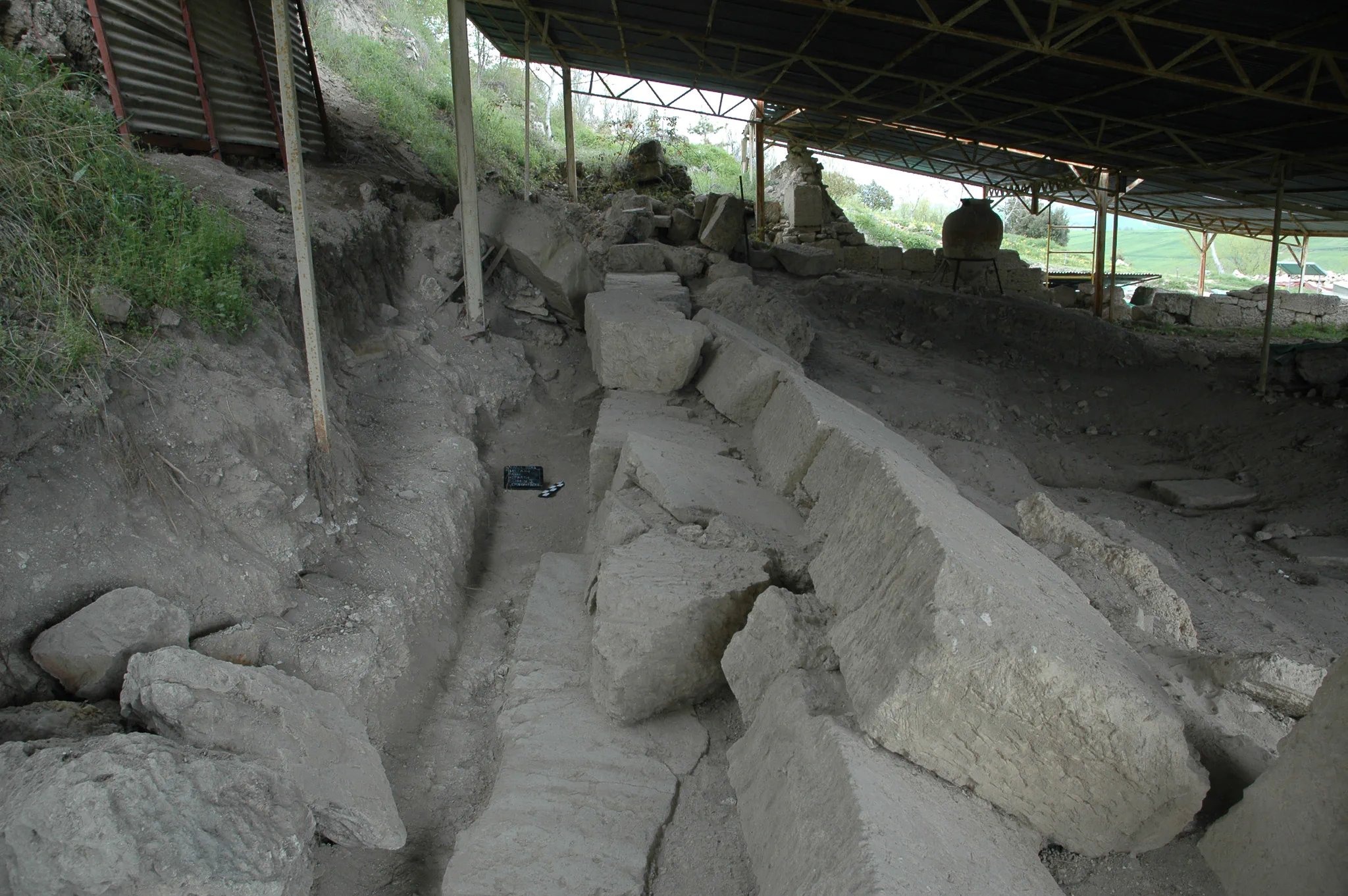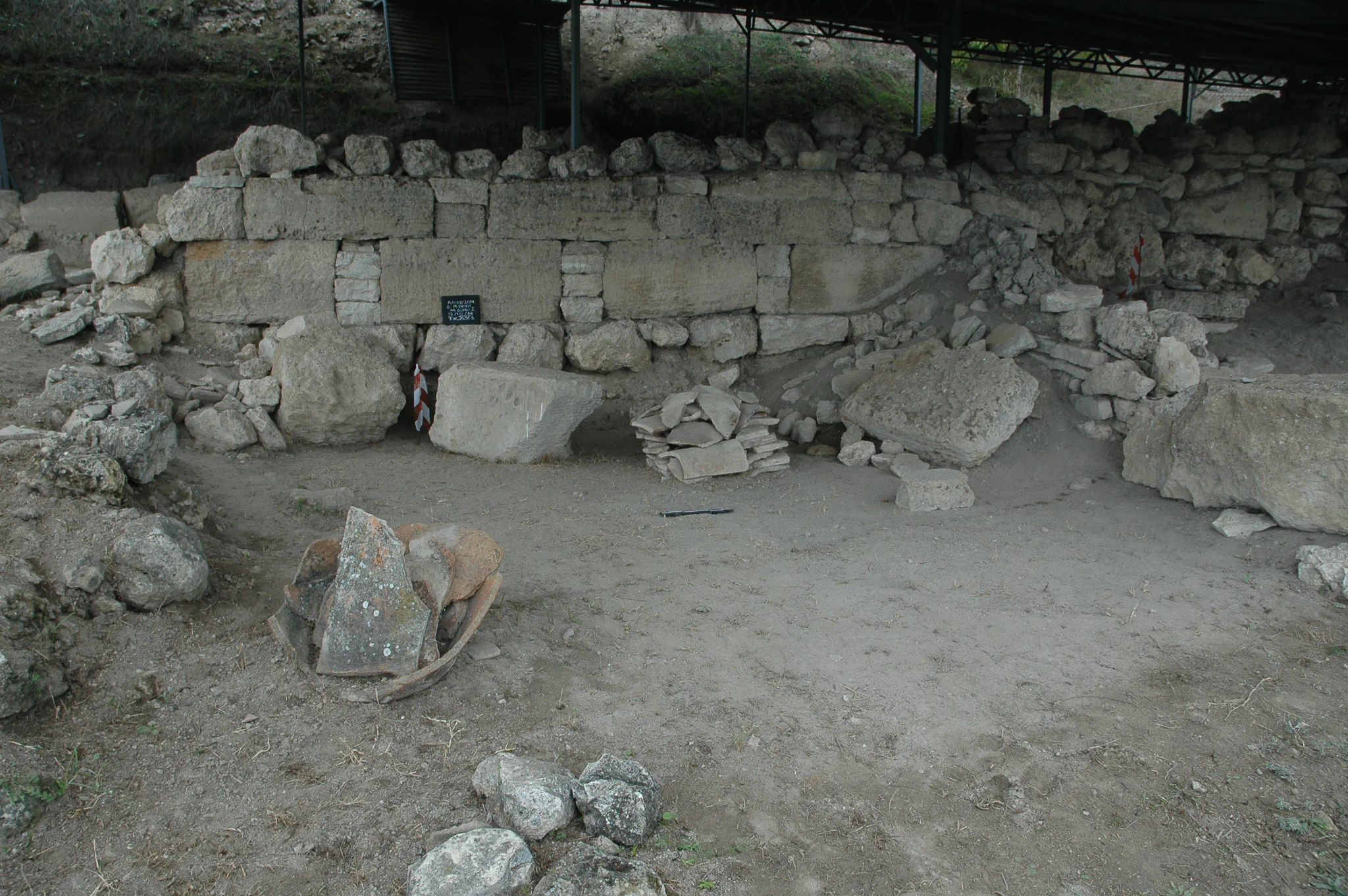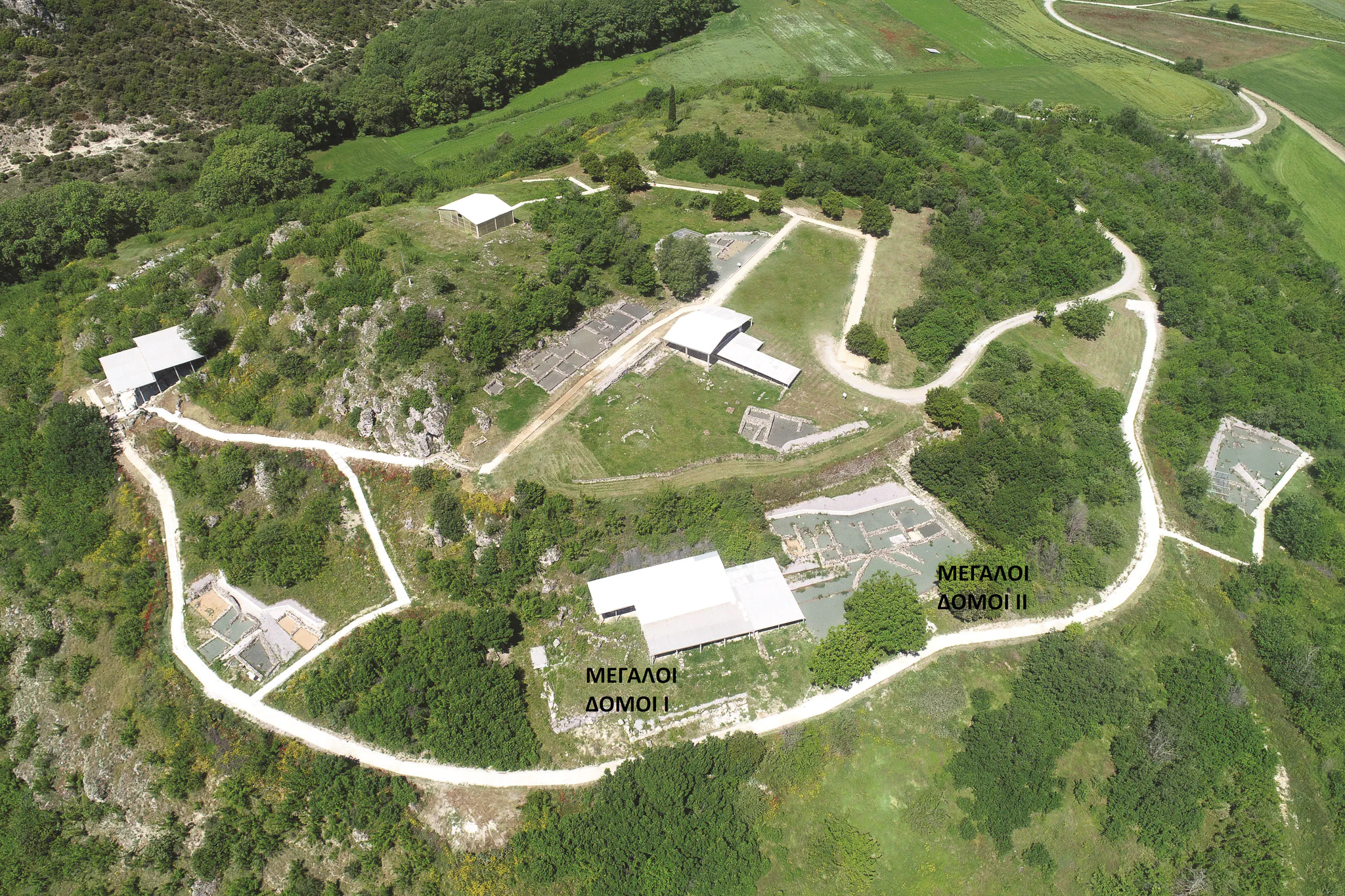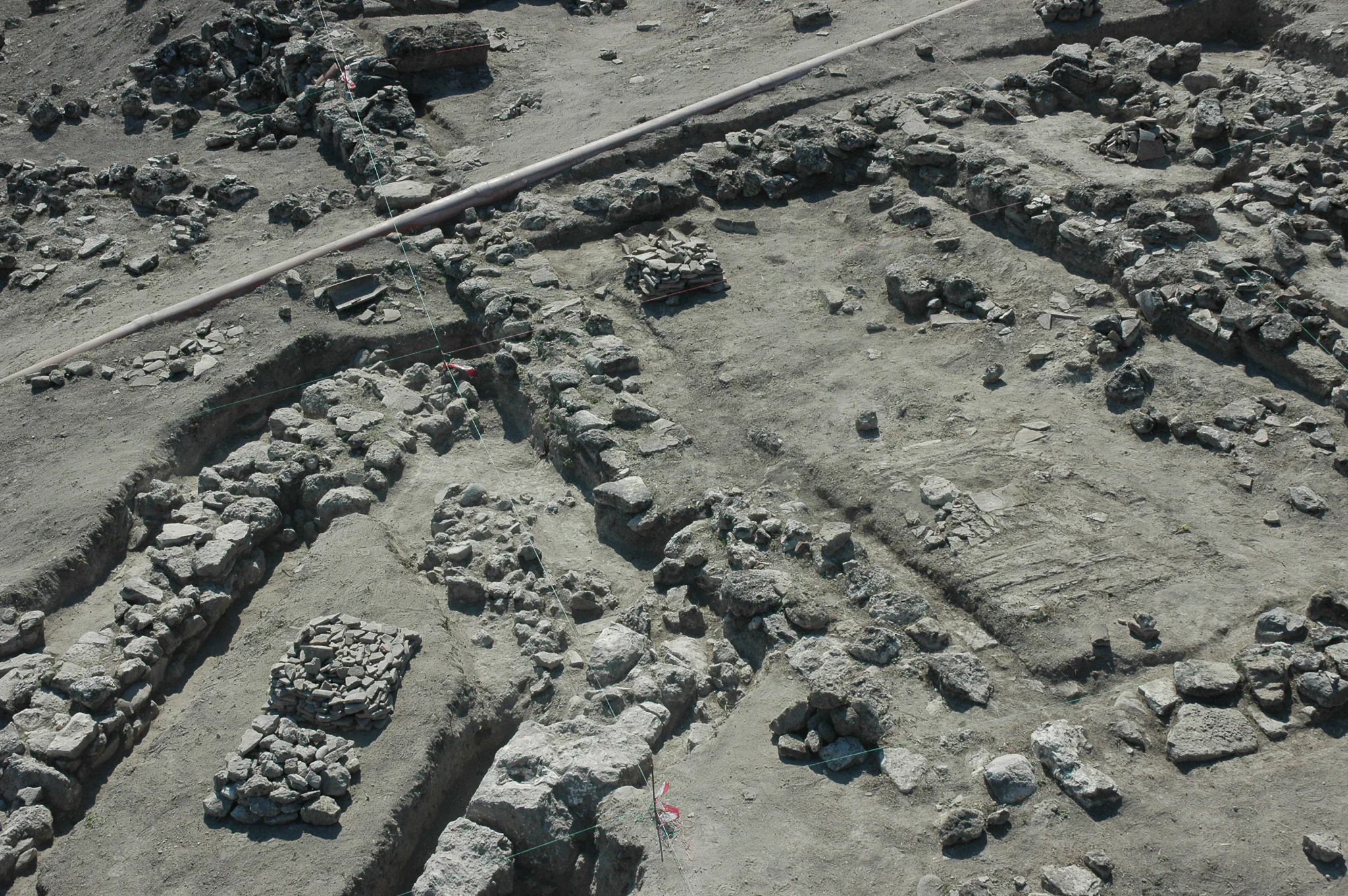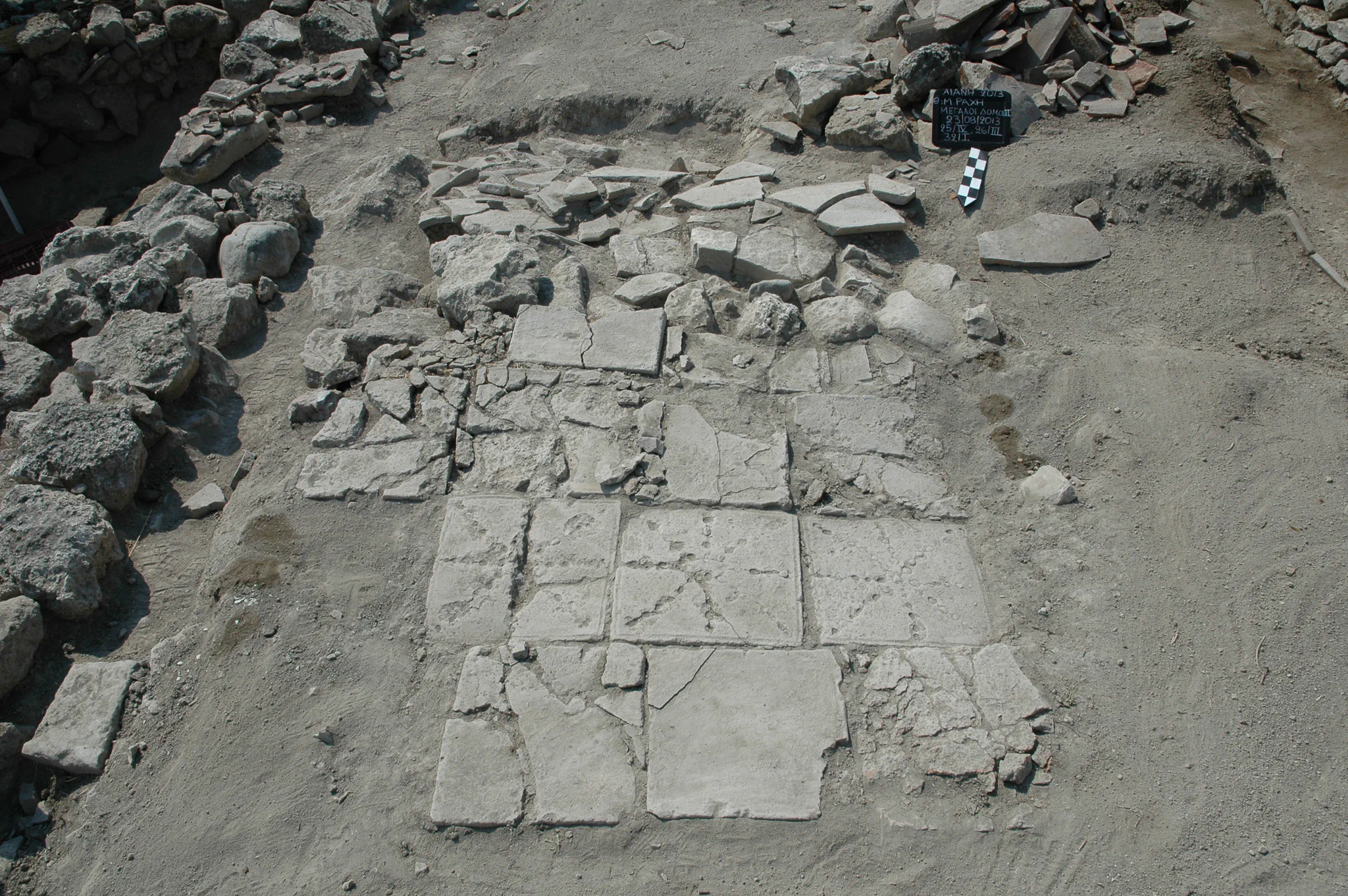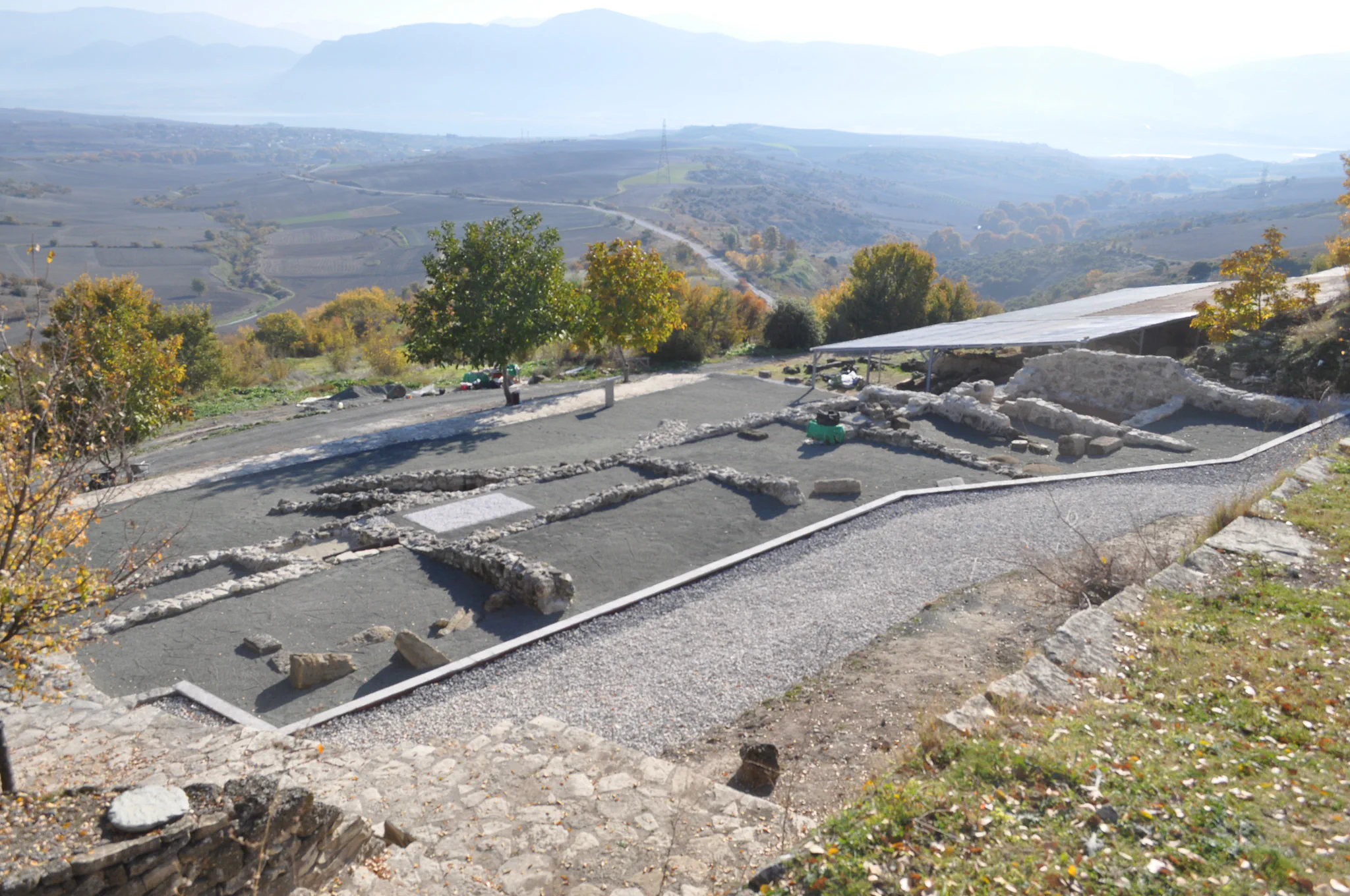
On the plateau immediately beneath this one – the excavation at this point has been given the name ‘Excavation of the Ashlar Masonry’ – survives the ground-plan of another public building of the Late Archaic/Classical period, which was found beneath the remains of buildings from later periods. It consists of a series of rectangular rooms at different levels, following the slope of the land, and a stoa. In front of the wall of this stoa, which is 1.70 m. thick and 20 m. long, the bases of five pillars were discovered. Two different types of masonry – large stone blocks and polygonal stones – distinguish two different building phases. The large number of red-figure sherds, many of which date from the first half of the 5th century BC, permits the building to be dated to this early period and indicates that organised cities with splendid architecture existed in Upper Macedonia even before the unification of the Macedonian kingdom under Philip II.
On the same site, there are also traces of well-constructed walls in the later building phases, and at some points the Classical walls have been used as foundations. One room of the Classical building contained a series of ovens. On one side of the room lies a pithos and on the other a burnt tile, with part of an early polygonal wall above them.
In addition to the numerous fragments of both imported pots and locally produced black-figure ware, other interesting finds were discovered, such as a small Attic skyphos with the name ΘΕΜΙΔΟΣ engraved on its base, and part of a tile with the following four-line inscription engraved upon it: ΑΡΚΑΠΟΣ ΕΡΙΑ ΗΗΗΔΔΔΔΔ ΔΔΠΙΙΙ. Evidently, this inscription was engraved by an ordinary citizen in the middle of the 5th century BC and represents a bill, written in the Attic acrophonic system, concerning a certain Arkapos and a quantity of wool (eria) weighing 350 units and costing 28 units.
Dr Georgia Karamitrou-Mentesidi
The area is divided into two sections, conventionally named “Ashlar Masonry I,” referring to the Classical-period building area, and “Ashlar Masonry II,” which primarily concerns the Hellenistic-period buildings. During the restoration, the main focus of the work was on the second section.
Throughout the restoration process, a detailed examination of the site’s stratigraphy was conducted, alongside efforts to clarify the chronological relationship between all the remains. New floors, walls, or construction phases were identified, some likely dating to the Classical period. In several spaces or rooms, the presence of two construction phases was confirmed. Along the entire western part of the area, the preserved ends of all walls were re-examined, but no continuation of the walls to the west was observed, nor was any perpendicular wall discovered to enclose the spaces from this side. The area revealed fill consisting of stones, roof tiles, and pottery fragments, as well as sandstone blocks from dismantled or in situ Classical buildings. The northern extension of the structures is confirmed by a section of a wall uncovered next to the modern pathway.
Dr. Areti Chrondroyianni-Metoki