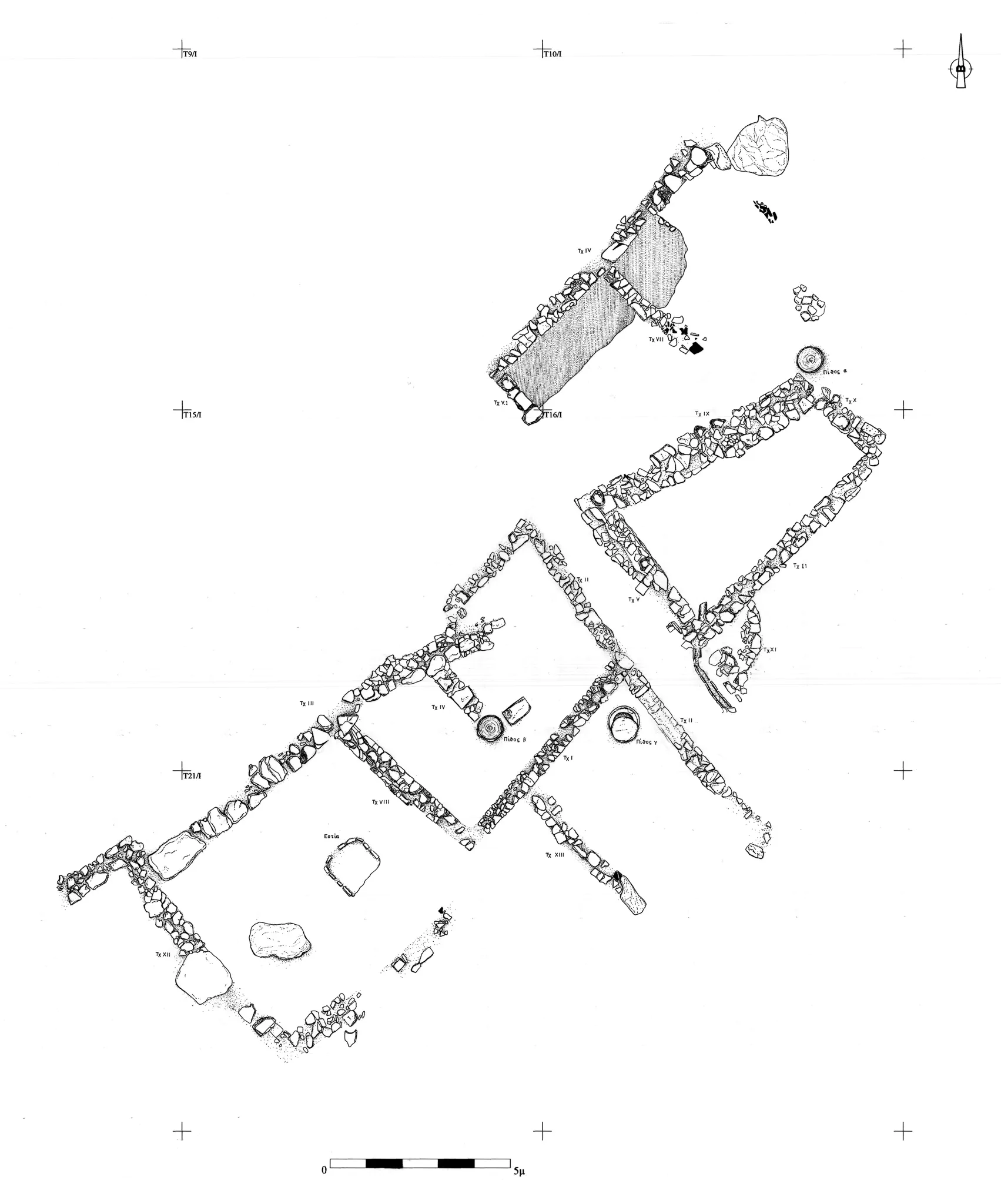
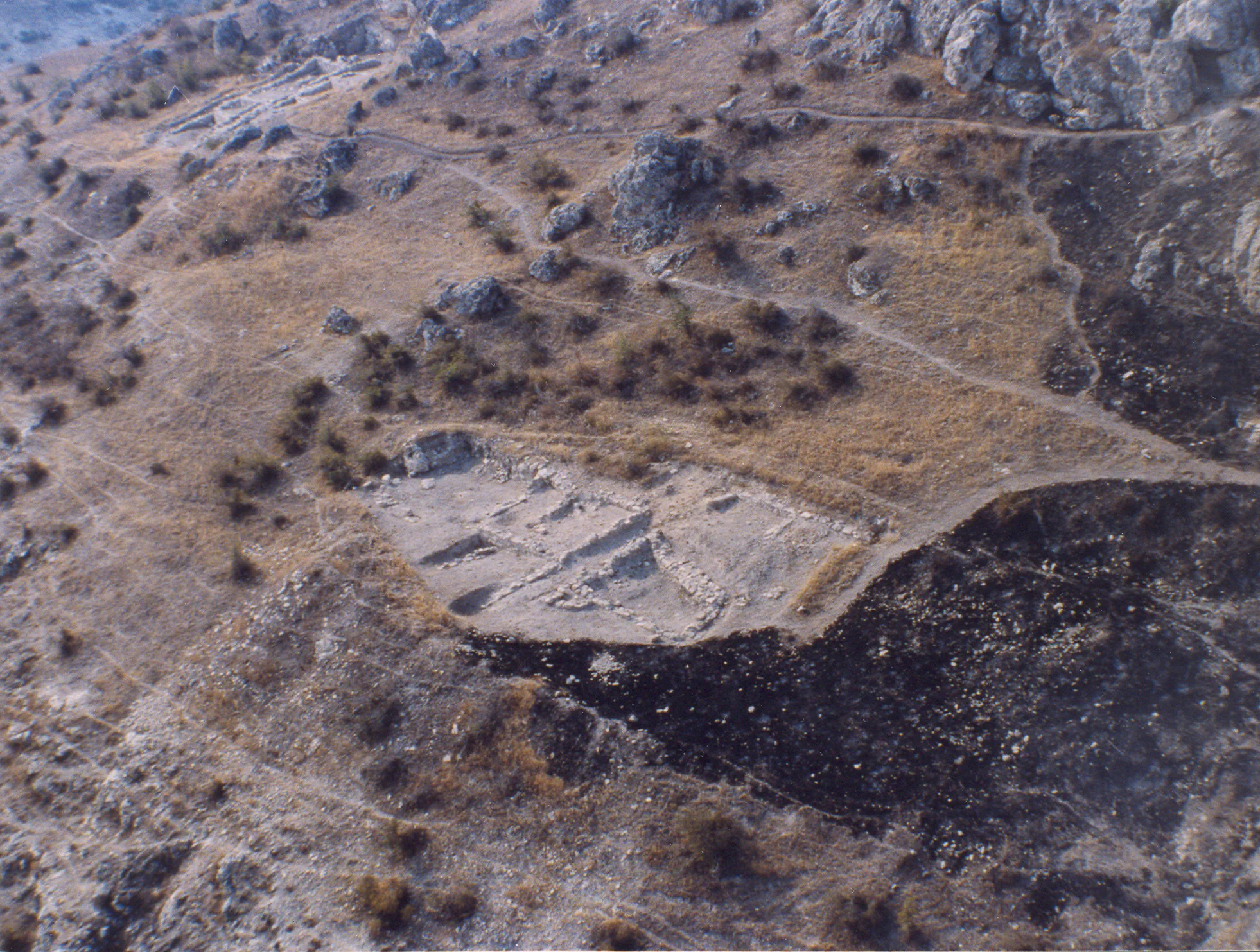
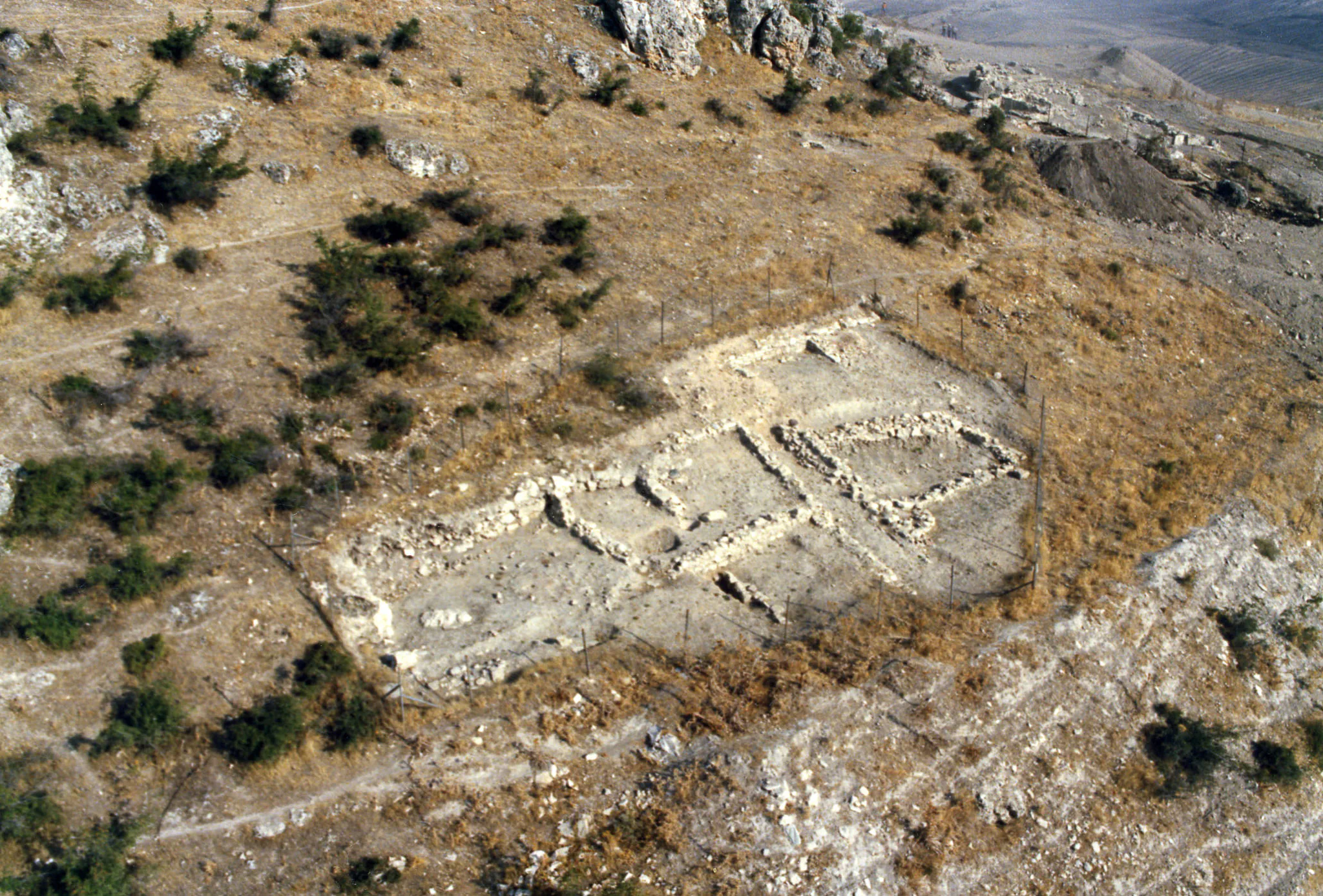
In this area the visitor may see the remains of at least two houses of the Hellenistic period (3rd -2nd c. BC), separated by a narrow lane about 2 m. wide with a drainage conduit.
The name “ House with the Loomweights” was given on account of the large pile of loomweights that was found at the rear, underground end of one of its rooms. The loom weights, made of fired clay, had various shapes: round-shaped, conical, pyramidal, trapezoid etc. The big number of loomweights suggests that the building had a dual function, both as a habitation area and as a weaving workshop.
Dr Georgia Karamitrou-Mentesidi
The House with the Loomweights: Site Restoration
The findings date to the Hellenistic period. Examination for the continuation of walls beyond their already known limits yielded no new information, nor did the exploration of the interior of the rooms. Noteworthy is the elevation difference observed in the floors of the rooms, indicating a multi-level development of the structures, as well as the positioning of two pithoi, suggesting the possible existence of underground storage spaces.