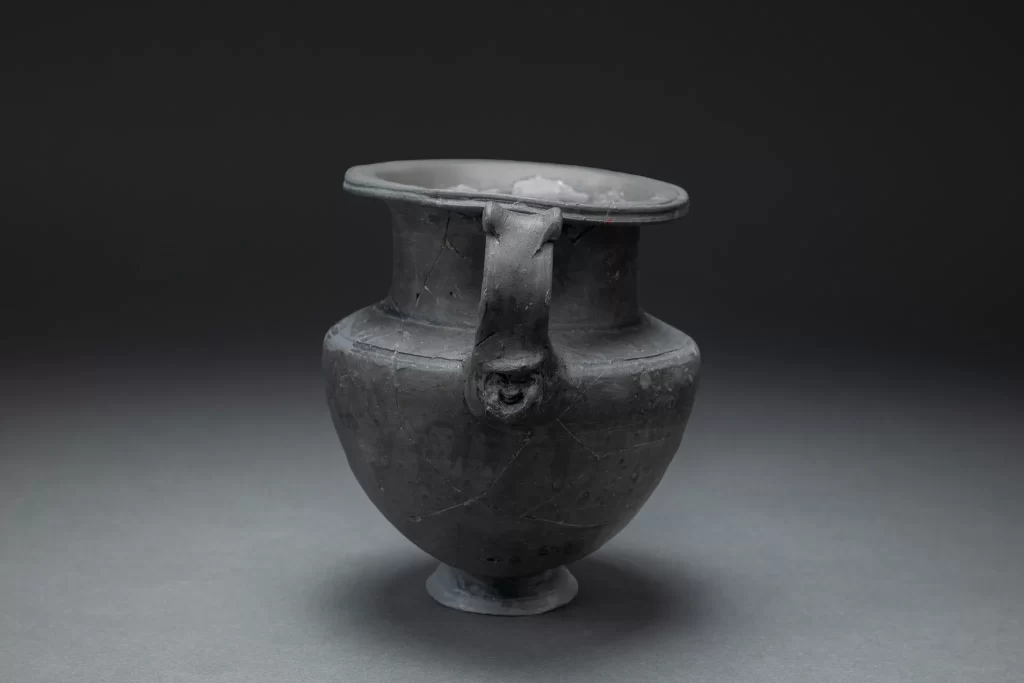
In Room A the visitor is given a brief introduction to the historical identity of Aiani and prehistoric life in the region. Immediately to the right of the entrance is a presentation of the historical and geographical identity of Aiani, the kingdom of Elimeia (or Elimiotis) and Upper Macedonia.
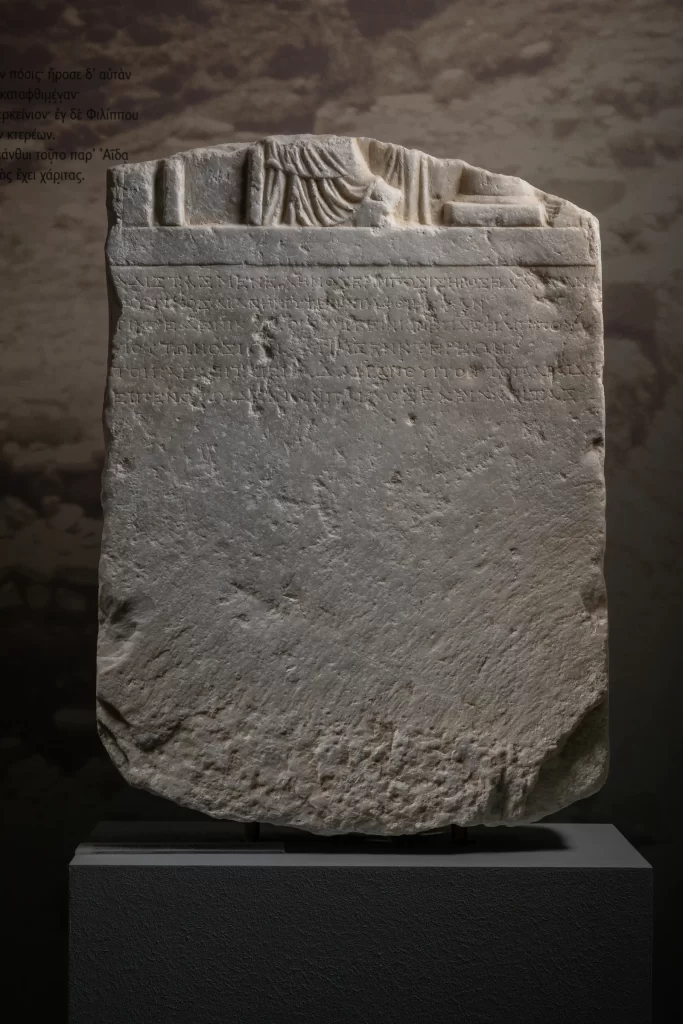
On the same side is displayed the earliest of the two inscriptions that attest to the name and location of the ancient city of Aiani. This is the 2nd-1st century B.C. funerary stele of Adista, wife of Menedemos, who was buried in Aiani.
On the other two sides of the room there is information about the excavations and surface surveys carried out in the Kozani Regional Unit that led to the unearthing of important monuments and the discovery of hundreds of archaeological sites. Information is also provided about the history of Aiani and the archaeological research carried out there.
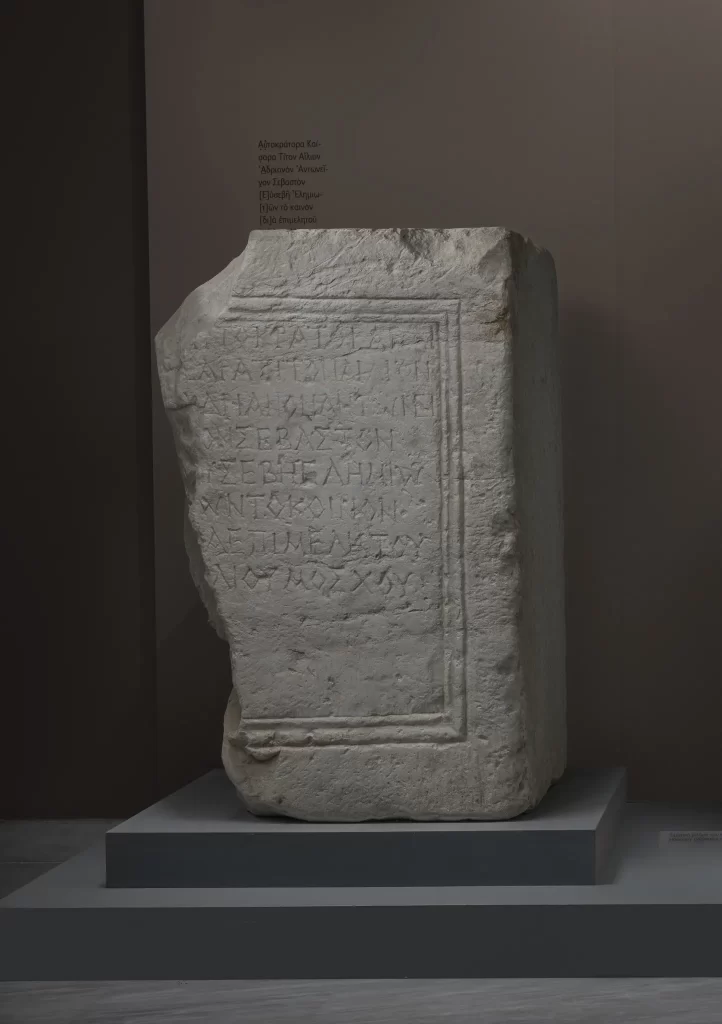
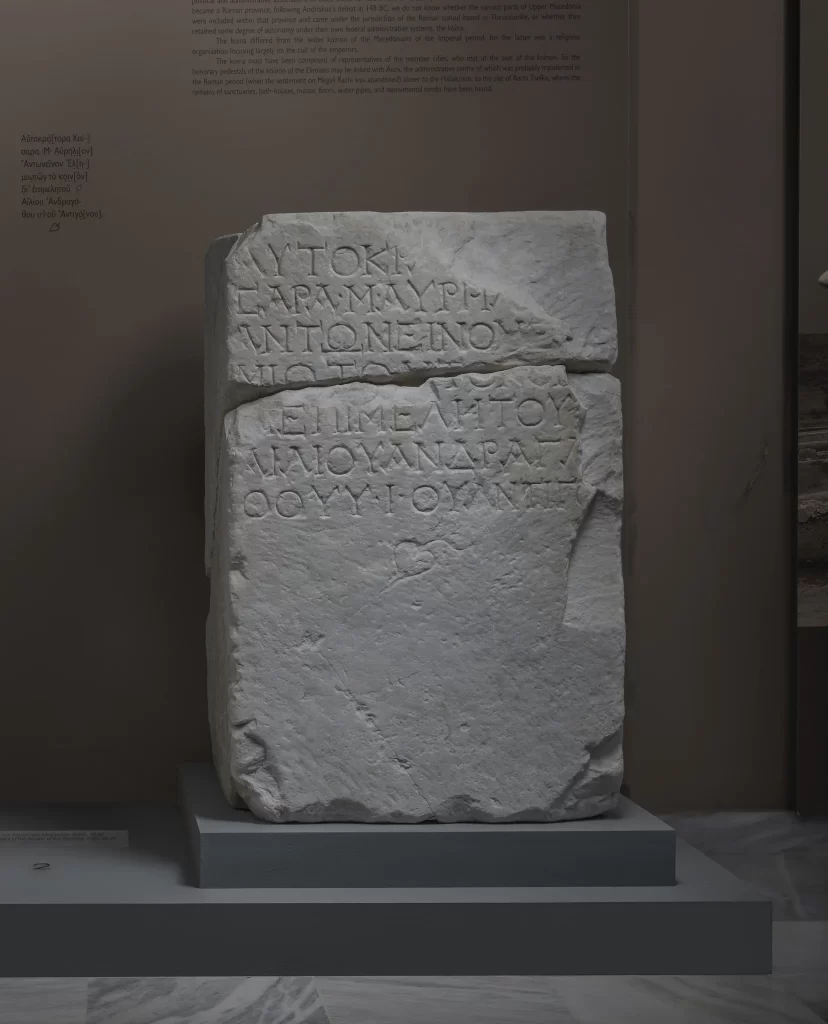
Information about the Roman Period is provided by two honorary pedestals from the 2nd century A.D., which were erected by the Koinon of the Elimiotes – a political and administrative association of Elimiote cities – in honour of the emperors Hadrian and Marcus Aurelius. The pedestals were found as reused material in the wall of the Byzantine settlement at Paliokatsro near Kaisareia, from which they were removed in the 1960s.
This section is completed by the early epigraphic finds from Aiani. These comprise the rim of a storage jar with three symbols – a unique example of linear script in northern Greece –, the spout of a pithos with letters of the Megaran or Corinthian alphabet, part of a tile on which has been engraved a bill using the acrophonic system, and two inscriptions from the 5th century B.C.