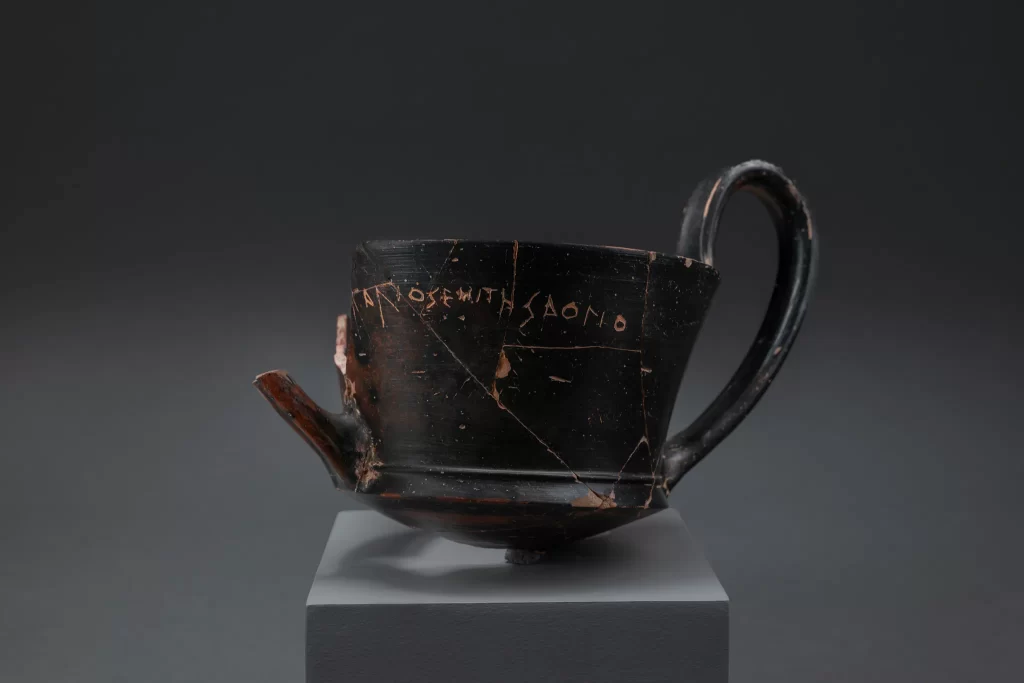
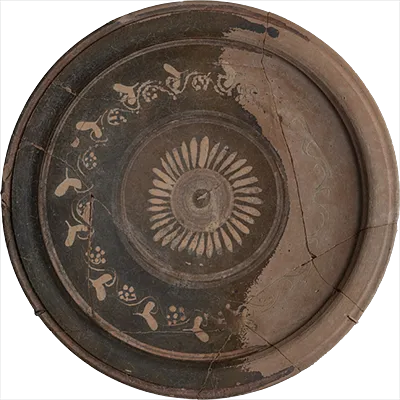
Room B contains a display of finds from the Archaic, Classical and Hellenistic Periods from the ancient city of Aiani on the Megali Rachi hill, arranged in chronological order and according to type. The centrepiece in this room is the model of the Megali Rachi hill, on which the ancient city of Aiani was founded and flourished.
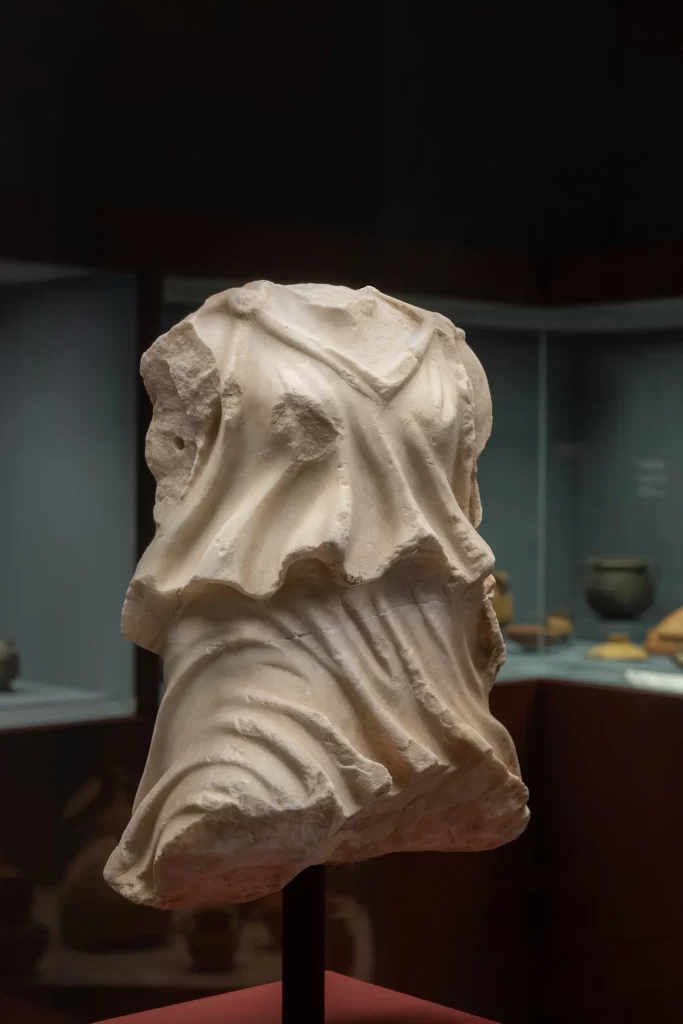
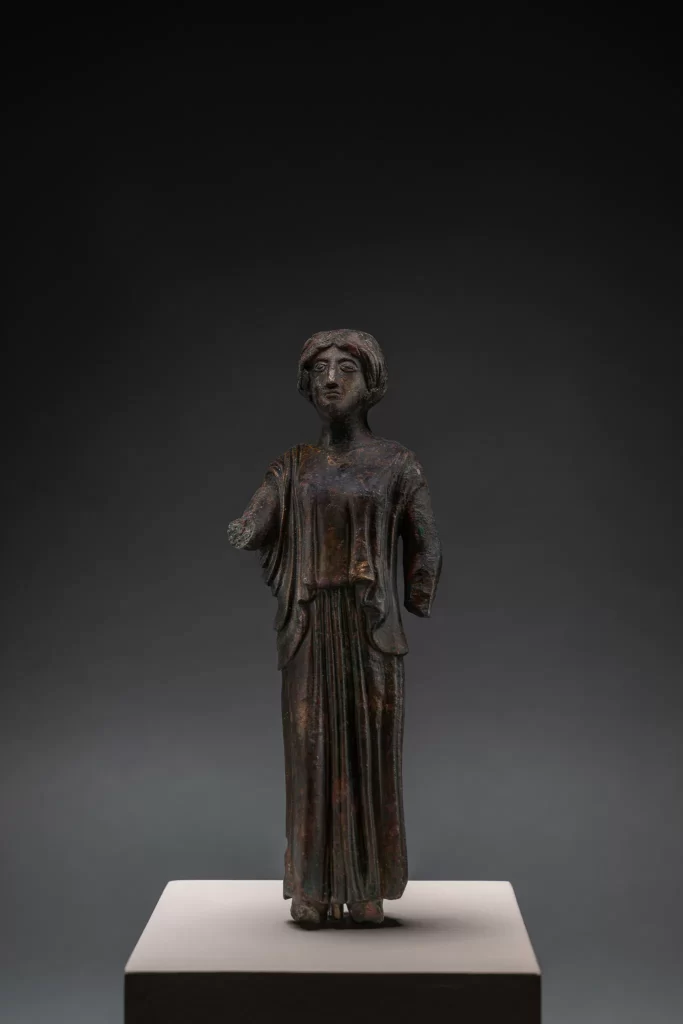
In a prominent position, in Case 1, stands the statue of Nike, an acroterion from an impressive civic building of the Classical Period. From similar buildings come the fragments of clay and stone architectural members with painted decoration in Case 4, the fragments of stamped tiles and the marble head of a young man, probably from a pediment. In Case 3 the impressive handle of a bronze mirror from the same period represents the figure of a peplos kore.
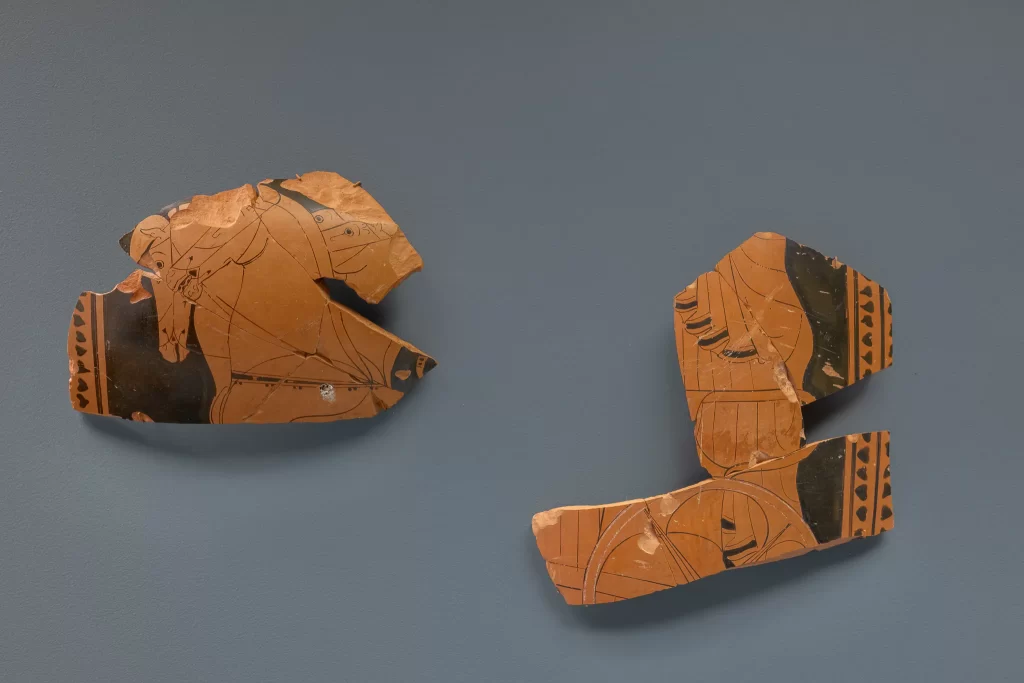
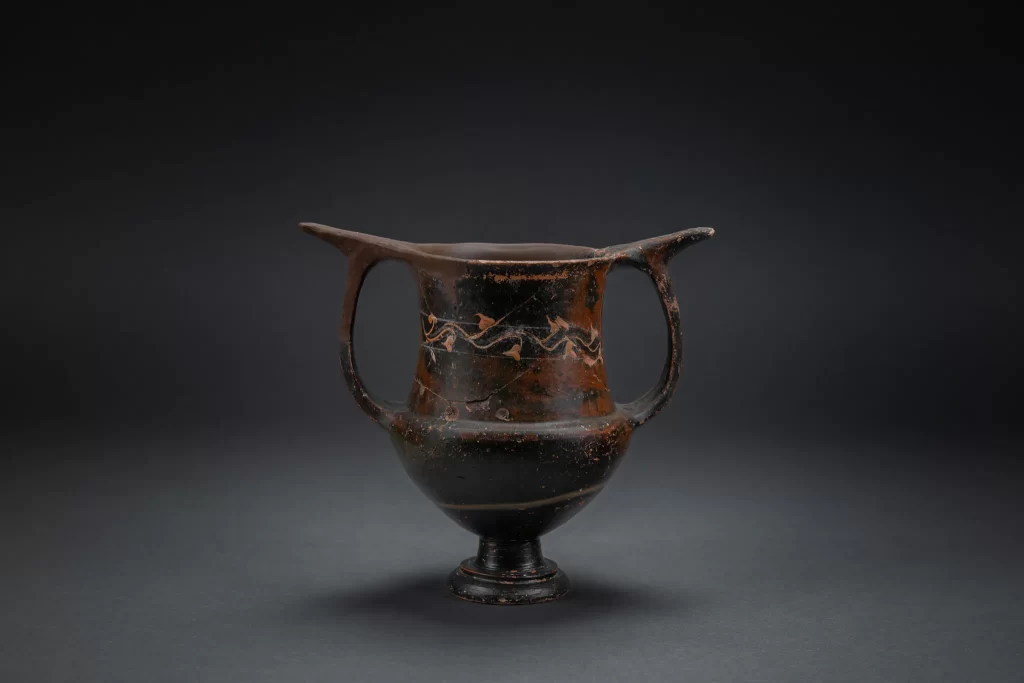
Cases 5-6 display Corinthian and mainly Attic black-figure and red-figure ware dating from between the 6th and 4th centuries B.C.
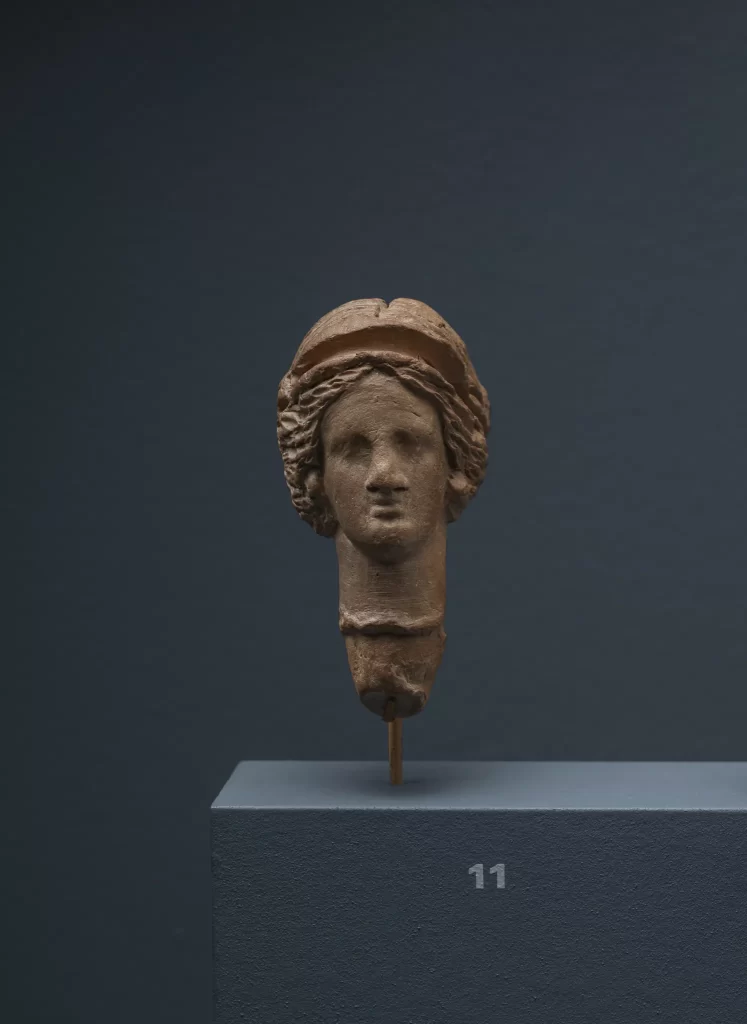
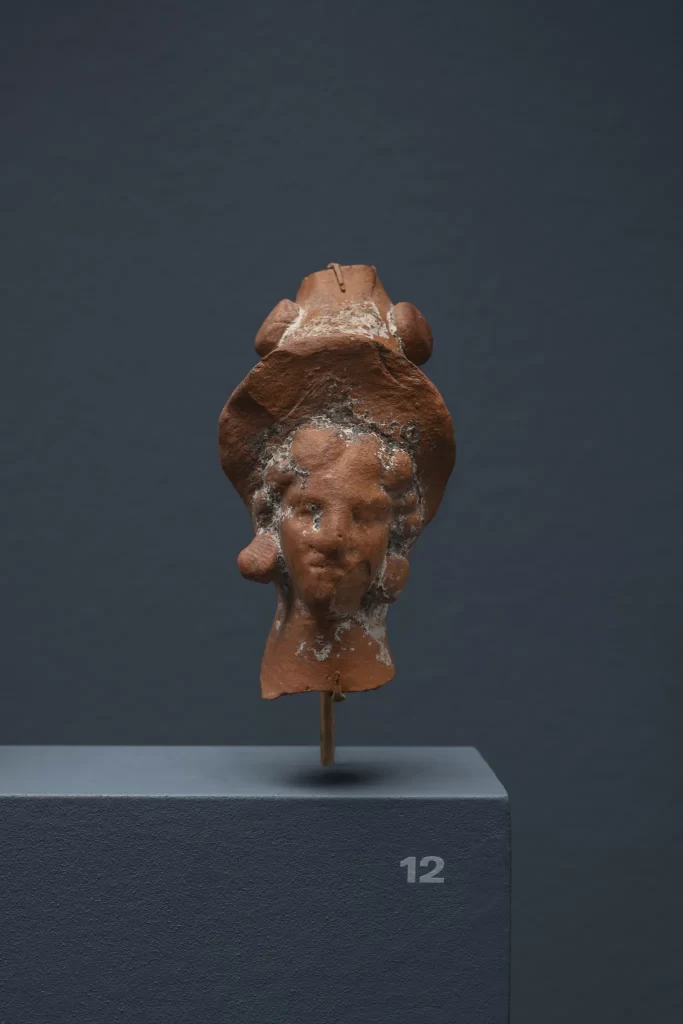
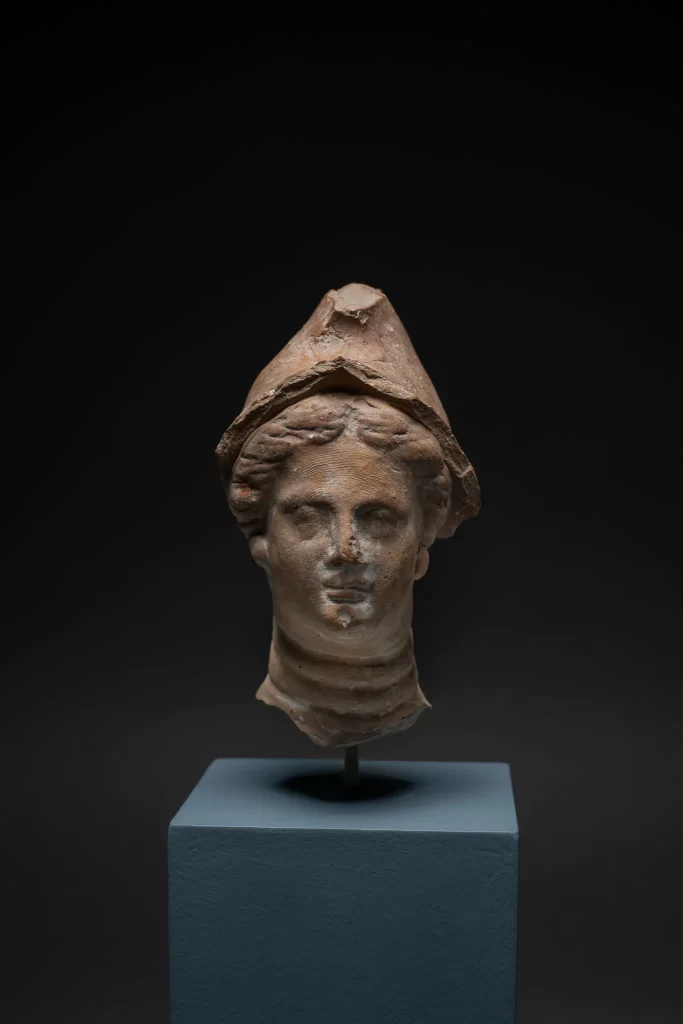
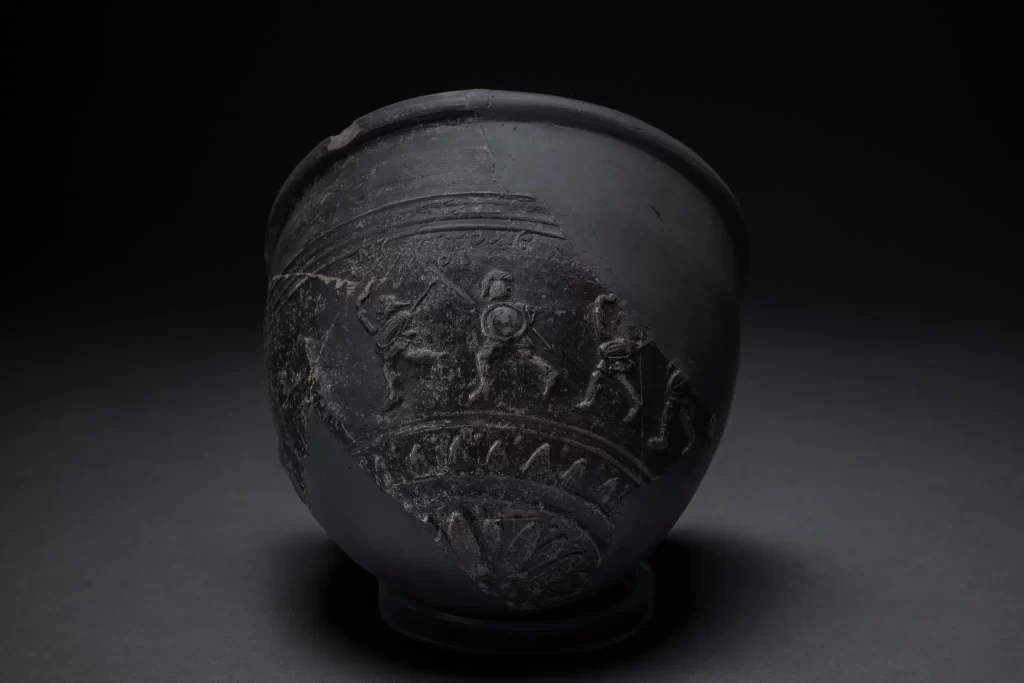
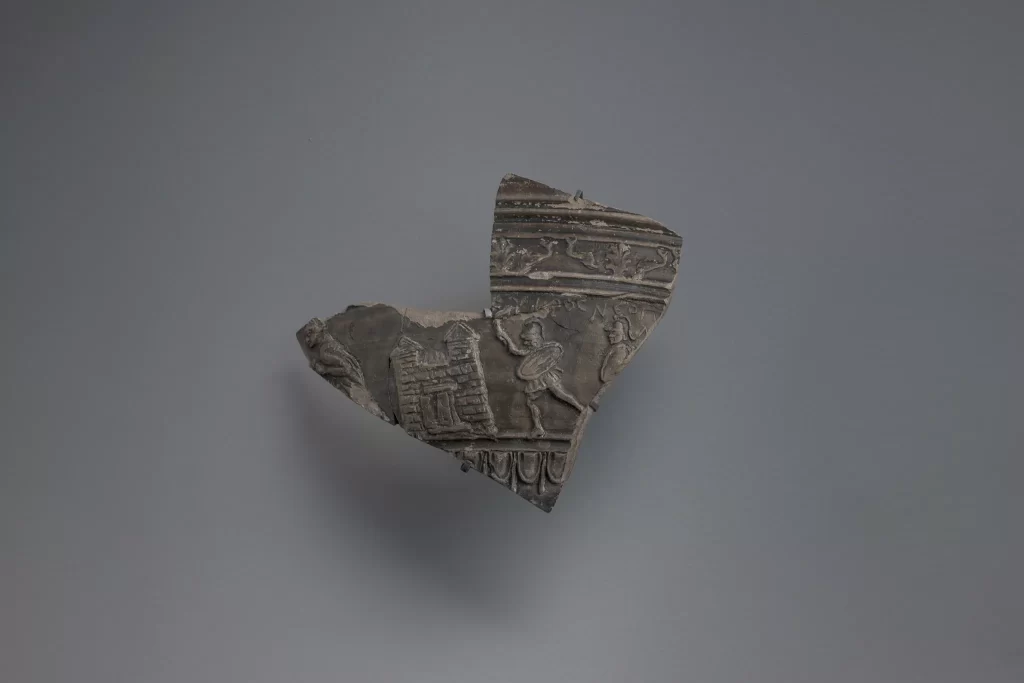
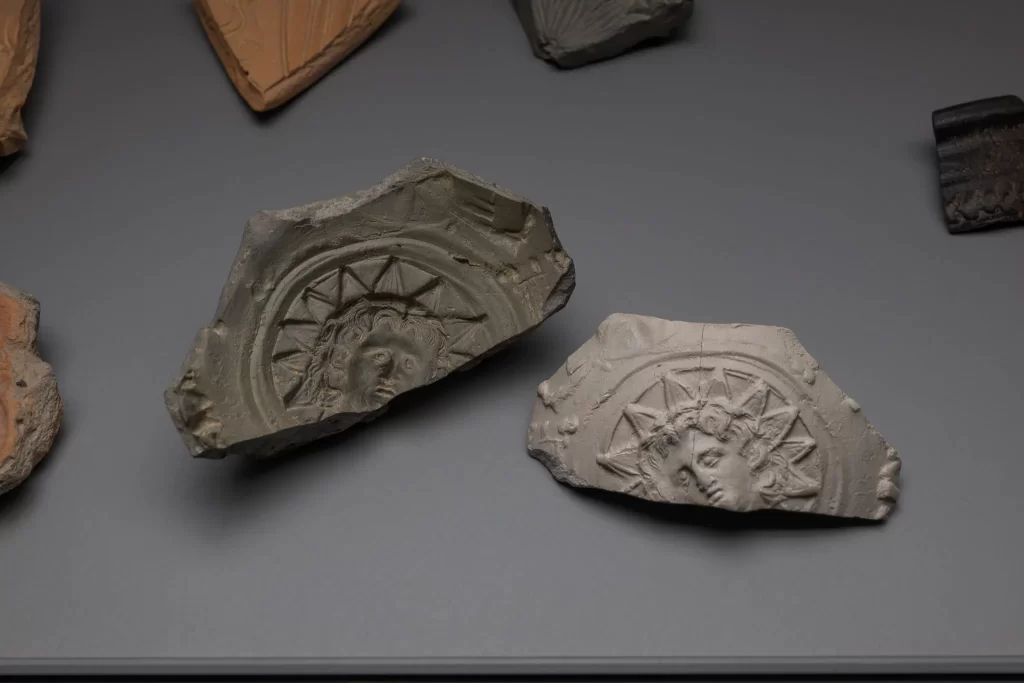
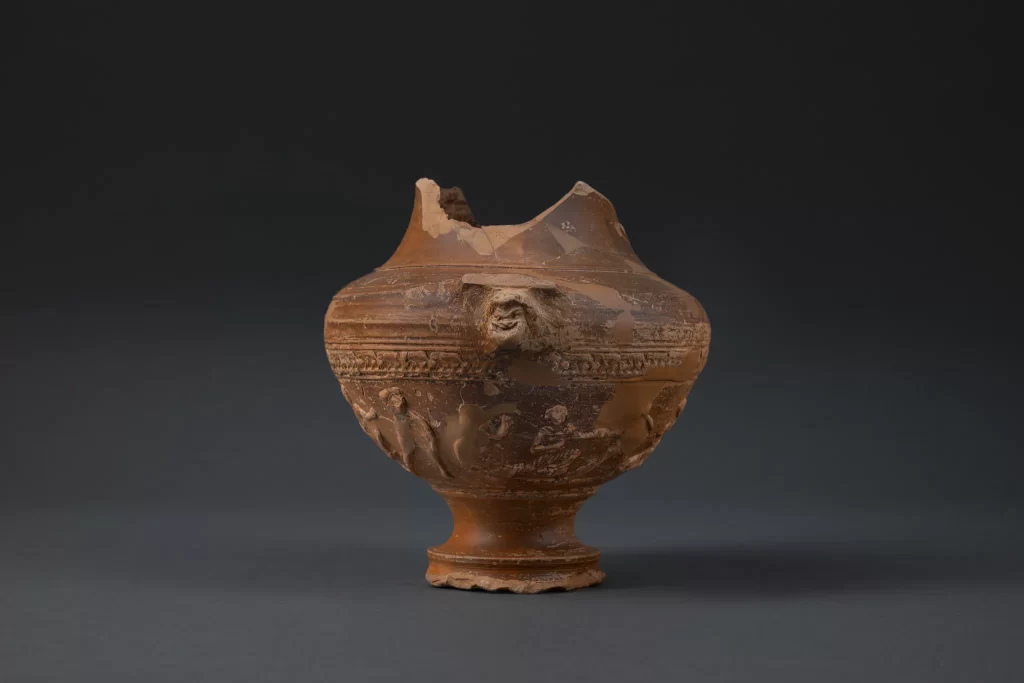
From the Hellenistic Era come the vases with relief decoration and the moulds in Case 7, which attest to a local production and relations with Pella. Floral, erotic and mythological motifs adorn the surfaces of the vases, such as the skyphos with a representation of the Iliupersis (Sack of Troy). To the same period also belong the vases in Case 8, with their painted decoration of the ‘West Slope’ type, and other vases with impressed decoration. Case 9 displays various inscribed potsherds, two of which bear the inscriptions ‘Σκόρδων Μναι’ (referring to the price for garlic) and ‘Μη κλέπτει’ (‘Do not steal’). Case 10 displays anthropomorphic and zoomorphic figurines that were manufactured with a mould. These include heads of the goddesses Athena and Kybele, whose cult was of particular importance at Aiani. Some of the fragments come from large-scale figurines.
Cases 11-13 contain displays of everyday clay vessels, arranged in groups according to their use, such as vessels for food, perfume flasks and lamps.
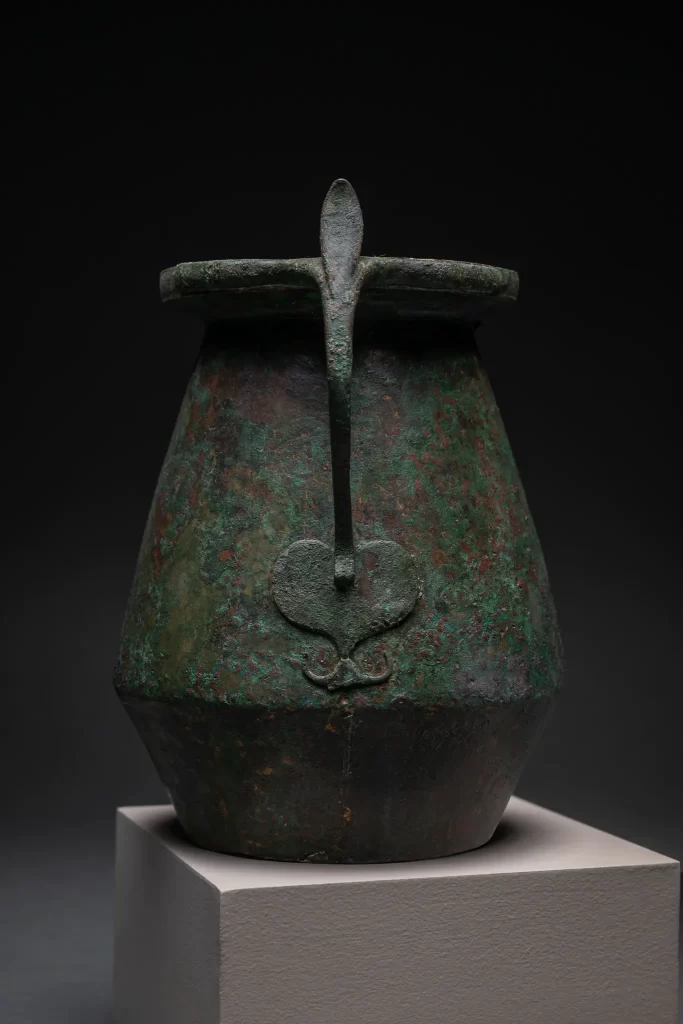
The large corner case, Case 14, contains a reconstruction of the city’s central cistern. Also on view are the clay vessels for carrying water (hydrias, oinochoai and amphoras) that were found in its interior. The next case, Case 15, displays similar objects of bronze. The cistern was discovered in the courtyard of a civic building on top of the Megali Rachi hill. Hewn out of the natural rock, it was 8.5 m. deep and 4.5 m. in diameter at its lowest point, and up to a height of 2 m. from the bottom preserved the bricks that lined its interior. It was constructed in the early 5th century B.C. and remained in use until the 2nd century B.C. It is one of the most important creations of ancient technology and engineering for the collection of rainwater. The water was purified through the use of sand and channelled to different parts of the settlement through a network of clay pipes.
Dr Areti Chondroyianni-Metoki