The freestanding Cases 11-13, around the column in the centre of Room C, display various bronze and silver coins issued by the Macedonian kingdom and other cities of the ancient world, which attest to the trading relations and exchanges that Aiani enjoyed with other regions. Of particular note are the small hoards of coins, the most impressive of which is the hoard of 53 bronze coins (51 of Philip V and two of Perseus) that was found in the excavation of the ‘Ashlar Masonry’. A few coins were also found on the dead for their journey to the Underworld. These were known as ‘Charon’s obol’ and were placed as a payment for Charon, a custom that still survives today.
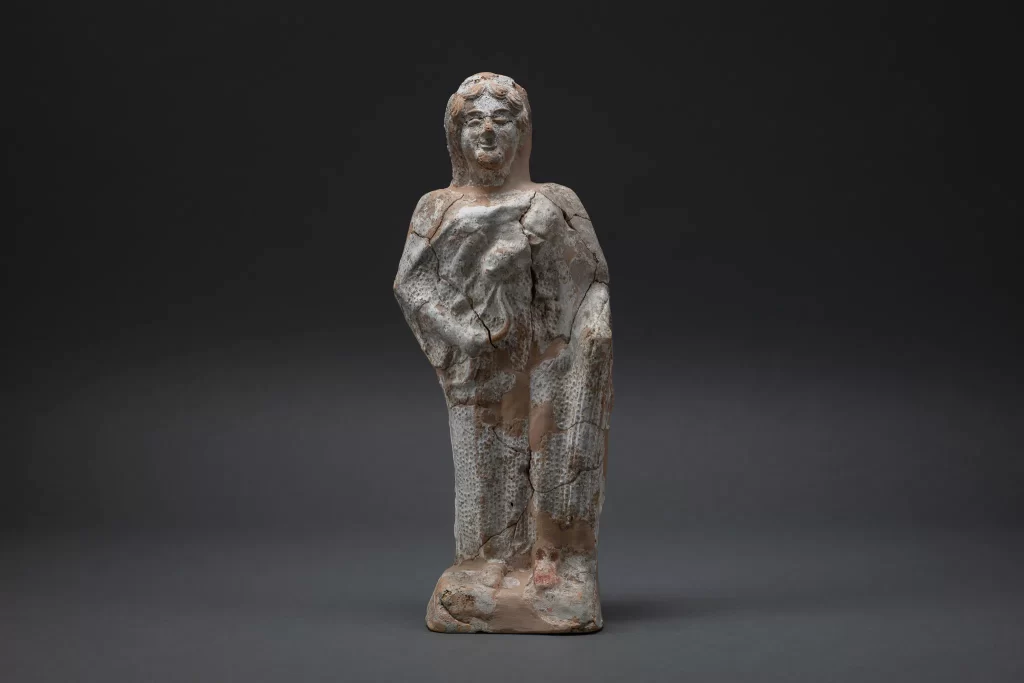
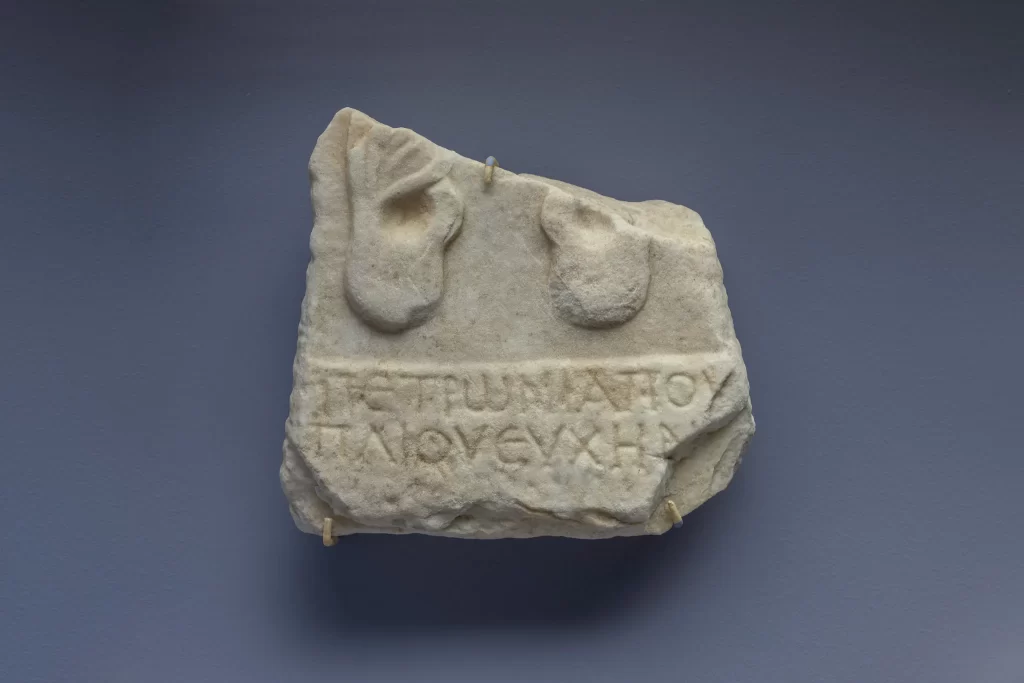
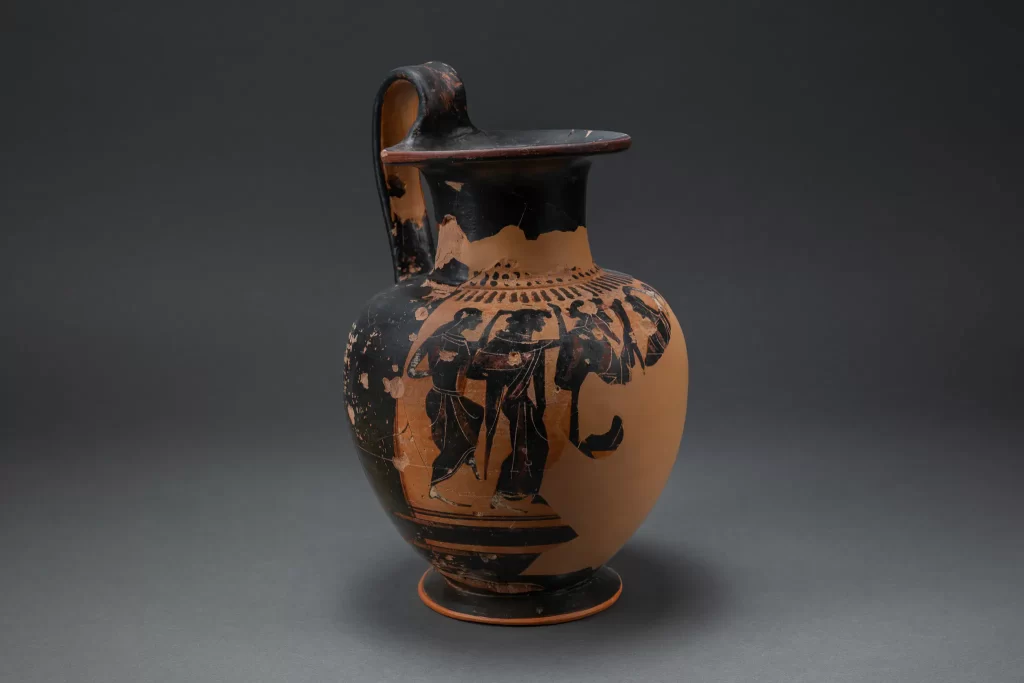
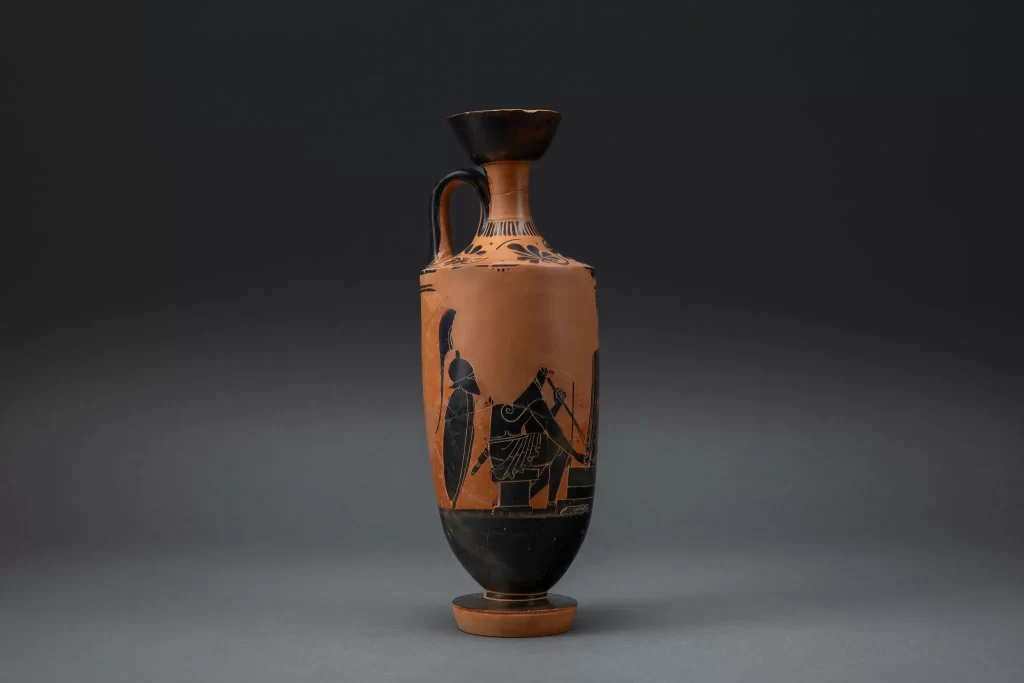
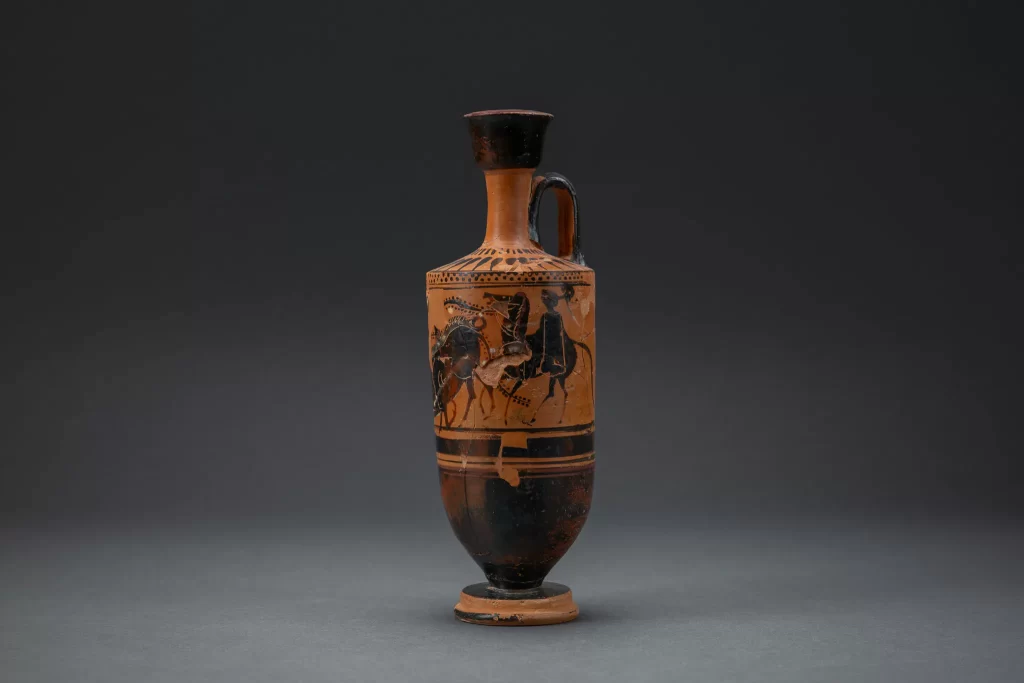
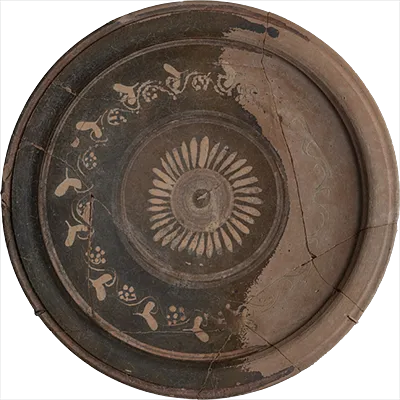
In the same area, in Cases 14-18, there is a display of finds that provide an idea of the cult practices and beliefs of the city’s residents. They provide evidence of the cult of the twelve Olympian gods, as well as those of other, minor deities, like those that existed in the rest of Greece. Case 14 contains a number of marble votive reliefs to Zeus Hypsistos, whose cult was particularly popular, as well as to Hermes Agoraios and Hygeia. The other showcases contain impressive black-figure and red-figure Attic vases with representations of gods and heroes, and various mythological scenes: the ‘Agora of the Gods’, Persephone, the ‘Departure of the Gods’, the Gigantomachy, Achilles playing dice with Ajax, Athena, Herakles and the Amazons, a goddess on a bull, and the god Dionysos with his retinue. Also on view is a terracotta figurine of the goddess Artemis.