


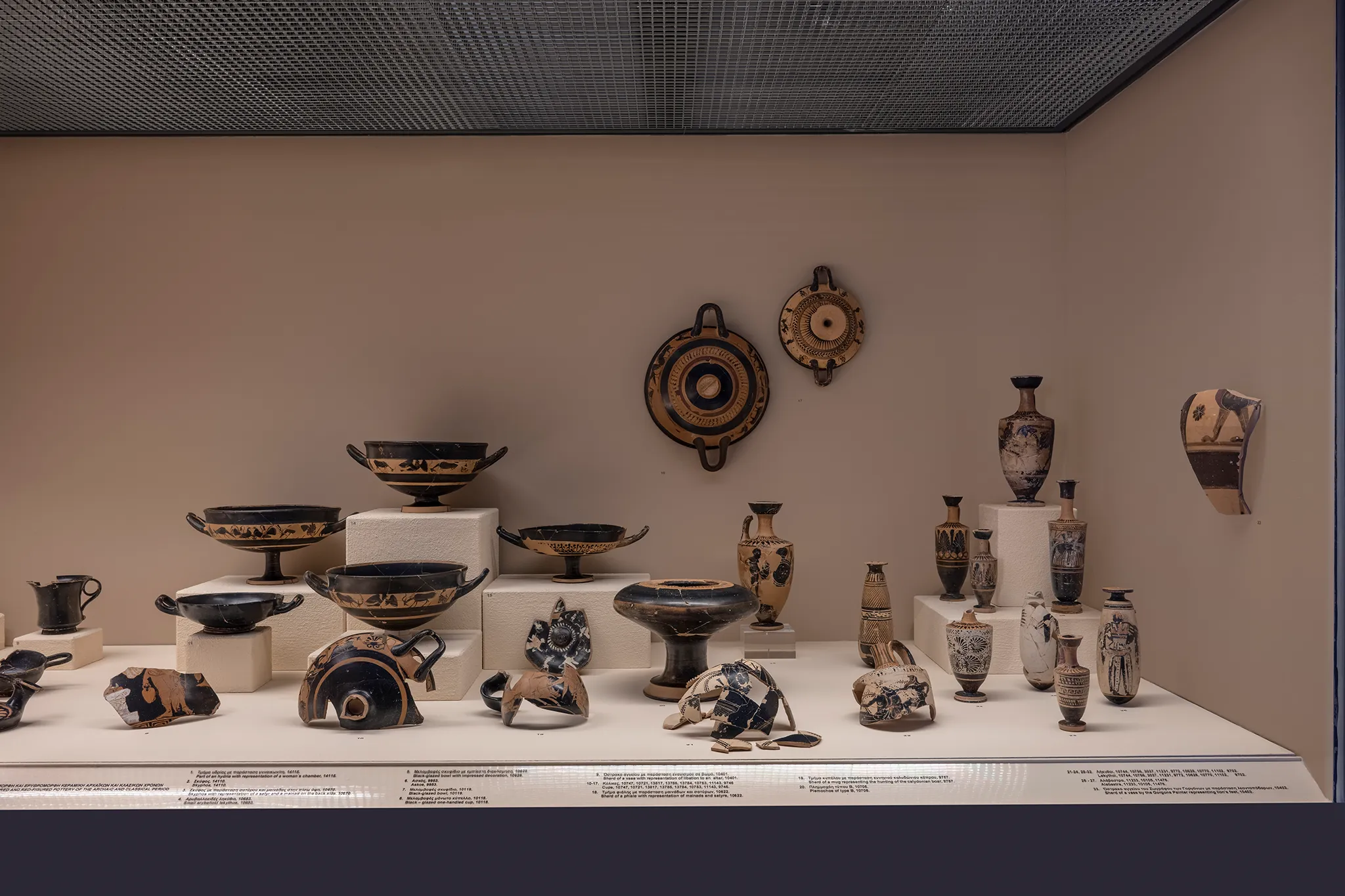
In Case 19, you’ll find a selection of pottery from Attic workshops. These include both black-figure and red-figure pieces. Highlights include a sherd by the Gorgon Painter (no. 33), one of the earliest Attic examples; black-figure alabasters (nos. 26–27); a kylix depicting the Calydonian boar hunt (no. 19); a hydria fragment showing a woman’s room (no. 1); bird-decorated kylikes (nos. 12–14); and a skyphos of the “Saint Valentine” type (no. 2).
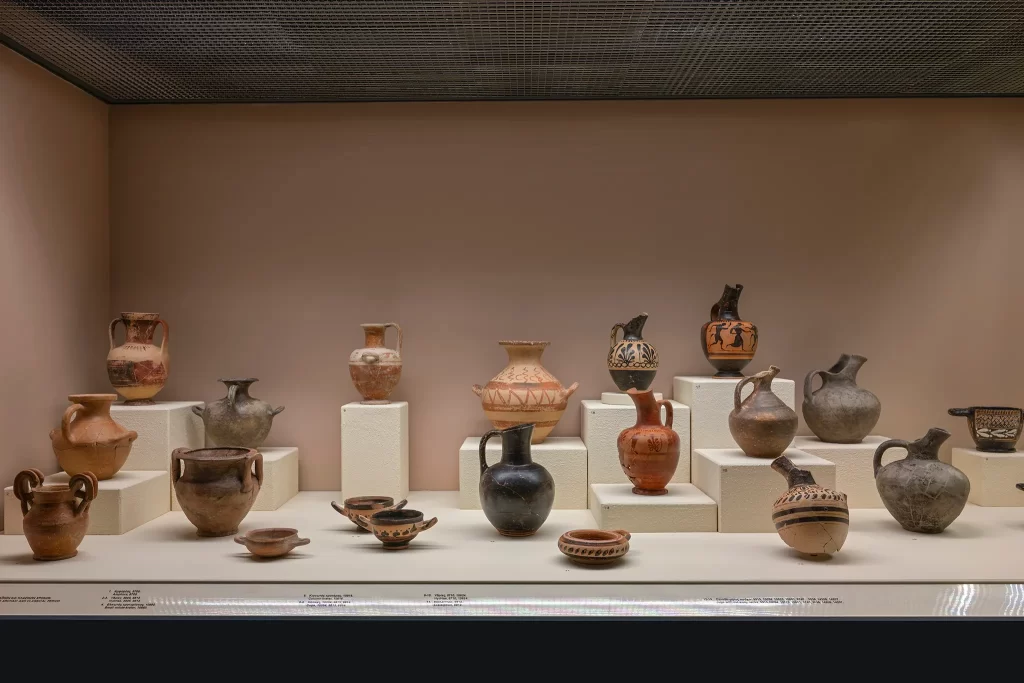
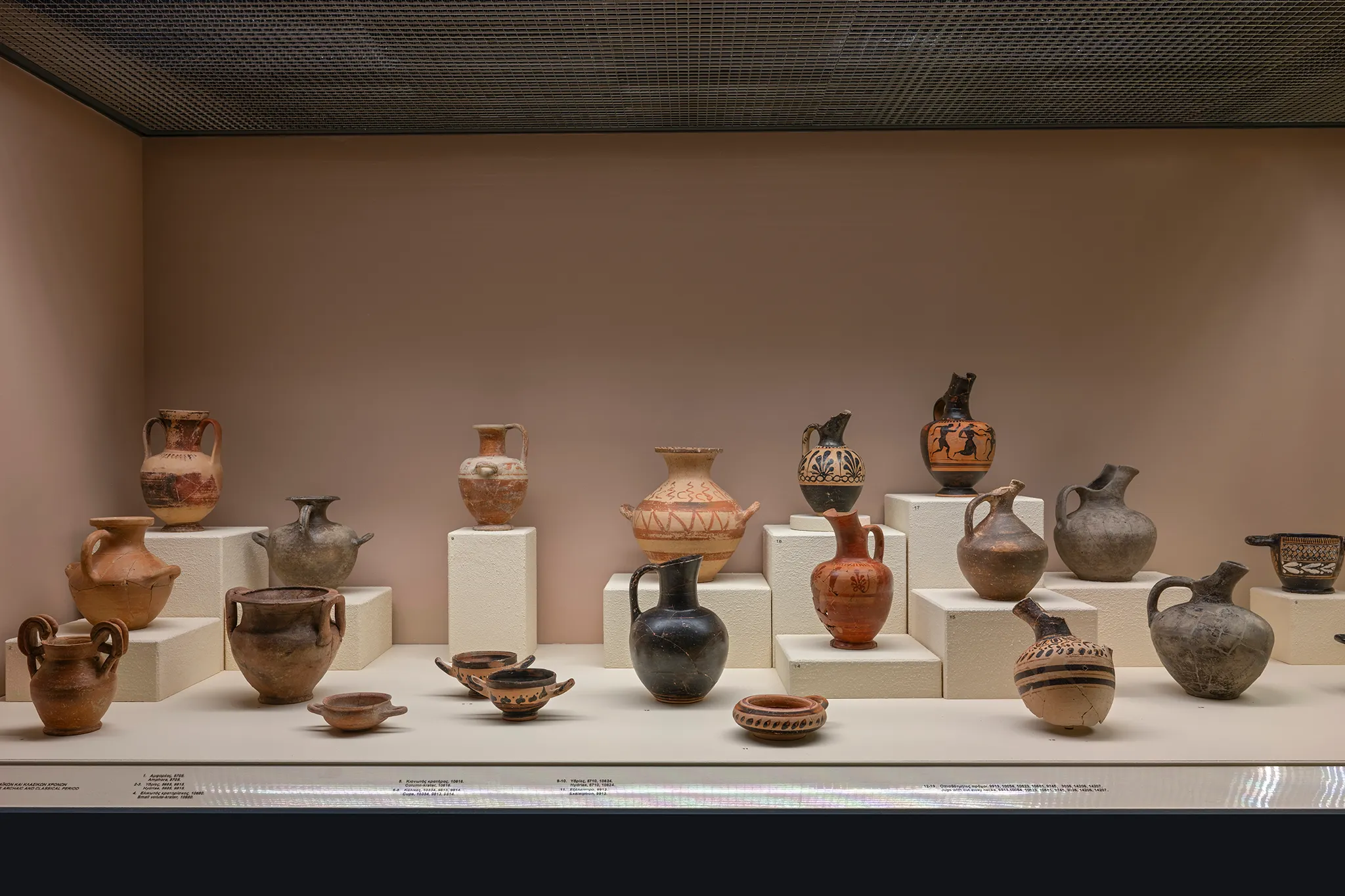
In the adjoining Case 20, local pottery from Aiani’s own workshops is displayed. One remarkable piece is a black-figure oinochoe showing a maenad between two satyrs (no. 3). From the mid-6th century BC, pottery from Corinth and Attica began arriving in Aiani, and by the early 5th century BC, local workshops began producing their own pottery. These pieces show both influence from southern Greece and the growing skill and style of the region’s own potters.